Airborne HQ
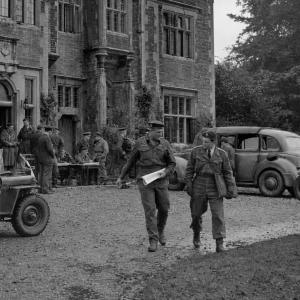
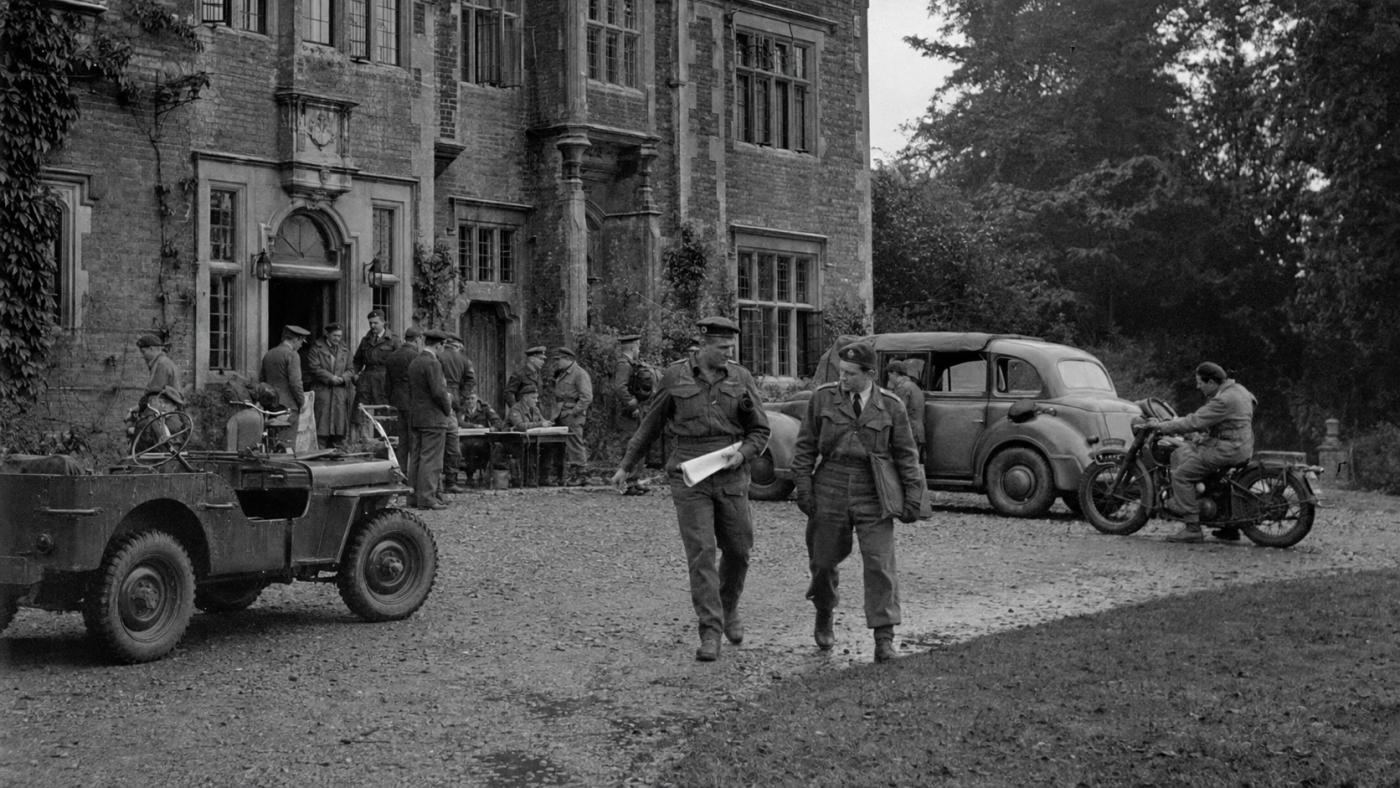
Operation Market Garden, the greatest airborne operation attempted during the Second World War, was planned inside Sunninghill Park, a large country estate near Ascot in Berkshire. Hidden behind extensive grounds and guarded entrances, the Georgian mansion became the headquarters of the First Allied Airborne Army and, during one remarkable week in September 1944, the nerve centre from which thousands of aircraft, gliders and airborne soldiers were prepared for battle.
The idea for Market Garden did not begin entirely at Sunninghill. Field Marshal Bernard Montgomery developed the broad strategy in Belgium as the Allied armies raced across France following the collapse of German resistance in Normandy. Montgomery believed that a bold thrust through the Netherlands could carry British forces across the Rhine, outflank Germany’s frontier defences and open a route towards the Ruhr, the industrial heart of the Third Reich.
On 10 September 1944 Montgomery presented his proposal to General Dwight D. Eisenhower, the Supreme Allied Commander, who authorised the operation. Montgomery then sent Lieutenant-General Frederick “Boy” Browning back to England to begin the detailed airborne planning. The first aircraft were expected to take off only seven days later, leaving the commanders with almost no time to prepare what would become the largest airborne operation yet attempted.
Later that day Browning arrived at Sunninghill Park carrying the outline of Montgomery’s scheme. At six o’clock that evening, Lieutenant-General Lewis H. Brereton, commander of the First Allied Airborne Army, called an emergency conference. Twenty-seven senior commanders and staff officers crowded into his large map-lined office as Browning explained the plan. Brereton warned them that the principal decisions made that evening would have to stand because there would be little opportunity to alter them once the enormous movement of men, aircraft, gliders, fuel and ammunition had begun.
Montgomery was the operation’s principal strategist, but Market Garden was the work of several important commanders. Eisenhower provided the authority and released the airborne forces, while Montgomery designed the overall thrust. Lieutenant-General Miles Dempsey, commanding the British Second Army, helped shape the ground operation, and Lieutenant-General Brian Horrocks was given the task of leading XXX Corps along the narrow road from the Belgian border towards Eindhoven, Nijmegen and Arnhem.
At Sunninghill Park, Browning became the central figure in organising “Market”, the airborne part of the operation, while Brereton controlled the combined air and airborne headquarters. Major-General Paul Williams of the American IX Troop Carrier Command dealt with the immense problem of carrying the troops into the Netherlands. Brigadier-General Floyd Parks, Brereton’s chief of staff, helped coordinate the British and American planning teams.
The individual battle plans were developed by Major-General Maxwell Taylor of the US 101st Airborne Division, Brigadier-General James Gavin of the US 82nd Airborne Division, Major-General Roy Urquhart of the British 1st Airborne Division and Major-General Stanisław Sosabowski of the Polish 1st Independent Parachute Brigade. Each commander had to study his objectives, choose landing areas and calculate how long his soldiers could hold out before the ground forces reached them.
The plan was divided into two closely connected operations. “Market” would place airborne forces behind the German lines to seize a chain of bridges through the Netherlands. “Garden” would send XXX Corps northwards over those bridges to reach Arnhem and cross the Lower Rhine. The 101st Airborne Division would land around Eindhoven and Veghel, the 82nd around Grave and Nijmegen, and the British 1st Airborne Division, supported by the Polish brigade, would land near Arnhem.
Everything depended upon the bridges being captured intact and the ground column reaching each airborne force before German reinforcements could overwhelm it. The proposed route stretched for approximately 64 miles and crossed numerous canals and rivers. A destroyed bridge, serious traffic delay or determined German resistance at any point could stop the entire advance.
Sunninghill Park was chosen because it was already a functioning American air headquarters. The US Ninth Air Force had occupied the estate from November 1943, providing offices, map rooms, accommodation and secure communications for a large military staff. When Brereton left the Ninth Air Force to command the newly created First Allied Airborne Army, buildings on the estate were made available for his headquarters in August 1944.
The estate was also conveniently situated near London, the Allied command structure and the network of airfields across southern England. The paratroopers and glider troops were not stationed at the house itself. Sunninghill was the command centre from which the widely scattered airborne divisions, transport groups and departure airfields could be coordinated.
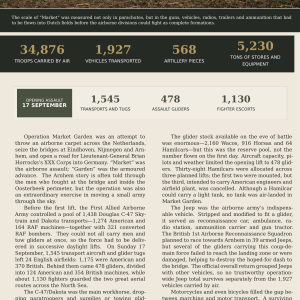
Maps covering the walls and tables showed the long, narrow corridor leading towards Arnhem. Air planners selected flight routes, landing zones and glider areas, while staff officers calculated aircraft numbers, loads, fuel requirements and timings. Each transport aircraft had to be assigned a particular load and destination, while thousands of gliders, vehicles, guns, radios, trailers and supply containers had to arrive at the correct airfield.
The distance involved, the shortage of transport aircraft and the limited hours of daylight meant that the entire force could not be carried in one movement. The landings would therefore be spread over several days. This left the first troops dangerously exposed while they waited for reinforcements, vehicles, artillery and supplies to arrive in later lifts.
Several of the operation’s most controversial decisions were settled during this hurried planning period. The landings would take place in daylight, relying upon Allied fighters and bombers to suppress German aircraft and anti-aircraft positions. At Arnhem, most of the British landing and dropping zones were placed several miles from the road bridge because the ground nearer the objective was considered unsuitable for mass glider landings or too heavily defended by anti-aircraft guns.
This meant that the British 1st Airborne Division would have to land, reorganise and then fight its way into Arnhem instead of appearing directly beside its main objective. Valuable time would be lost before the main body could reach the bridge, giving the Germans an opportunity to recover from the surprise and bring reinforcements into the area.
Concerns were raised about German strength near Arnhem, where elements of the 9th and 10th SS Panzer Divisions were resting and refitting. Sosabowski considered the operation dangerously ambitious, while Urquhart worried about the distance between his landing grounds and the bridge. Browning is famously associated with the warning that Arnhem might be “a bridge too far”, although the precise wording and moment remain debated.
Despite these doubts, the extraordinary speed of the Allied advance encouraged the belief that German resistance was collapsing. Allied intelligence estimated that the enemy lacked the strength to mount a serious response. The planners believed that surprise, air superiority and momentum would allow the lightly armed airborne troops to hold the bridges until the tanks of XXX Corps arrived.
Sunninghill Park had already witnessed the planning of numerous proposed airborne operations, many of which were cancelled because Allied ground forces reached their objectives before the paratroopers could be launched. Market Garden was different. Once the orders were issued, thousands of men were confined to their camps, aircraft were assembled across dozens of airfields and gliders were loaded with guns, jeeps, trailers, radios, ammunition and medical supplies.
On the morning of 17 September 1944, the plan created inside the quiet Berkshire estate became a reality over the Netherlands. An enormous aerial force crossed the North Sea carrying British, American and Polish troops. The initial landings were remarkably accurate, and many of the early objectives were secured. At Arnhem, however, only the 2nd Parachute Battalion under Lieutenant-Colonel John Frost managed to reach the northern end of the road bridge in strength.
The operation captured much of its intended corridor but failed to secure the final crossing at Arnhem. The road advance of XXX Corps was delayed by destroyed bridges, German resistance and severe traffic congestion along the single raised highway. The British 1st Airborne Division was gradually surrounded at Arnhem and Oosterbeek, while bad weather disrupted the arrival of reinforcements and supplies.
After nine days of fighting, the surviving British airborne troops were withdrawn across the Rhine during the night of 25–26 September. Thousands had been killed, wounded or captured. Although Market Garden liberated a considerable area of the Netherlands, it failed to establish the bridgehead across the Lower Rhine needed for the advance into northern Germany.
Sunninghill Park continued to serve the Allied airborne command after Arnhem. An advanced headquarters was established at Maisons-Laffitte near Paris, and Brereton transferred his main operational headquarters there in February 1945 while preparations were being made for Operation Varsity, the airborne crossing of the Rhine. The First Allied Airborne Army remained in existence until 20 May 1945, while IX Troop Carrier Command continued using Sunninghill Park until September 1945.
The Crown Estate purchased Sunninghill Park in 1945, intending the old mansion to become a home for Princess Elizabeth and Prince Philip following their marriage. That future disappeared on 30 August 1947 when the building was gutted by fire during renovation work and later demolished.
The country house in which the maps of Eindhoven, Nijmegen and Arnhem had been studied no longer survives, but its place in airborne history remains considerable. For seven tense days in September 1944, this secluded Berkshire estate stood at the centre of an operation intended to shorten the war and became the headquarters from which the road to “a bridge too far” was plotted.