On this day in military history…
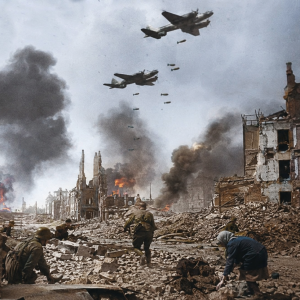
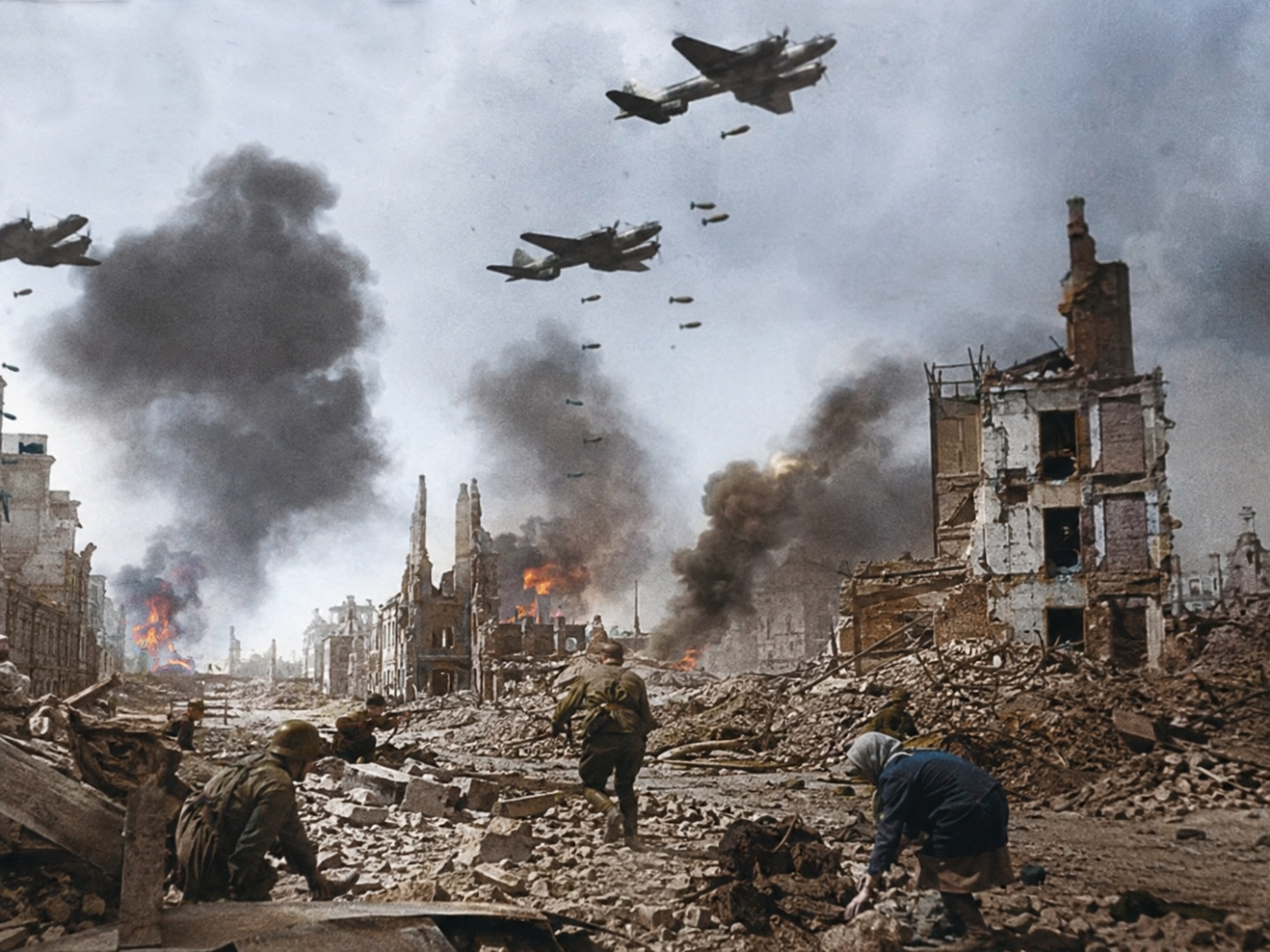
On 23 August 1942, the German Luftwaffe unleashed one of the most devastating aerial bombardments of the Second World War against the Soviet city of Stalingrad. Within hours, huge areas of the city were burning, thousands of civilians were dead or wounded and entire neighbourhoods had been reduced to shattered brick and twisted steel. The attack was intended to break Soviet resistance before German ground forces entered the city, but instead it helped create the very battlefield in which Adolf Hitler’s armies would eventually become trapped and destroyed.
By the summer of 1942, Hitler’s armies were driving deep into southern Russia as part of Operation Blue, the German offensive intended to seize the oilfields of the Caucasus and cut Soviet communications along the River Volga. Stalingrad had enormous strategic importance because it stretched for miles along the western bank of the Volga, one of the Soviet Union’s most important transport arteries. The city was also a major industrial centre producing tractors, weapons and military equipment. Its name gave it an additional political significance. Capturing the city bearing Joseph Stalin’s name would provide Hitler with an enormous propaganda victory.
The German Sixth Army under General Friedrich Paulus approached Stalingrad from the west while elements of the Fourth Panzer Army advanced from the south. On 23 August, German armoured forces reached the Volga north of the city, threatening to cut Stalingrad off. At approximately the same time, the Luftwaffe began a massive aerial assault designed to smash Soviet defences and paralyse the city before the main German ground attack.
Much of the bombing was carried out by Luftflotte 4 under Generaloberst Wolfram von Richthofen, one of Germany’s most experienced air commanders. Hundreds of German aircraft were committed to the attack. Heinkel He 111 and Junkers Ju 88 bombers crossed the city in repeated waves while Junkers Ju 87 Stuka dive-bombers attacked selected targets. High explosive bombs shattered buildings, roads and factories before incendiaries ignited fires across densely packed residential districts.
Stalingrad contained large numbers of wooden houses, warehouses and industrial buildings, making parts of the city exceptionally vulnerable to fire. Oil storage facilities near the Volga were hit and enormous columns of black smoke climbed into the sky. Burning fuel reportedly flowed towards the river while fires spread from street to street. Water supplies were disrupted, communications were severed and many of the city’s emergency services were overwhelmed. Civilians desperately attempted to escape towards the Volga while Soviet soldiers, firefighters and factory workers fought the flames around them.
The exact number of people killed during the bombing of 23 August remains disputed. Soviet accounts traditionally gave extraordinarily high figures, with estimates of around 40,000 civilian deaths sometimes associated with the opening bombardments. Modern historians have questioned whether so many people were killed on a single day, but there is no doubt that civilian losses were enormous. Tens of thousands of people remained trapped inside Stalingrad when the German attack began because Soviet authorities had not completed a full evacuation of the population. Families sheltered in basements, trenches and improvised bunkers while buildings collapsed above them.
The bombardment transformed Stalingrad. Streets disappeared beneath rubble, tram lines were torn apart and apartment blocks became burnt-out shells. The famous industrial district containing the Dzerzhinsky Tractor Factory, Red October steelworks and Barrikady weapons factory would soon become some of the most fiercely contested ground of the war. Yet the destruction produced an unintended consequence for the Germans. Instead of making Stalingrad easy to capture, the rubble created a defensive landscape ideally suited to Soviet troops.
German tanks that had performed so effectively across the open Russian steppe suddenly found themselves fighting amongst collapsed buildings, cratered roads and mountains of debris. Long-range German firepower became less useful as Soviet soldiers fought from cellars, factories, sewers and ruined apartment blocks. Snipers concealed themselves amongst the rubble while small assault groups moved through holes blasted in walls. German and Soviet troops sometimes occupied different floors of the same building.
Stalin ordered that the city must be defended at virtually any cost. The Soviet 62nd Army, eventually commanded by Lieutenant-General Vasily Chuikov, adopted tactics designed specifically to neutralise German superiority in artillery and air power. Soviet soldiers remained extremely close to German positions, effectively embracing the enemy so that Luftwaffe aircraft and German artillery risked hitting their own troops. Fighting increasingly took place at ranges measured in metres rather than kilometres.
The Luftwaffe continued hammering Stalingrad throughout the battle. German aircraft flew thousands of sorties against Soviet positions, factories and crossings over the Volga. During daylight the skies frequently belonged to the Germans, while Soviet reinforcements and supplies often crossed the river under cover of darkness. Boats returning east carried wounded soldiers and civilians away from the ruined city.
By September the Germans had entered Stalingrad itself and began fighting their way towards the Volga. Battles raged around Mamayev Kurgan, the central railway station, grain elevator and factory district. Buildings changed hands repeatedly. The railway station was reportedly captured and recaptured numerous times, while places such as Pavlov’s House became symbols of Soviet resistance. The Germans occupied most of the city, but they were never able to eliminate the Soviet bridgeheads along the Volga.
The enormous commitment of German forces to Stalingrad also exposed a critical weakness. While Paulus concentrated the Sixth Army inside the ruined city, the long German flanks north and south of Stalingrad were increasingly defended by Romanian, Hungarian and Italian troops who lacked adequate anti-tank weapons and reserves. Soviet commanders recognised the opportunity.
On 19 November 1942 the Red Army launched Operation Uranus. Massive Soviet forces attacked the Romanian armies protecting the German flanks. Within days the Soviet spearheads met west of Stalingrad, encircling approximately 250,000 Axis troops in and around the city. Hitler refused to allow Paulus to break out and ordered the Sixth Army to remain in Stalingrad.
The Luftwaffe was then given the impossible task of supplying the trapped army by air. Hermann Göring assured Hitler that his aircraft could deliver enough food, ammunition and fuel to sustain the pocket, but the transport fleet could never provide the quantities required. Bad weather, Soviet fighters, anti-aircraft fire, inadequate airfields and the enormous distances involved caused increasingly heavy losses. German soldiers inside Stalingrad slowly starved and froze as ammunition and medical supplies disappeared.
By January 1943 the Sixth Army was collapsing. Soviet forces drove through the pocket, dividing the remaining German positions. On 31 January Paulus surrendered the southern section of the encirclement, having been promoted to Field Marshal shortly beforehand. The remaining German troops in the northern pocket surrendered on 2 February 1943.
The Battle of Stalingrad had become one of the greatest catastrophes in German military history. Hundreds of thousands of Axis soldiers had been killed, wounded or captured during the campaign. Of the approximately 90,000 exhausted German and Axis troops who entered Soviet captivity at the end of the battle, only a small proportion would eventually return home years later.
The devastating air attack of 23 August 1942 was intended to prepare Stalingrad for rapid German conquest. Instead, the Luftwaffe helped create a vast landscape of ruins in which the Red Army could conduct a brutal close-quarter defence. The city that Hitler intended to destroy became the place where the apparently unstoppable German advance into the Soviet Union was decisively broken.
Stalingrad would come to represent far more than a single battle. It became a symbol of Soviet endurance, German overconfidence and the extraordinary brutality of warfare on the Eastern Front. The fires that consumed the city on 23 August 1942 marked the beginning of months of fighting that would ultimately destroy the German Sixth Army and change the course of the Second World War.