On this day in military history…
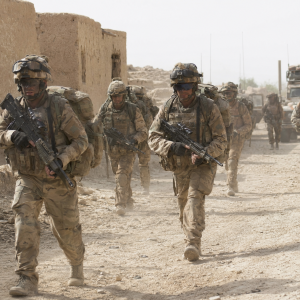
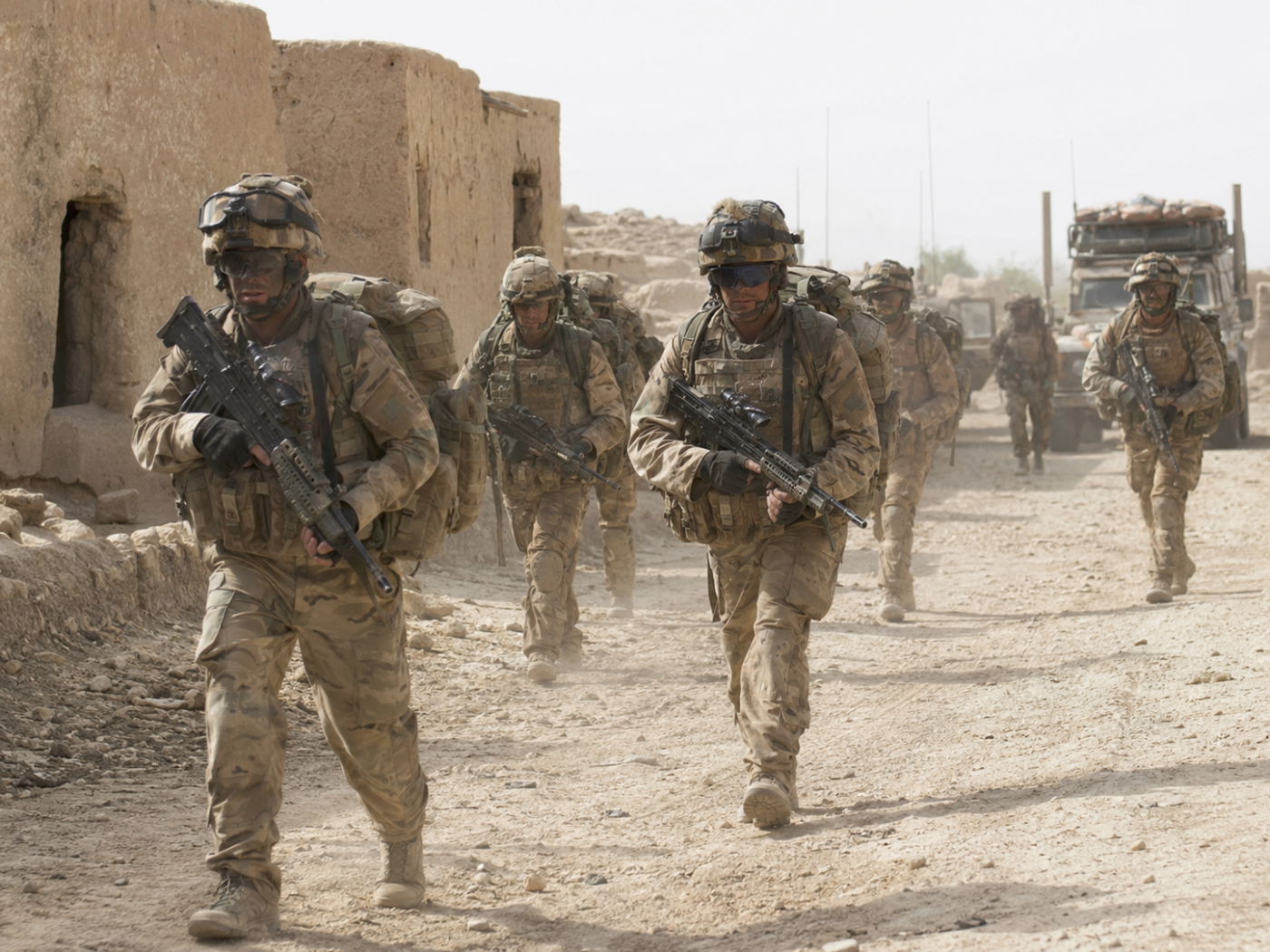
On 24 August 2006, soldiers of 3rd Battalion, The Parachute Regiment began moving out of Musa Qala in Afghanistan’s Helmand Province after completing one of the most demanding phases of their deployment. Their departure did not mark the end of the battle for the town; fighting would continue for weeks and other British troops remained behind. It did, however, mark the conclusion of a major period of operations by elements of the 3 PARA Battle Group around a place that had become synonymous with the ferocity of Britain’s early campaign in Helmand. The National Army Museum records photographs taken that day showing heavily armed soldiers of 3 PARA beginning their move out after completing their mission.
British forces had deployed into Helmand earlier in 2006 expecting to support reconstruction, Afghan government authority and security operations. Instead, they found themselves drawn into a series of increasingly violent battles against a determined Taliban insurgency. Musa Qala, a remote district centre in northern Helmand, became one of the most difficult positions. British troops were committed as part of what became known as the “Platoon House” strategy, placing relatively small groups of soldiers inside isolated district centres to maintain government presence. In practice, these positions could quickly become surrounded and subjected to repeated attacks. Musa Qala was particularly dangerous because the coalition compound stood within the town itself, surrounded by buildings, compounds, narrow streets and alleyways which provided excellent covered approaches for Taliban fighters.
During July and August the fighting developed into something closer to a siege than the peace-support mission originally envisaged. Taliban fighters attacked with machine guns, rocket-propelled grenades, mortars, rockets and small-arms fire, frequently attempting to close with the defenders. Helicopters bringing supplies or reinforcements were vulnerable, while movement outside the compound could rapidly develop into a major firefight. The troops holding Musa Qala therefore depended heavily upon their own weapons, artillery, mortars, attack helicopters and fast jets when enemy forces massed around the town. The National Army Museum describes the Taliban force involved during the wider battle as numbering more than 500 fighters and records more than 100 enemy contacts during the siege.
3 PARA played a major role in the effort to maintain access to Musa Qala and prevent the garrison from being overwhelmed. On 6 August, B Company soldiers were photographed taking up firing positions outside the town as British forces fought to break through to the isolated position. A major relief operation, supported by substantial air power and mortars from the Royal Irish Regiment, succeeded in forcing a route through to the compound. It demonstrated the scale of force that was sometimes necessary simply to reinforce or resupply one of the isolated northern Helmand positions.
The fighting around Musa Qala became relentless. Temperatures were extreme, soldiers carried enormous loads of ammunition, body armour, water and communications equipment, and there was little opportunity for proper rest. Men could move from relative quiet to intense combat within seconds. Taliban fighters understood the terrain and frequently attacked from compounds, irrigation ditches and concealed positions, forcing British soldiers to identify and engage fleeting targets while remaining conscious that civilians could still be present nearby. For many members of 3 PARA, Helmand was proving to be a very different campaign from that which had been anticipated before deployment.
By late August the continuing rotation and relief of forces required another major operation. The operation associated with the movements on 24 August was known as Operation ATOMI. It involved troops from the Helmand Task Force, including 3 PARA, 51 Parachute Squadron Royal Engineers, the Royal Irish Regiment and D Squadron Household Cavalry. Its purpose included securing a route into the district centre, assisting Afghan troops and enabling the movement and replacement of forces within Musa Qala. Troops were inserted at first light and engineers worked to clear routes threatened by booby traps and improvised explosive devices. Artillery from I Battery, 7th Parachute Regiment Royal Horse Artillery and attack helicopters provided heavy support throughout the operation.
Moving men in or out of Musa Qala was therefore far from a routine troop change. The Taliban recognised that helicopters, vehicles and soldiers moving across exposed ground presented opportunities for attack. Every extraction required security, fire support and careful coordination. On 24 August British troops watched as a 500lb bomb was dropped onto an enemy position during the withdrawal of the Danish contingent from Musa Qala, illustrating the extraordinary level of firepower required simply to conduct the changeover safely.
For the soldiers of 3 PARA beginning their move out, there was considerable satisfaction in having completed their mission against an enemy which had repeatedly attempted to dominate the battlefield. The battalion had operated aggressively around Musa Qala and elsewhere in Helmand, frequently fighting at close range and often against numerically strong Taliban forces. The purpose had never simply been to occupy ground regardless of cost. It was to prevent Afghan government positions being swept away, relieve isolated troops and demonstrate that coalition forces could move into areas which the insurgents believed they controlled.
The photographs from 24 August capture heavily equipped paratroopers moving away from Musa Qala carrying weapons, body armour and equipment after weeks of operations. There was little ceremony. They were soldiers finishing one mission in a campaign that was still developing around them. For those involved, however, the experience had already demonstrated just how severe the fighting in Afghanistan could become.
Importantly, 24 August was not the final abandonment of Musa Qala by British forces. A smaller force of paratroopers remained or moved into the position alongside another Royal Irish platoon as the troop rotation continued. This composite garrison became known as “Easy Company”. The Taliban apparently recognised that the new force possessed less heavy firepower than the departing contingent and renewed its attacks with even greater determination. The defenders would continue fighting for approximately another three weeks before negotiations eventually produced a cessation of hostilities.
Those who remained endured some of the hardest fighting of the entire siege. Mortar teams fired hundreds of rounds, enemy attacks sometimes approached dangerously close to the compound and the buildings themselves became scarred by bullets, rockets and fragmentation. On 1 September Ranger Anare Draiva and Lance Corporal Paul Muirhead were struck by Taliban mortar fire while manning the position known as “The Alamo”. Draiva was killed immediately and Muirhead later died of his wounds. By the end of the fighting three British soldiers had been killed and twelve wounded within the Musa Qala garrison.
Eventually local elders became involved in negotiations and a truce was arranged. The remaining British garrison stayed for several further weeks while the agreement was tested before finally leaving Musa Qala in October. This later withdrawal is sometimes confused with the movement of 3 PARA on 24 August. They were separate events. The August movement was part of the operational rotation and relief of forces following an extremely hard period of combat; the final evacuation of the district centre came only after the subsequent siege and negotiated ceasefire.
The significance of 24 August 2006 therefore lies not in the end of the battle, but in what the departing soldiers had achieved. 3 PARA and the wider Helmand Task Force had operated in terrain dominated by an aggressive enemy, fought repeatedly to gain access to isolated positions and prevented Taliban forces from achieving the decisive battlefield victory they sought. Musa Qala revealed both the extraordinary fighting ability of British soldiers and the enormous difficulties created by attempting to hold remote Afghan district centres with relatively small numbers of troops.
For the Parachute Regiment, the summer of 2006 became another demanding chapter in a long history of fighting while isolated, heavily outnumbered and dependent upon aggression, discipline and mutual trust. The men who moved out on 24 August were exhausted and battle-worn, but their mission had been completed. Behind them Musa Qala remained contested and the fighting was far from over. Ahead lay further operations across Helmand.