On this day in military history…
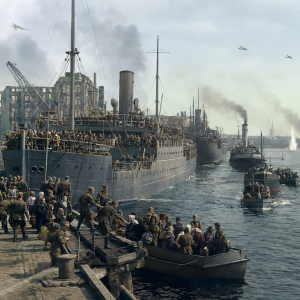
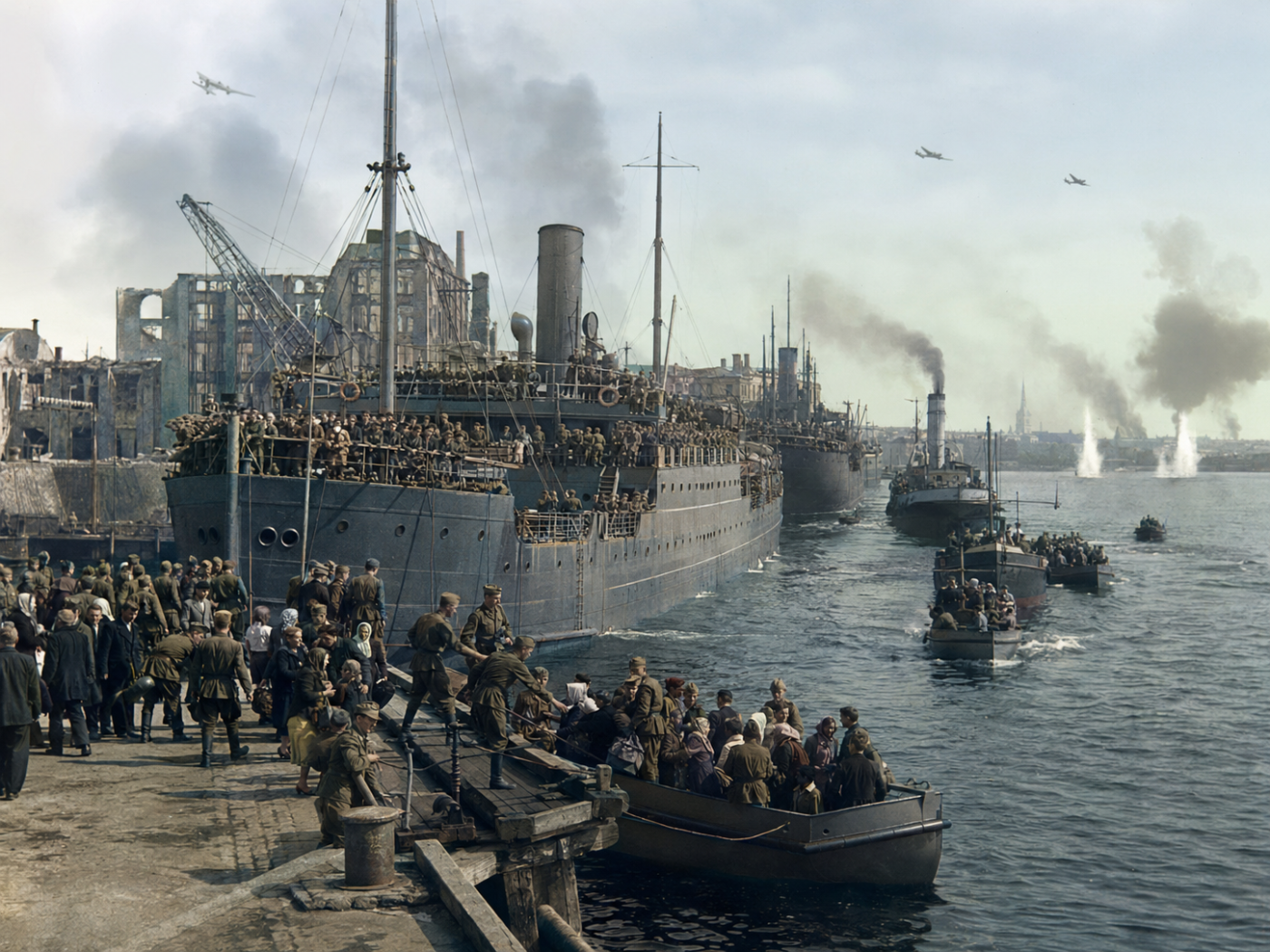
By the final days of August 1941, the German invasion of the Soviet Union had turned the eastern Baltic into a battlefield. Army Group North was advancing rapidly through the Baltic states towards Leningrad, while Soviet positions in Estonia were collapsing. At Tallinn, the capital and a key base of the Red Banner Baltic Fleet, tens of thousands of soldiers, sailors and civilians were effectively trapped, with escape possible only by sea across the Gulf of Finland towards Kronstadt and Leningrad. The evacuation that followed on 28 August 1941 became one of the greatest maritime disasters of the Second World War.
The Soviet occupation of Estonia in June 1940 had turned Tallinn into an important forward naval base. When Operation Barbarossa began on 22 June 1941, Soviet forces attempted to hold the Baltic region, but the German advance quickly made this impossible. German troops pushed north through Estonia while Finnish forces fought further north, and by late August Tallinn was almost encircled. The German assault intensified from 19 August, and although Soviet troops resisted fiercely, the Baltic Fleet commander Vice-Admiral Vladimir Tributs was eventually authorised to evacuate. The decision came too late, forcing a massive withdrawal through waters already prepared as a killing ground.
The sea route east of Tallinn was extremely dangerous. German and Finnish forces had laid extensive minefields across the Gulf of Finland, especially around Cape Juminda, while coastal artillery and Luftwaffe aircraft operating from nearby bases could attack the evacuation route almost continuously. The Soviet evacuation force was enormous and unwieldy, consisting of around 190 vessels carrying approximately 28,000 people, including soldiers, sailors, officials and civilians, along with military equipment. Warships such as the cruiser Kirov, destroyers, submarines, minesweepers and patrol craft were mixed with overloaded merchant transports, some carrying over a thousand people each.
During the night of 27–28 August, Soviet forces began boarding ships under constant German artillery and air attack, with smoke screens offering only limited concealment. The embarkation was chaotic, as frontline troops, wounded soldiers and civilians crowded onto vessels. When the fleet finally sailed on 28 August, it immediately entered narrow swept channels surrounded by dense minefields, while minesweepers struggled unsuccessfully to clear safe passages.
Cape Juminda quickly became the centre of catastrophe. German and Finnish minefields formed an almost continuous barrier, and as ships entered the area, explosions erupted in rapid succession. Warships and transports struck mines and often sank within minutes, while others attempting to avoid wreckage drifted outside safe channels and triggered further explosions. Among the major losses were destroyers such as Yakov Sverdlov, Kalinin, Artem, Volodarsky and Skory, as well as several submarines, showing that even heavily protected naval vessels were vulnerable to the minefields.
Conditions aboard transports were often worse. Many ships were dangerously overloaded, and when mines detonated there was little time to launch lifeboats. Soldiers, sailors and civilians were thrown into the sea amid burning fuel and wreckage, while other vessels were forced onward through the minefield without stopping. Notable losses included the transport Vironia, which is believed to have carried over a thousand people, the Ella, which sank with hundreds aboard, and the Everita, which reportedly disappeared almost immediately after striking a mine.
Air attacks added further destruction. German Ju 88 bombers repeatedly struck the convoy, exploiting weak Soviet air cover. Bombing attacks forced ships into sudden manoeuvres that often led them into additional minefields, while damaged vessels became easy targets. German and Finnish motor torpedo boats also operated in the Gulf, increasing pressure on an already disorganised evacuation.
By the evening of 28 August, the situation had descended into chaos. Burning ships lit the Gulf while survivors clung to wreckage or overcrowded lifeboats. Rescue attempts were extremely dangerous, as stopping inside mined waters risked further losses. Some sections of the fleet effectively halted overnight, anchoring in uncertain waters while awaiting daylight, despite damaged ships taking on water and the expectation of renewed air attacks.
On 29 August, German bombers resumed attacks on the remaining vessels heading towards Kronstadt, sinking or damaging further transports. Mines continued to claim additional victims, while Soviet rescue vessels operating from nearby islands managed to recover thousands of survivors from the sea and damaged ships. Despite the disaster, a significant portion of the fleet eventually reached Kronstadt, with around 165 vessels surviving the operation along with tens of thousands of evacuees and large quantities of equipment.
Loss estimates remain uncertain, but more than fifty ships were certainly destroyed, with some studies suggesting higher figures when including irreparably damaged vessels. Human losses are generally estimated at over 10,000, with some assessments exceeding 12,000. Most of these deaths resulted from the combined effects of mines, air attacks, artillery fire and the extreme confusion of the evacuation.
The Tallinn evacuation is sometimes compared to Dunkirk, but the comparison is misleading. Unlike Dunkirk, which became a symbol of successful evacuation, Tallinn was a far more destructive operation, with Soviet forces escaping through a deliberately prepared maritime death zone. The German and Finnish minefields around Juminda proved especially effective, demonstrating how relatively inexpensive naval mines could dominate an entire sea area and turn an evacuation route into a lethal trap.
Despite the losses, the Germans failed to destroy the Baltic Fleet. Key ships such as the cruiser Kirov survived and later played an important role in the defence of Leningrad during the siege, using their heavy guns against German forces. For Estonia, the evacuation marked another occupation, as German forces entered Tallinn on 28 August after the Soviet withdrawal, replacing one brutal regime with another.
The waters off Cape Juminda became a vast maritime graveyard, with wrecks of destroyers, submarines and transports still lying on the seabed. The disaster remained relatively little known outside the Soviet Union for decades, as it did not fit the official wartime narrative. Today, however, it is recognised as one of the most devastating naval disasters of the Second World War, commemorated by a memorial at Cape Juminda overlooking the site of the tragedy.
The evacuation of Tallinn reflects the extreme brutality of the early months of Operation Barbarossa. A major naval base was forced into a desperate sea escape, only to encounter a hidden battlefield of mines, aircraft and fast attack craft. On 28 August 1941, the Gulf of Finland became a corridor of burning ships and mass death, yet enough of the Baltic Fleet survived to continue the war.
It was an escape achieved at an appalling cost, and one of the most tragic and significant naval episodes of the Second World War.