On this day in military history…
On 30 August 1942, Field Marshal Erwin Rommel launched what would become his final major offensive in Egypt. The attack at Alam el Halfa was intended to smash through the British Eighth Army, outflank its defensive positions and open the road towards Alexandria, Cairo and ultimately the Suez Canal. Instead, Rommel ran into a carefully prepared British defence under the recently appointed Lieutenant-General Bernard Montgomery. The resulting battle would mark an important change in the North African campaign and show that the seemingly unstoppable advance of the Afrika Korps could be contained. By the summer of 1942, the military situation in North Africa had become extremely serious for Britain. Rommel's German and Italian forces had captured Tobruk in June and driven the British Eighth Army deep into Egypt. The Axis advance finally halted around El Alamein, a relatively narrow stretch of desert between the Mediterranean coast and the impassable Qattara Depression. Geography prevented Rommel from simply sweeping around the southern flank as he had done during previous battles, giving the British a rare opportunity to establish a defensive line that could not easily be bypassed.
Command of the Eighth Army had recently passed to Bernard Montgomery. He immediately began strengthening the army's defences and rebuilding confidence after months of retreats and defeats. Montgomery was convinced that Rommel would attempt another sweeping attack around the southern end of the British line. Rather than trying to stop the Axis armour immediately at the frontier of the defensive area, he planned to draw it into ground where British artillery, tanks and aircraft could gradually wear it down. The key position was Alam el Halfa Ridge, a raised area of ground southeast of El Alamein. Montgomery concentrated strong armoured forces around the ridge and ordered them to fight defensively rather than become involved in the type of fast-moving pursuit battles in which Rommel had repeatedly demonstrated his skill. British tanks were positioned in prepared locations with artillery support, while extensive minefields and defensive zones were established across the approaches.
Rommel's plan was ambitious. German and Italian infantry would demonstrate against the northern and central sections of the British line while the main mobile force, including the Afrika Korps, would move south through the British minefields before turning northeast towards Alam el Halfa. Once the British armour had been defeated, Rommel hoped to push towards the coast and trap much of the Eighth Army. Shortly before midnight on 30 August, Axis forces began moving forward, but almost immediately the operation encountered difficulties. British minefields were deeper and more complicated than expected, engineers struggled to clear passages quickly enough, artillery fired into the congested columns and aircraft of the Desert Air Force repeatedly attacked German and Italian vehicles moving through the narrow cleared lanes. The delays were particularly damaging because Rommel's forces were desperately short of fuel. Supply lines stretched hundreds of miles across North Africa, while British attacks against Axis shipping and transport had badly restricted the amount of petrol, ammunition and spare parts reaching the front.
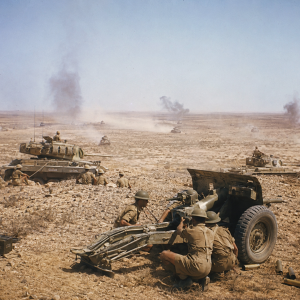
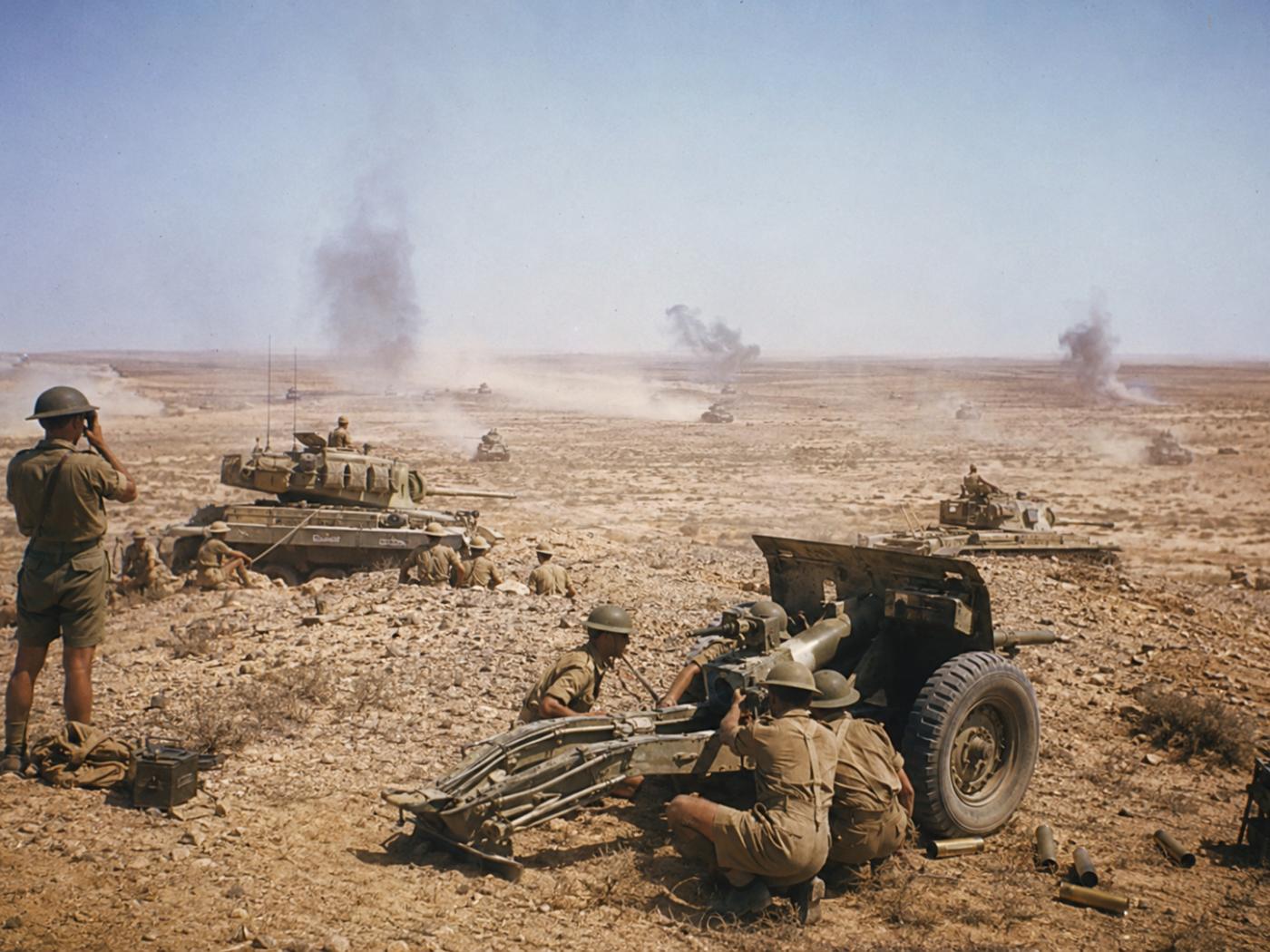
By daylight, the Axis armoured columns had still not reached the positions originally intended. Rommel therefore altered the direction of the attack, turning earlier towards Alam el Halfa Ridge and placing his forces directly in front of Montgomery's prepared defensive positions. As German armour approached the ridge it encountered concentrated fire from British tanks, anti-tank guns and artillery. Montgomery had specifically ordered his armoured commanders not to rush forward and engage the enemy in a mobile battle. Instead, the British tanks remained on favourable ground and forced the Germans to attack them. This was an important change in tactics. Rommel had frequently exploited aggressive British armoured attacks by drawing tanks onto concealed anti-tank gun positions and then counter-attacking, but at Alam el Halfa the British refused to provide him with that opportunity. Among the units defending the area were formations equipped with the American-built M3 Grant tank. Although the Grant had several weaknesses, its powerful 75mm gun could engage German armour effectively when supported by artillery and anti-tank weapons.
Above the battlefield, the Desert Air Force maintained almost continuous pressure. Axis vehicles were particularly vulnerable when stationary or concentrated together, and bombing attacks disrupted movement, damaged transport and further consumed the limited supply of fuel. Night attacks were especially exhausting for the German and Italian troops, who found it increasingly difficult to rest or reorganise. Rommel soon realised that the breakthrough he had expected was not developing. The British had not panicked, their armour had not been drawn into a reckless pursuit and the Axis advance was becoming increasingly constrained by fuel shortages and air attacks. During 1 September, further German attacks were made around Alam el Halfa, but little progress was achieved. Montgomery continued to resist demands for a major armoured counter-attack, believing the correct strategy was to allow Rommel's offensive to exhaust itself rather than risk the Eighth Army in another uncertain mobile battle.
By 2 September, Rommel's fuel situation had become critical and the Afrika Korps could no longer sustain major offensive operations. He ordered his forces to begin withdrawing towards their original positions. The retreat was dangerous, with British aircraft continuing to attack Axis columns and artillery shelling routes through the minefields, but Montgomery again resisted committing his entire armoured force to a pursuit. Limited British attacks were made against the retreating enemy, yet the main Axis formations successfully escaped and by 5 September the battle was effectively over. Casualties on both sides were significant, but the importance of Alam el Halfa was greater than the numbers alone suggested. Rommel had launched another attempt to break the British position in Egypt and had failed. More importantly, he had lost fuel, vehicles, experienced crews and offensive momentum that were becoming increasingly difficult to replace.
For Montgomery, the battle represented his first major success as commander of the Eighth Army. He had correctly anticipated Rommel's intentions, prepared his defences accordingly and refused to be drawn into the type of battle that favoured his opponent. The psychological effect was considerable. For much of the previous two years Rommel had appeared capable of repeatedly outmanoeuvring British forces across the desert, and his reputation as the "Desert Fox" had become almost legendary. At Alam el Halfa, however, the Eighth Army demonstrated that his tactics could be anticipated and defeated. The battle also revealed the growing importance of logistics in the desert war. German tanks and tactical skill could achieve little without sufficient fuel, and Axis supply lines across the Mediterranean and along the North African coast were constantly threatened by British naval and air power.
Montgomery understood that time increasingly favoured Britain. Reinforcements, new tanks, artillery and supplies were arriving in Egypt in growing quantities, while Axis forces struggled merely to replace their losses. Rather than launching an immediate major pursuit after Alam el Halfa, Montgomery continued building his strength. During the following weeks enormous quantities of ammunition, fuel and equipment were accumulated behind the El Alamein line, and troops trained extensively for the offensive that was coming. Less than two months later, on 23 October 1942, the Second Battle of El Alamein began. This time Montgomery would attack.
Alam el Halfa therefore occupies an important place in the North African campaign. It was not the spectacular battlefield victory that El Alamein would later become, but it marked the moment when Rommel's eastward advance was decisively stopped and the initiative began to pass to the Allies. On 30 August 1942, Rommel attempted one final great manoeuvre to break the British army in Egypt. Instead, his tanks drove into a carefully constructed defensive system of minefields, artillery, armour and relentless air attack. When the Afrika Korps eventually withdrew, the opportunity to capture Egypt and the Suez Canal had effectively disappeared. The Desert Fox had reached the limit of his advance, and from Alam el Halfa onwards the long road of retreat across North Africa was about to begin.