On this day in military history…
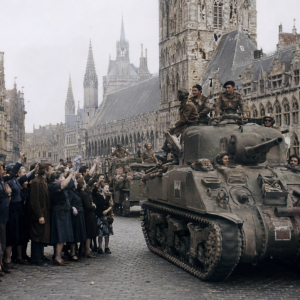
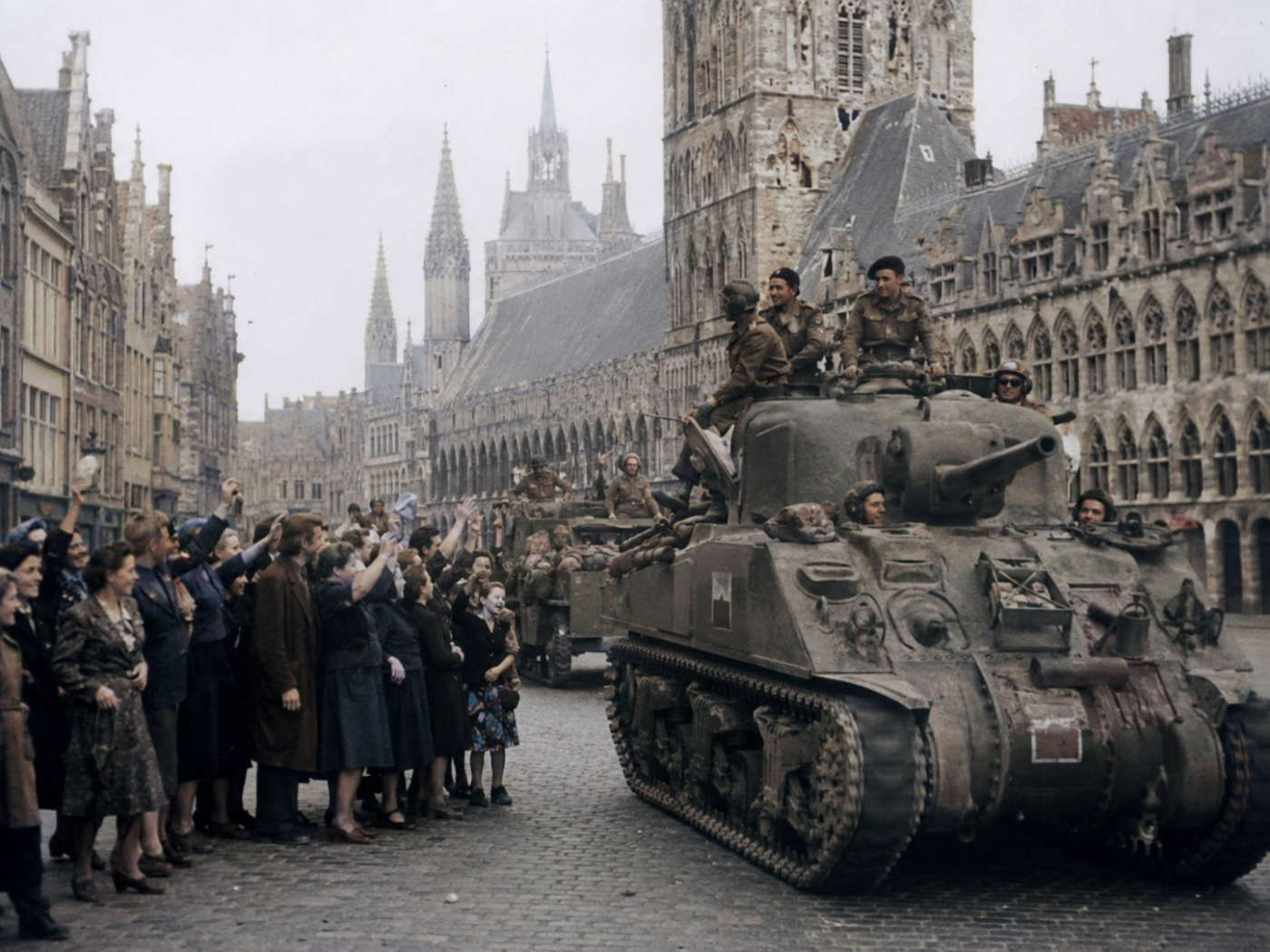
On 6 September 1944, the people of Ypres in Belgium saw the end of more than four years of German occupation when soldiers of the Polish 1st Armoured Division entered and liberated the historic city. Commanded by Major-General Stanisław Maczek, the Polish formation was advancing rapidly through northern France and into Belgium as part of the great Allied pursuit of German forces following the collapse of the Normandy front. For Ypres, a city whose name had already become synonymous with sacrifice during the First World War, the appearance of Polish tanks and soldiers on its streets marked another extraordinary chapter in its military history.
The men who liberated Ypres had themselves been fighting a long way from home. Poland had been invaded by Germany on 1 September 1939 and by the Soviet Union later that month. Many Polish soldiers escaped through Hungary, Romania and France and eventually reached Britain. There they continued the fight alongside the Western Allies. The 1st Polish Armoured Division was formed in Britain in 1942 under Stanisław Maczek, one of Poland's most experienced armoured commanders. Equipped largely along British lines, the division developed into a powerful mobile formation of tanks, motorised infantry, artillery, engineers and supporting units. By 1944 it numbered roughly 16,000 men and possessed around 300 tanks.
The division entered combat in Normandy during August 1944 as part of the First Canadian Army. Its baptism of fire was severe. During the fighting around Falaise, Polish troops were given the vital task of helping close the escape route through which German formations were attempting to withdraw eastwards. At Mont Ormel and the surrounding heights, Polish troops endured repeated attacks by German armour and infantry while cut off from much of the Allied force. The division suffered more than 2,000 casualties during its first weeks of fighting, but its actions contributed significantly to trapping and destroying large elements of the German armies in Normandy.
Once the German front collapsed, there was little time for rest. Maczek's men became part of the rapid Allied pursuit towards Belgium. Moving through northern France, the Poles liberated a succession of communities as German forces withdrew towards the Belgian frontier. The nature of the campaign had now changed dramatically. Instead of the slow, attritional fighting through Normandy's hedgerows, armoured columns were covering considerable distances, attempting to prevent the retreating Germans from establishing new defensive lines.
On 6 September the Polish 1st Armoured Division crossed into Belgium in the area of Abele and Westouter. Ypres lay only a short distance ahead. German troops were withdrawing, but the possibility of resistance remained, and the Poles advanced carefully through countryside that still carried the scars and cemeteries of the First World War. By the end of the day Polish forces had entered Ypres and the German occupation of the city was over.
For many of the Polish soldiers, the surroundings must have carried enormous significance. Ypres was known throughout the British Commonwealth and much of Europe as one of the great killing grounds of 1914–18. Battles at Ypres, Passchendaele and the surrounding salient had cost hundreds of thousands of casualties. The rebuilt Cloth Hall, the Menin Gate and the countless military cemeteries surrounding the city ensured that the memory of the previous war was impossible to ignore. Now, barely a generation later, armoured vehicles and soldiers were once again passing through Ypres during another struggle against Germany.
The liberation brought scenes of enormous relief among the civilian population. German forces had occupied Ypres since May 1940, following the invasion of Belgium and the fighting that accompanied the British Expeditionary Force's withdrawal towards Dunkirk. For more than four years the inhabitants had lived under occupation, with shortages, restrictions, forced labour and the constant presence of the German authorities. When Polish troops arrived in September 1944 they were welcomed not merely as another Allied formation but as men who had restored freedom to the city.
One of the most symbolic consequences of liberation concerned the Menin Gate. Since 1928, apart from the years of German occupation, buglers of the Ypres fire brigade had sounded the Last Post beneath the memorial each evening in remembrance of the British and Commonwealth servicemen who had died in the Ypres Salient and had no known grave. After German troops occupied the city in 1940 the ceremony could no longer take place there and was continued symbolically at Brookwood Military Cemetery in Britain. Following the liberation of Ypres by the Polish 1st Armoured Division, the ceremony was able to return to the Menin Gate.
Ypres was only the beginning of the Polish division's remarkable advance through Belgium. During the following days Maczek's men pushed onwards, liberating towns including Roeselare and Tielt before taking part in the fighting towards Ghent. Within little more than a week the division had travelled deep into Belgium, frequently receiving enthusiastic welcomes from civilians who had endured four years of occupation. The Polish advance continued into the Netherlands on 16 September.
The campaign was far from an effortless pursuit. German formations were attempting to regroup behind Belgium's network of rivers and canals, destroying bridges and establishing defensive positions wherever possible. The Poles encountered increasingly determined resistance as they advanced towards the Netherlands. Maczek repeatedly used manoeuvre rather than unnecessary frontal attacks whenever circumstances permitted, a style of warfare that would become especially evident the following month when his division liberated Breda while limiting destruction to the Dutch city.
There was also a bitter irony behind the celebrations greeting the Polish soldiers. They were liberating other European nations while their own homeland remained beyond their reach. Poland had suffered terribly under German occupation, while the Soviet Red Army was advancing westwards across Polish territory. Political agreements made between the major Allied powers would eventually leave post-war Poland within the Soviet sphere of influence. For many members of the 1st Armoured Division, returning home after the war would therefore prove impossible or undesirable.
Maczek and his men continued fighting through the Netherlands and eventually into Germany. In October 1944 they liberated Breda, where their achievement is still particularly well remembered. In the final weeks of the European war the division advanced into northern Germany, and in May 1945 it accepted the surrender of the German naval base and fortress area at Wilhelmshaven. Many of its soldiers subsequently remained in Western Europe rather than return to a Poland dominated by a communist government backed by Moscow.
The contribution of the Polish 1st Armoured Division to the liberation of Western Europe was consequently remarkable. Its soldiers had lost their country in 1939, rebuilt their military lives in exile and then returned to the European mainland five years later as part of the Allied armies. From the brutal fighting around Falaise they advanced through France, Belgium and the Netherlands before finally entering Germany itself.
Today the Polish role in the liberation of Ypres continues to be remembered in the city. Memorials commemorate General Stanisław Maczek and the men of his division, including a monument on Polenlaan and a commemorative plaque at the town hall.