On this day in military history…
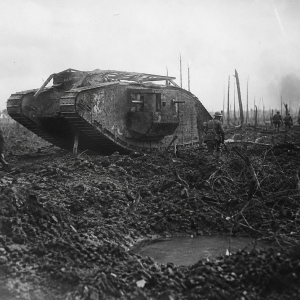
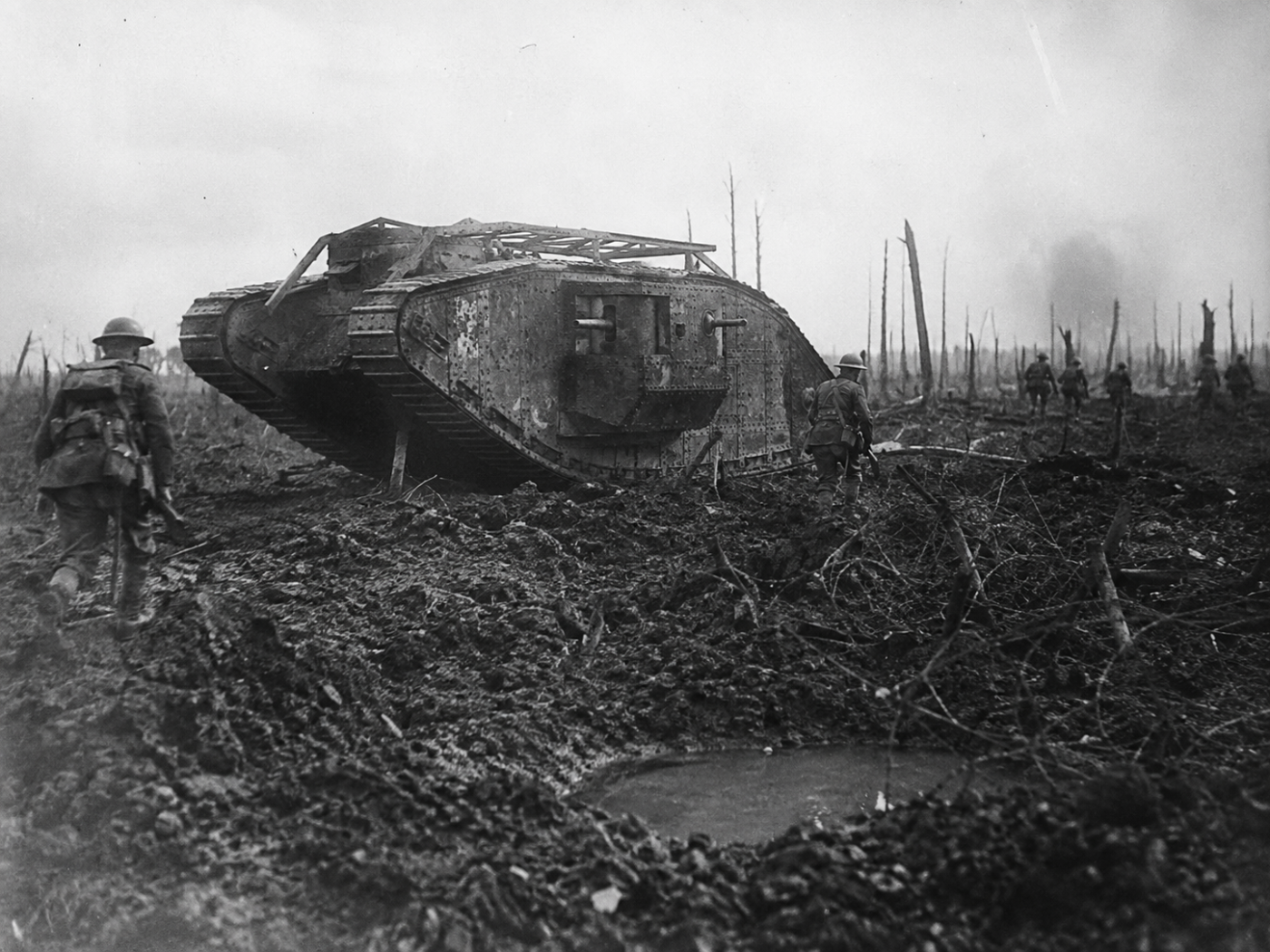
On the morning of 15 September 1916, amid the mud, shell holes and shattered landscape of the Somme, British soldiers witnessed something never before seen on a battlefield. Moving slowly towards the German lines were huge armoured machines crawling forward on continuous tracks. At the Battle of Flers-Courcelette, Britain was using the tank in combat for the first time in history, beginning a new era of mechanised warfare.
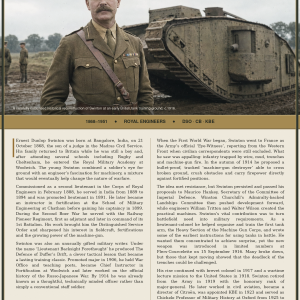
The tank had been developed in great secrecy as Britain searched for a way of breaking the deadlock of trench warfare. Since 1914, machine guns, barbed wire, artillery and deeply constructed defensive positions had made attacks across open ground extraordinarily costly. Lieutenant Colonel Ernest Swinton was among those who argued that a tracked, armoured vehicle capable of crossing trenches, crushing wire and attacking machine-gun positions could help infantry break through. Winston Churchill, then First Lord of the Admiralty, became an important supporter of the idea, and development eventually came under the secretive Landships Committee.
To conceal the project, the machines were referred to as “tanks”, suggesting containers for carrying water rather than revolutionary fighting vehicles. The name remained. By early 1916 the design that became the Mark I had emerged, with its distinctive rhomboid shape and tracks running around almost the entire hull. There were two principal versions. The “Male” carried two 6-pounder guns together with machine guns, while the “Female” was armed predominantly with machine guns. A crew of eight operated inside conditions that were extremely hot, deafening and filled with fumes from the engine, weapons and lubricants.
General Sir Douglas Haig decided to introduce the new weapon during the continuing Somme offensive. Forty-nine Mark I tanks were allocated to the attack at Flers-Courcelette. They were dispersed among infantry formations rather than being concentrated into one large armoured force. Their task was to move ahead or alongside the infantry, crush barbed wire, cross trenches and engage German strongpoints that had previously brought attacks to a standstill.
The machines immediately demonstrated their greatest weakness: reliability. Some broke down before reaching the battlefield, others became stuck or suffered mechanical problems around the starting positions. Of the 49 tanks allocated to the operation, only around 15 were able to move forward into no-man's-land when the attack developed. Yet the sight of even this small number produced an extraordinary psychological effect on German soldiers who had never encountered anything like them.
Moving at little more than walking pace, the Mark I tanks were cumbersome and vulnerable, but where they remained operational they showed what the new weapon might eventually achieve. German troops watched as armoured vehicles crossed shell holes and trenches that conventional wheeled vehicles could never have negotiated. Barbed-wire obstacles could be crushed beneath their tracks, while machine-gun positions could be attacked at close range.
One of the most famous tanks involved was C5, known as “Crème de Menthe”. Operating around Flers, tanks assisted the infantry as British troops entered the village. Contemporary accounts described the astonishing spectacle of an armoured machine moving along streets and engaging German positions while infantry followed behind. The appearance of the tanks contributed greatly to the shock and confusion among the defenders.
Elsewhere the results were less successful. Tanks became bogged down in shell craters, suffered track failures or experienced engine problems. Their armour provided protection against ordinary rifle and machine-gun fire but they remained vulnerable to artillery. Steering was difficult, visibility for the crews was extremely restricted and communication between tanks and infantry was primitive. Inside the hull, temperatures rose rapidly and crews were subjected to tremendous noise and exhaust fumes.
Despite these shortcomings, the wider attack made important gains. British and Commonwealth forces captured Flers and Canadian troops took Courcelette. However, the hoped-for decisive breakthrough did not occur. The surviving tanks became fewer as the advance continued, casualties mounted and German resistance hardened. The Battle of Flers-Courcelette continued until 22 September without achieving the complete collapse of the German line that British commanders had hoped for.
There was considerable debate afterwards about whether Britain had introduced its secret weapon too early. Some officers believed the tanks should have been held back until hundreds could be assembled for a concentrated attack. Major Allen Holford-Walker, one of the officers commanding the new tank units, later criticised the decision to commit inadequately trained crews and mechanically unreliable machines in relatively small numbers. Once the Germans had encountered the tank, the advantage of complete surprise could never be recovered.
Yet 15 September 1916 was far more significant than the immediate battlefield results suggested. The Mark I had proved that an armoured tracked vehicle could cross the devastated terrain of the Western Front and accompany infantry into enemy positions. Engineers began addressing its mechanical weaknesses while commanders gradually developed better methods of employing tanks in larger formations.
Within little more than a year, tanks would be used on a much greater scale at Cambrai, where hundreds of machines demonstrated the possibilities of massed armoured warfare. During the final offensives of 1918 they became an increasingly important part of the combination of infantry, artillery, aircraft and armour that helped break through German defensive systems.
The primitive Mark I machines at Flers-Courcelette were slow, unreliable and uncomfortable, and many never even reached the enemy. Nevertheless, what happened on the Somme on 15 September 1916 changed warfare forever. For the first time soldiers had gone into battle behind mobile armour travelling on tracks, possessing the ability to cross trenches and carry heavy weapons directly into an enemy defensive system.
The tank had arrived.
From those few lumbering machines at Flers-Courcelette would eventually develop the armoured forces that transformed warfare throughout the twentieth century. Every modern main battle tank can trace part of its ancestry back to that September morning on the Somme, when Britain took one of the greatest military technological gambles of the First World War and sent its secret “landships” into battle for the very first time.