On this day in military history…
In the opening months of the Korean War, United Nations forces were driven into an increasingly narrow defensive area surrounding the vital southern port of Pusan. Among the most fiercely contested positions was the town of Haman, situated west of Masan on one of the principal routes leading towards the port. If Haman fell, North Korean troops could break through the Pusan Perimeter and threaten the supply bases upon which the entire United Nations war effort depended.
The battle began shortly before midnight on 31 August 1950 when the North Korean 6th Division launched a major attack as part of the Great Naktong Offensive. Thousands of troops advanced through the darkness, infiltrating gaps in the defensive line and overrunning several forward positions. Their main opposition came from the United States 25th Infantry Division, particularly the 24th Infantry Regiment, supported by the 27th Infantry Regiment, American artillery, tanks and South Korean forces.
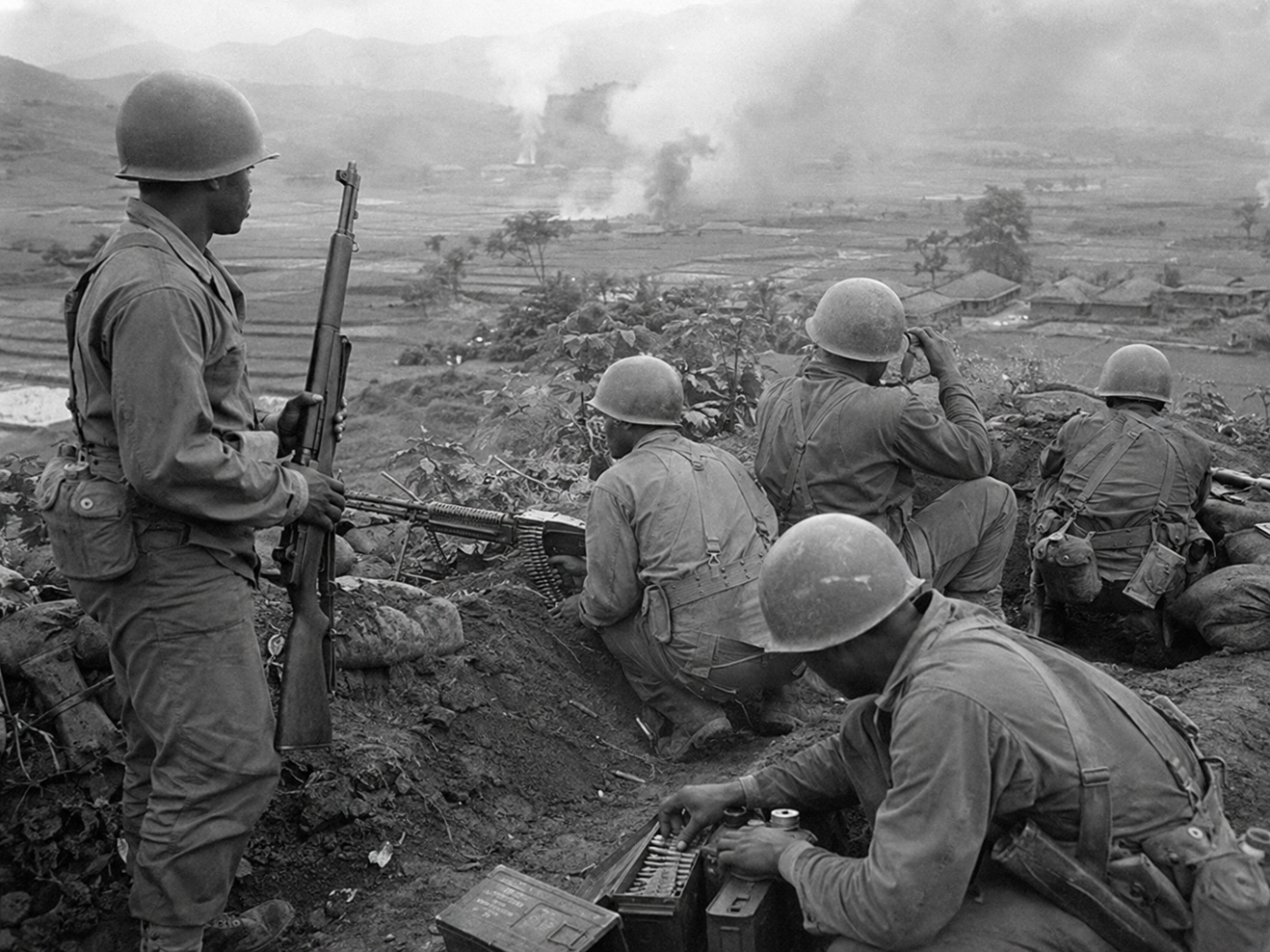
The 24th Infantry held an extended line across the ridges west of Haman. It was one of the last racially segregated regiments in the United States Army, with predominantly African-American soldiers serving under mainly white officers. Many of its men had received inadequate training, and replacements sometimes arrived without having mastered their weapons. Heavy casualties among experienced officers, poor communications and racial prejudice within the Army further weakened the regiment, although many of its soldiers continued to fight with considerable courage under extremely difficult conditions. Later official studies concluded that early accounts had placed too much blame upon the men while overlooking serious failures in leadership, preparation and organisation.
During the opening assault, North Korean troops broke through the centre of the American position and reached Haman. Fighting erupted around the town as buildings burned and confused groups of defenders attempted to reorganise. Some units withdrew, while others remained isolated and fought until their ammunition was nearly exhausted. American artillery fired upon the approaches, but the attackers continued pushing forward through the broken defensive line.
Reinforcements were hurried into the area and tanks carrying infantry advanced back into Haman. Although the North Koreans had occupied the surrounding ridges and swept the approaches with machine-gun fire, the Americans recovered the town and gradually forced the attackers back towards their former positions. One tank was destroyed and the advancing infantry suffered heavily, but by the evening the defenders had secured ground west of Haman and prevented the North Koreans from exploiting their breakthrough.
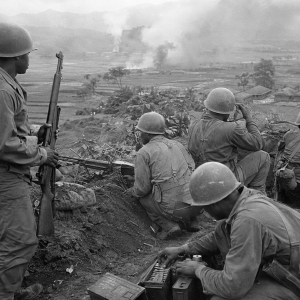
The fighting continued for more than two weeks. North Korean soldiers repeatedly attacked the ridges around Haman, Battle Mountain and the nearby Nam River, while American artillery and aircraft struck their exposed positions and supply routes. The attackers were increasingly short of food, ammunition and replacements, yet they continued probing the defensive line until 18 September. The exhausted defenders understood that losing Haman could open the road towards Masan and possibly Pusan itself.
The situation changed dramatically following the United Nations amphibious landing at Inchon on 15 September. The landing placed powerful forces behind the North Korean armies and threatened to cut their communications and supply routes. At the same time, the United States Eighth Army began breaking out of the Pusan Perimeter. Faced with encirclement, shattered supply lines and mounting casualties, North Korean formations across the southern front began withdrawing.
During the night of 18–19 September, the North Korean 6th and 7th Divisions abandoned many of their positions around Haman, Battle Mountain and the Nam River. On 19 September, American patrols discovered that the ridges which had cost so many lives were largely deserted. Units of the 25th Infantry Division moved forward and began pursuing the retreating enemy towards Chinju. The Battle of Haman was over, ending in a hard-won United Nations victory.
The defence of Haman helped prevent the collapse of the southern end of the Pusan Perimeter and preserved the base from which the United Nations launched its counter-offensive. It did not end the Korean War, which continued until the armistice of 27 July 1953, but it marked an important turning point. After weeks of retreat and desperate defence, the United Nations forces were finally advancing, while the North Korean army that had swept across most of South Korea was beginning a rapid and costly withdrawal north.