On this day in military history…
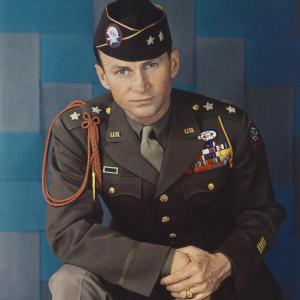
On 21 September 1944, the men of Major General Stanisław Sosabowski’s 1st Polish Independent Parachute Brigade finally descended over the Dutch village of Driel during Operation Market Garden. They had been sent to reinforce the British 1st Airborne Division fighting desperately around Arnhem, but delays caused by bad weather, aircraft shortages and confused orders meant that they arrived when the battle was already close to being lost. Market Garden had begun four days earlier with the ambitious aim of capturing a chain of bridges through the Netherlands, allowing British armoured forces to cross the Rhine and advance towards Germany’s industrial heartland. The British airborne troops were expected to hold Arnhem for approximately two days until XXX Corps arrived, but the ground advance became badly delayed and German resistance proved far stronger than Allied planners had anticipated.
Sosabowski had questioned the plan before the operation began. The landing zones were several miles from Arnhem Bridge, the airborne troops lacked sufficient heavy weapons and intelligence reports warning of German armoured formations in the area had largely been dismissed. Nevertheless, his brigade was ordered to take part. The Polish force was divided because there were not enough aircraft to carry the entire brigade in a single lift. Some Polish glider troops and anti-tank guns entered the battle earlier, but the main parachute force was due to land on 19 September. Poor weather over England caused two successive postponements, leaving the men waiting beside their aircraft while the British position at Arnhem steadily deteriorated.
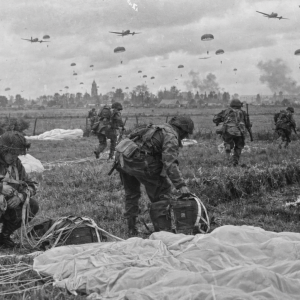
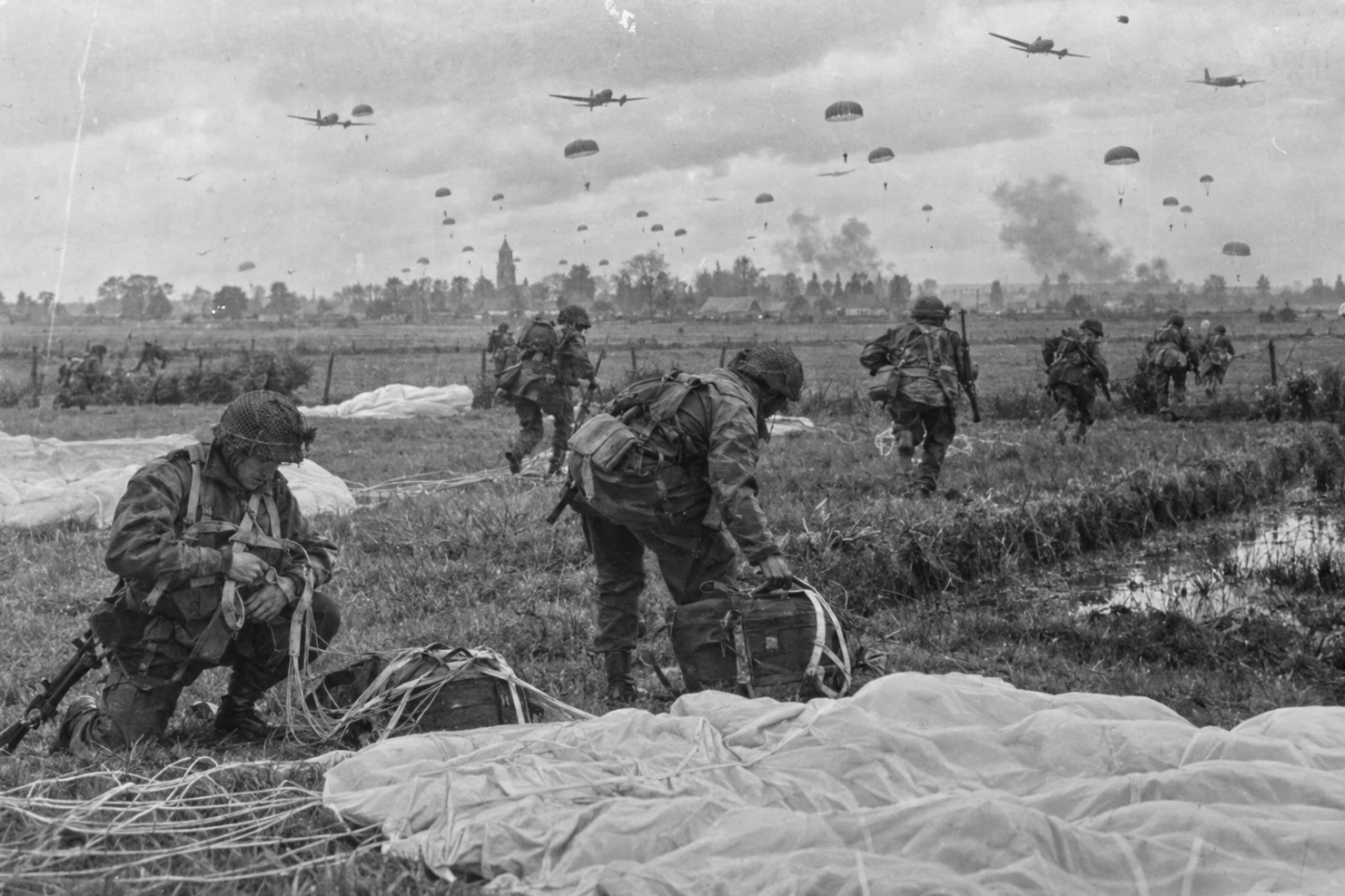
When the Poles finally took off on 21 September, worsening weather forced 41 aircraft to turn back. The remaining aircraft continued towards Driel carrying approximately 1,000 paratroopers. By the time they arrived over the drop zone late that afternoon, Lieutenant Colonel John Frost’s isolated force at Arnhem Bridge had already been overwhelmed and the survivors of the 1st Airborne Division had been forced into a shrinking defensive perimeter around Oosterbeek. The Polish Dakotas approached Driel under German anti-aircraft and ground fire. Paratroopers jumped into fields east of the village as mortar bombs and machine-gun fire struck around the landing zone. The men hurried to release themselves from their parachutes, recover their weapons containers and organise a defence before establishing positions around Driel.
Sosabowski’s immediate intention was to cross the Lower Rhine and reinforce the exhausted British troops at Oosterbeek. The plan depended upon using the Heveadorp ferry, but when the Poles reached the river they discovered that it was missing and the northern bank was under German control. The brigade had arrived without sufficient assault boats, while the wide, fast-flowing river made improvised crossings extremely dangerous. During the following nights, repeated attempts were made to ferry Polish soldiers across in small rubber boats and canvas assault craft. Only limited numbers reached the northern bank, where they joined the British defenders. Several boats were damaged or swept downstream, and German fire repeatedly struck the exposed crossing points. The bulk of the brigade remained south of the river, defending Driel against increasingly determined German attacks.
Although unable to cross in sufficient strength to change the outcome, the Polish presence was far from wasted. German commanders feared that the brigade might establish a major bridgehead and were forced to divert troops to contain it. The Poles held their ground and later helped protect the withdrawal routes when the decision was made to evacuate the surviving British airborne troops. During the night of 25–26 September, approximately 2,400 exhausted survivors of the 1st Airborne Division were ferried across the Rhine during Operation Berlin. Polish soldiers helped cover their escape while engineers worked through darkness, rain and enemy fire. Those who had crossed to the northern bank were among the last to withdraw, and some were left behind when the evacuation ended.
The Polish brigade had been committed too late, scattered between different landing areas and deprived of the aircraft, heavy weapons and boats needed to carry out its mission. Sosabowski was later unfairly blamed for failures caused largely by flawed planning, poor communications and delays beyond his control. The landing at Driel remains one of the most poignant moments of Operation Market Garden. The Polish paratroopers had crossed Europe hoping eventually to fight for the liberation of their own country, but instead landed beneath German fire in the Netherlands to save an Allied division whose position had already become desperate. Their arrival could not rescue Arnhem, but their courage, sacrifice and determination helped save many British survivors and earned them an honoured place in the history of the battle.