On this day in military history…
By 25 September 1944, the Battle of Arnhem had reached its final and most desperate stage. For nine days the British 1st Airborne Division and its Polish comrades had fought against overwhelming German forces in and around Arnhem and Oosterbeek. Their original mission had been to seize the road bridge over the Lower Rhine and hold it until the tanks of XXX Corps arrived. Instead, the bridge force had been destroyed, the relief column delayed and the division’s survivors trapped inside a steadily shrinking defensive perimeter at Oosterbeek. The airborne soldiers were exhausted, short of ammunition and desperately lacking food, water and medical supplies. German tanks, self-propelled guns, mortars and infantry were breaking deeper into their positions, houses had been reduced to ruins and hundreds of wounded men crowded cellars and makeshift dressing stations.
South of the river, senior British commanders finally accepted that Arnhem could not be relieved. Lieutenant-General Brian Horrocks, commanding XXX Corps, visited the area around Driel and saw the difficulties for himself. Earlier attempts to reinforce the airborne perimeter had achieved very little. Polish paratroopers had crossed the Rhine in small numbers, but there were never enough boats, while a crossing by the 4th Battalion, Dorsetshire Regiment during the night of 24–25 September ended disastrously. Many of the Dorsets landed in areas already controlled by the Germans and were killed or captured. The decision to withdraw involved Horrocks, Lieutenant-General Miles Dempsey of the British Second Army, Lieutenant-General Frederick Browning and Major-General Ivor Thomas of the 43rd Wessex Division. Field Marshal Bernard Montgomery authorised the abandonment of the Arnhem bridgehead once it became clear that no realistic rescue could reach Major-General Roy Urquhart’s division.
The evacuation plan was prepared on both sides of the river. Major-General Ivor Thomas and the staff of the 43rd Wessex Division organised the boats, engineers, artillery support and reception arrangements on the southern bank, while Urquhart planned the withdrawal from inside the Oosterbeek perimeter. He adapted a method used during the successful evacuation from Gallipoli in the First World War. The troops farthest from the Rhine would quietly withdraw first, passing through units still holding the southern part of the perimeter. Each remaining position would then be abandoned in turn until the final rearguards pulled back. The operation was given the code name Berlin and depended upon complete secrecy. If the Germans discovered what was happening, they could capture the riverbank and concentrate machine-gun, mortar and artillery fire upon the crossing places. Details were therefore withheld from most of the men until the afternoon of 25 September.
Throughout the day the defenders continued behaving as though they intended to hold their positions. Wireless operators maintained normal radio traffic, artillery observers continued calling down fire and soldiers resisted German attacks wherever they threatened the perimeter. Glider Pilot Regiment personnel marked two narrow escape routes through the woods and ruined houses towards the northern bank of the Rhine. White tape was laid along the ground so men could follow the paths in darkness. The soldiers were ordered to move as lightly and silently as possible. Equipment that could not be carried was destroyed, artillery crews fired their remaining ammunition before disabling their guns and weapons were wrapped to prevent them rattling. Some men placed socks or strips of cloth over their boots to reduce the sound of their footsteps.
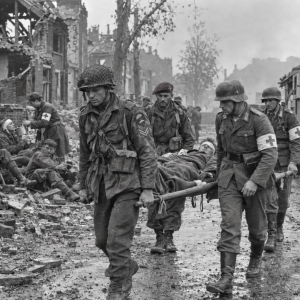
The most painful part of the plan concerned the wounded. Those capable of walking were given the opportunity to escape, but many of the seriously injured could not be carried through the woods and taken across the fast-flowing river in small boats. Doctors, medical orderlies and chaplains volunteered to remain with them, knowing that they would become prisoners when the Germans entered the perimeter. Some wounded soldiers reportedly surrendered their places so fitter men could escape and fight again. It was a bitter decision, but attempting to evacuate everyone would probably have exposed the entire operation and caused far greater losses.
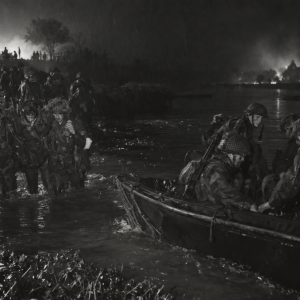
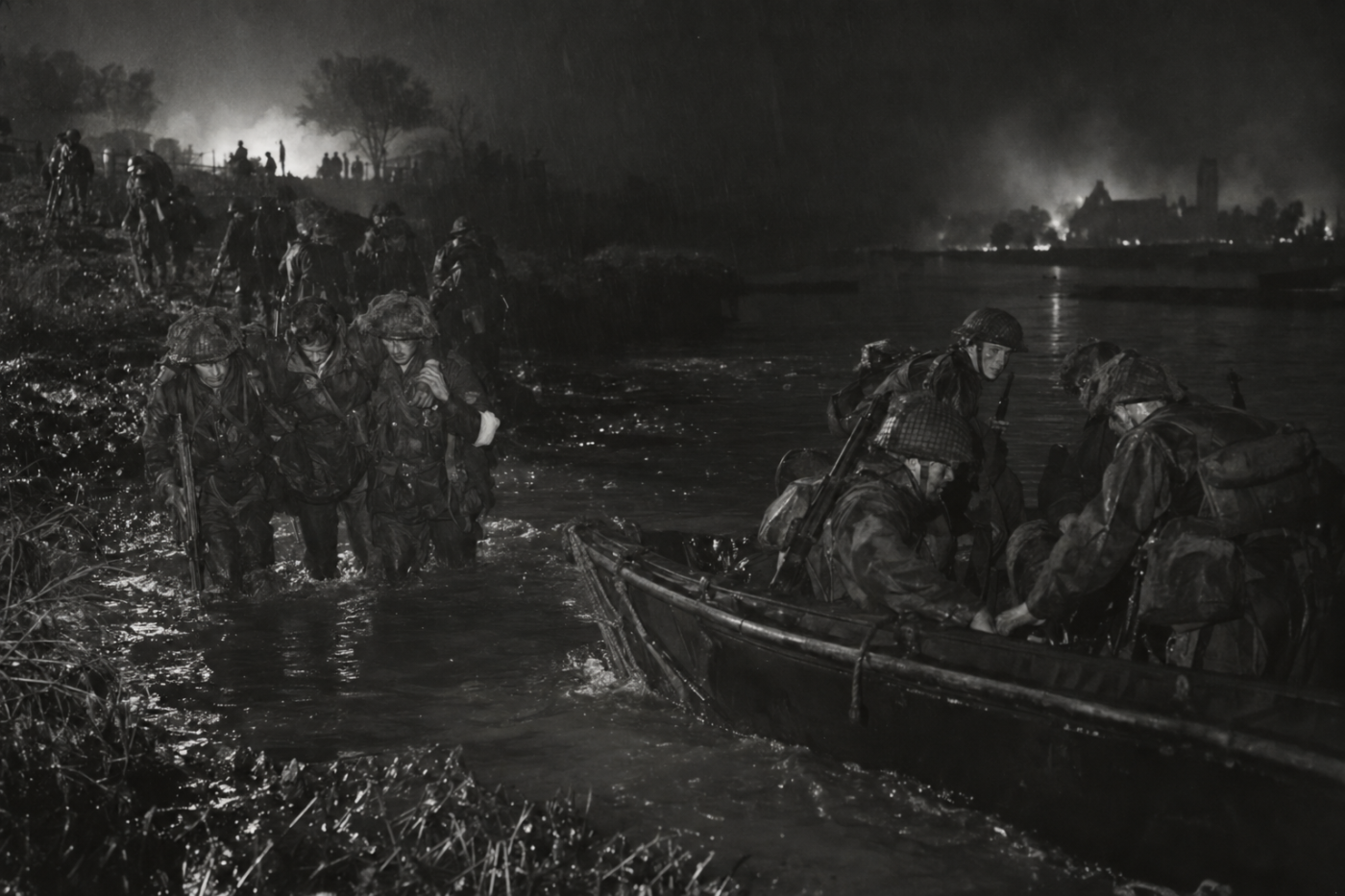
Operation Berlin began during the evening of Monday, 25 September 1944. At approximately 9 p.m., heavy rain started falling across the battlefield. The weather made movement difficult, but it also helped conceal the noise of the evacuation. British artillery south of the Rhine opened a powerful bombardment against German positions around Oosterbeek, creating the impression that another attempt was being made to reinforce the airborne division. The northernmost troops then began leaving their foxholes, ruined houses and woodland positions. Small rearguards remained behind, firing occasional bursts and maintaining the illusion that the perimeter was still occupied. Once the withdrawing columns had passed, these final defenders followed them towards the river.
There was little light and almost no conversation as the men stumbled through mud, broken trees and wreckage, following the white tapes towards the water. German troops were sometimes only a short distance away. Some soldiers became lost and others walked into enemy positions, but the Germans failed to recognise the full scale of the withdrawal until it was too late. At the riverbank, British and Canadian engineers waited with assault boats and storm boats. The crossing was undertaken by the 23rd and 20th Field Companies of the Royal Canadian Engineers, supported by the 260th and 553rd Field Companies of the Royal Engineers.
The Lower Rhine was wide, cold and swollen by rain. Its current was powerful, visibility was extremely poor and the northern bank remained under German mortar, machine-gun and artillery fire. The engineers repeatedly crossed the river in their small craft, collecting groups of airborne soldiers and carrying them to safety near Driel. Boats were damaged, lost or swept downstream, yet their crews continued making journey after journey. The Canadian engineers of the 23rd Field Company completed approximately 150 crossings and carried the majority of the survivors. Seven members of the company were killed and fourteen wounded while operating the boats.
Major-General Urquhart remained on the northern bank until most of his men had crossed. He eventually entered one of the boats and reached the southern side, where the exhausted survivors were assembled before being moved away in vehicles. Many arrived without helmets, equipment or weapons. Some had crossed partly by swimming or clinging to damaged boats, while others collapsed as soon as they reached safety. The evacuation continued until around 5 a.m. on 26 September, when approaching daylight made further crossings too dangerous. Those who had not reached the boats were forced to hide or attempt their own escape. Several hundred soldiers remained concealed north of the Rhine with the help of courageous Dutch civilians and resistance workers, and some were later rescued during Operation Pegasus in October 1944.
Approximately 2,400 men escaped during Operation Berlin, including about 2,163 soldiers of the British 1st Airborne Division, 160 Polish troops and 75 men of the 4th Dorsetshire Regiment. They represented only a fraction of the force committed to Arnhem. Of the 10,095 men of the 1st Airborne Division who had landed by parachute and glider, most had been killed, wounded or captured. German troops entered the abandoned positions during the morning of 26 September and found ruined houses, wrecked equipment, disabled guns and dressing stations filled with wounded men and the medical personnel who had remained beside them.
Operation Berlin was not planned by one man alone. The decision came through the senior British command, with Montgomery authorising the withdrawal, Dempsey and Horrocks accepting that relief was impossible, Ivor Thomas and the 43rd Wessex Division organising the operation south of the river, and Roy Urquhart directing the secret withdrawal from Oosterbeek. Its success ultimately depended upon the discipline of the airborne soldiers and the extraordinary bravery of the British and Canadian engineers who repeatedly crossed the Rhine under fire. Although Arnhem had been lost, Operation Berlin prevented the complete destruction of the remaining fighting strength of the 1st Airborne Division. After nine days of almost continuous battle, thousands of exhausted men silently disappeared from beneath the Germans’ noses and crossed the river to safety.