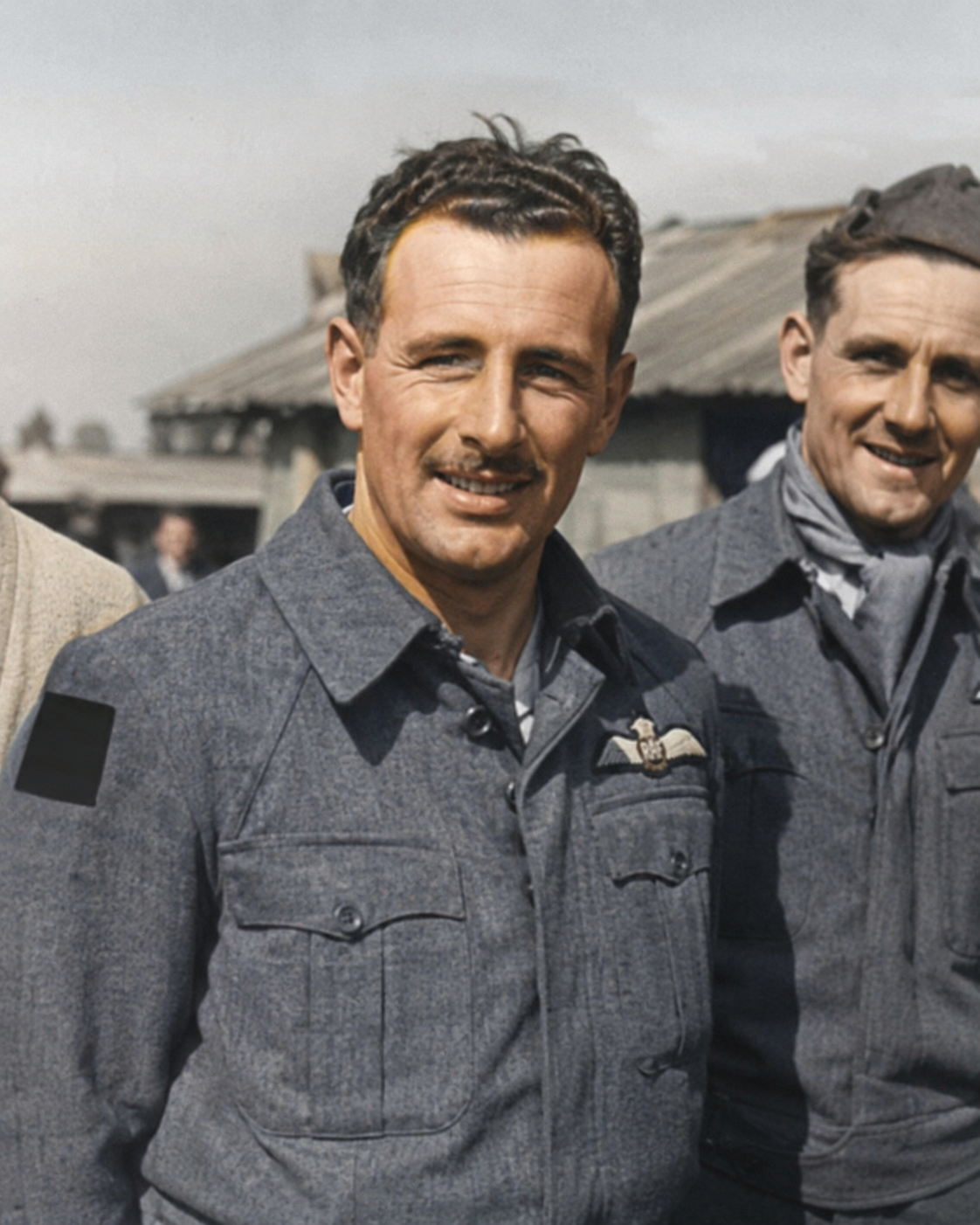
Pilot Shot Down in Korea
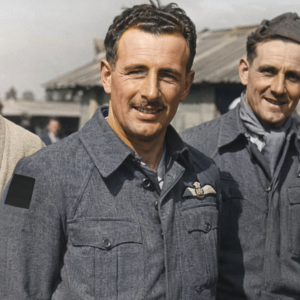
During the Korean War, Royal Air Force pilots served alongside Commonwealth and United Nations air forces in a conflict that rapidly became one of the most demanding air campaigns of the early jet age. Among them was Flying Officer M. O. Bergh, a South African-born pilot serving with the RAF whose experience over North Korea in August 1952 became an extraordinary story of survival, evasion and captivity.
Bergh was one of a number of RAF pilots attached to No. 77 Squadron Royal Australian Air Force, which was operating from Kimpo in Korea. The arrangement allowed experienced RAF aircrew to reinforce the Australian squadron at a time when the demanding operational tempo was placing considerable strain on its pilots. In total, more than thirty RAF pilots served with No. 77 Squadron during the Korean War, and Bergh would become the only RAF officer among them to be taken prisoner.
By 1952 No. 77 Squadron was flying the Gloster Meteor F.8, one of Britain's first operational jet fighters. The Meteor had originally been designed primarily as a fighter, but the appearance of the faster Soviet-built MiG-15 over Korea increasingly exposed its limitations in high-altitude air combat. As a result, the squadron became heavily involved in ground-attack operations, carrying rockets and cannon ammunition against Communist troop concentrations, transport routes, buildings and other targets across North Korea.
On 27 August 1952 Bergh took off on what would become the most dramatic mission of his career. He was flying Gloster Meteor F.8 A77-316, an aircraft normally associated with Australian pilot Sergeant James Kichenside and carrying the nickname connected with Kichenside, the young pilot known as the “Korean Kid”. A last-minute change resulted in Bergh flying A77-316 that day while Kichenside flew another Meteor.
The mission was a rocket strike against a target near Yongma-dong in North Korea. Attacking at low level brought the Meteors directly within range of Communist anti-aircraft weapons, and as Bergh swept towards the target the defenders opened a fierce barrage from the ground. His aircraft was struck in the starboard engine and further fire smashed into the cockpit area. Bergh managed to pull the Meteor out of its diving attack, but moments later the damaged starboard engine exploded.
With the aircraft becoming uncontrollable and already close to the ground, Bergh had only seconds in which to escape. Suffering slight burns, he abandoned the Meteor as it rolled dangerously towards an inverted position. His parachute opened only seconds before he struck the ground. Behind him A77-316 was destroyed, ending the operational career of one of No. 77 Squadron's best-known Meteors.
Landing alive in enemy-held North Korea was only the beginning of Bergh's ordeal. He immediately faced the problem that confronted every airman shot down behind Communist lines: escape before enemy troops could reach the crash site and somehow make his way towards friendly territory.
For the next eight days Bergh remained at large. He had no proper supply of food or water and was operating in hostile territory where military patrols and local security forces were searching for downed United Nations airmen. Moving cautiously and attempting to avoid populated areas, he managed to remain free for more than a week. Considering the density of enemy forces in the region and his physical condition following the destruction of his aircraft, his survival alone was remarkable.
Eventually, after eight days without food or water, his luck ran out. Bergh was discovered and captured, becoming a prisoner of war of the Communist forces.
His treatment following capture was severe. Bergh refused to cooperate fully with his interrogators and his captors consequently regarded him as an especially difficult prisoner. For approximately five months he was held in solitary confinement. He later described his place of confinement as little more than a hole in the ground, so restricted that he could neither stand upright nor lie down properly. It was an extraordinary test of physical endurance and mental resilience after the eight days he had already spent attempting to evade capture.
Bergh remained a prisoner for the rest of the Korean War and was eventually released following the armistice that ended major fighting in July 1953. Unlike many servicemen whose operational careers were effectively ended by serious wounds or imprisonment, his RAF career continued after his return.
He subsequently rose through the service and was promoted through Flight Lieutenant to Squadron Leader. By 1960 Squadron Leader M. O. Bergh had become commanding officer of No. 93 Squadron RAF, and later records show him serving in senior appointments and being awarded the Air Force Cross. By the mid-1960s he had risen to Wing Commander and commanded No. 38 Squadron RAF, demonstrating how completely he had rebuilt his flying career after his ordeal in Korea.
The destruction of Meteor A77-316 on 27 August 1952 therefore represents far more than the loss of another aircraft during the Korean War. It began an extraordinary episode in the life of an RAF officer: shot down by enemy ground fire deep inside North Korea, escaping from an exploding jet only seconds before hitting the ground, surviving eight days without food or water while attempting to evade enemy troops, and then enduring months of harsh imprisonment after capture.
Flying Officer M. O. Bergh survived it all and returned to continue a successful Royal Air Force career. His story remains one of the lesser-known but remarkable individual accounts of RAF service during the Korean War and a striking example of the courage and endurance demanded of aircrew operating over enemy territory during the first major jet conflict of the Cold War.