Ww11 Rocket Fuel Production
Germany’s V-2 ballistic missile is usually remembered for its size, speed and destructive power, but every launch depended upon an enormous and complicated fuel-production system. The rocket did not use petrol or aviation fuel. Its main propellants were liquid oxygen and a mixture of ethyl alcohol and water, supported by hydrogen peroxide and chemical catalysts that powered the engine’s fuel pumps. Producing, transporting and handling these volatile substances became almost as demanding as building the missile itself.
The V-2’s main fuel was known by the German code name B-Stoff. It consisted of approximately 75 per cent ethyl alcohol and 25 per cent water. The alcohol was produced through the fermentation of agricultural materials rich in starch or sugar, particularly potatoes and grain. These were processed into a fermentable mash, treated with yeast and then distilled to produce concentrated ethanol. Water was deliberately added to the finished alcohol because pure ethanol would have produced combustion temperatures capable of damaging the rocket’s engine. The water moderated the temperature while still allowing the engine to generate immense thrust.
Each V-2 required roughly 3,800 kilograms of the alcohol-and-water mixture. This placed considerable pressure on Germany’s agricultural and industrial resources at a time when food, transport and manpower were already in desperately short supply. Alcohol intended for rockets competed indirectly with civilian food production, livestock feed and other military demands. Large distilleries and chemical works supplied the ethanol, which was transported in drums or railway tank wagons to storage depots and mobile launching units.
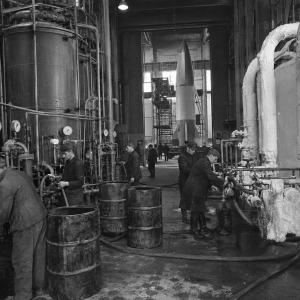
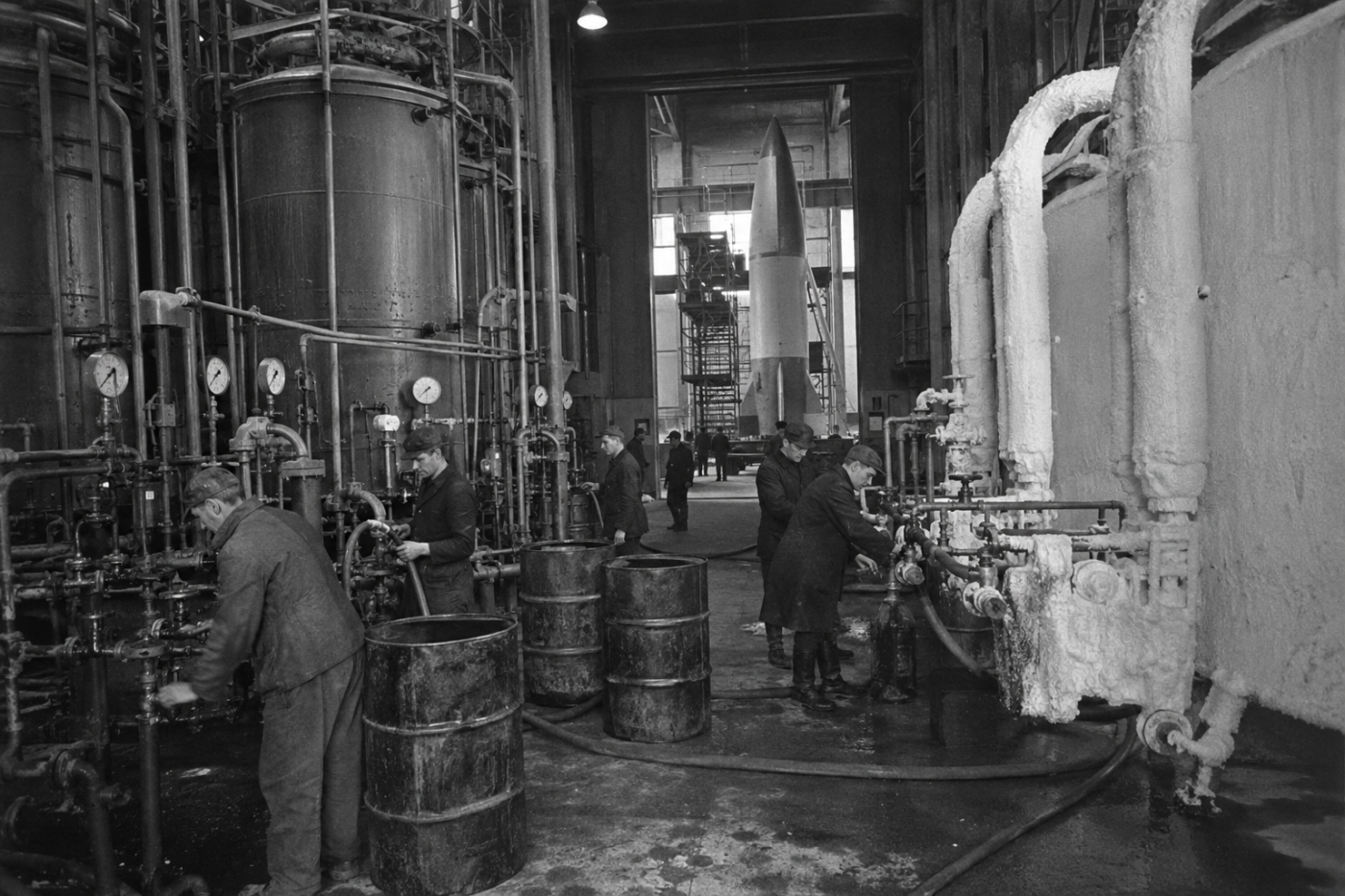
The second main propellant, designated A-Stoff, was liquid oxygen. It acted as the oxidiser that allowed the alcohol to burn inside the engine even at high altitude, where atmospheric oxygen was insufficient. Liquid oxygen was produced by compressing and cooling air until it became liquid and then separating its oxygen from nitrogen and other gases. The resulting oxygen had to be maintained at about minus 183 degrees Celsius in specially insulated tanks.
Approximately 4,900 kilograms of liquid oxygen were required for one launch. It continually evaporated, even when stored in insulated containers, so it could not be stockpiled for long periods. Production plants therefore had to be located within practical travelling distance of V-2 depots and operational areas. Tanker vehicles carried it to the launch site, where the rocket was filled shortly before firing. Frost forming around pipes and connections made leaks visible, but the intensely cold liquid could cause severe burns and made surrounding materials dangerously brittle.
A separate chemical system powered the V-2’s turbopumps. These pumps had to force tonnes of alcohol and liquid oxygen into the combustion chamber within little more than a minute. Concentrated hydrogen peroxide, called T-Stoff, was mixed with a catalyst solution known as Z-Stoff, generally containing sodium or potassium permanganate. Their violent reaction produced high-temperature steam and oxygen, which drove a turbine connected to the propellant pumps. The hydrogen peroxide was therefore not the rocket’s principal fuel, but without it the main engine could not operate.
When ignited, alcohol and liquid oxygen entered the combustion chamber through thousands of small injection openings. The engine produced around 25 tonnes of thrust at take-off and consumed its propellants in approximately 65 seconds. During that brief period the missile burned several tonnes of carefully manufactured chemicals before continuing along its ballistic trajectory at several times the speed of sound.
Propellant manufacture formed part of a vast and increasingly dispersed weapons programme. Allied bombing forced German production into concealed, hardened and underground locations. The V-2 itself was assembled at the notorious Mittelwerk complex near Nordhausen, where prisoners from the Mittelbau-Dora concentration camp were subjected to brutal forced labour. Thousands died through starvation, disease, exhaustion, beatings and executions. Although propellants were produced at several industrial facilities rather than inside one single V-2 fuel factory, their delivery was coordinated with this wider system of manufacture, transport and deployment.
The V-2 represented an extraordinary engineering achievement built upon enormous waste and human suffering. Every missile demanded tonnes of agricultural alcohol, cryogenic oxygen and specialist chemicals, yet carried a warhead of only about one tonne. More people died producing the weapon than were killed by its attacks. Behind each spectacular launch stood distilleries, oxygen plants, chemical works, tanker columns and forced labour—the largely forgotten industrial machinery that supplied the fuel for the world’s first long-range ballistic missile.