On this day in military history…
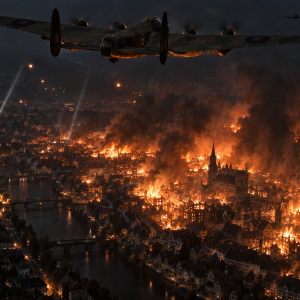
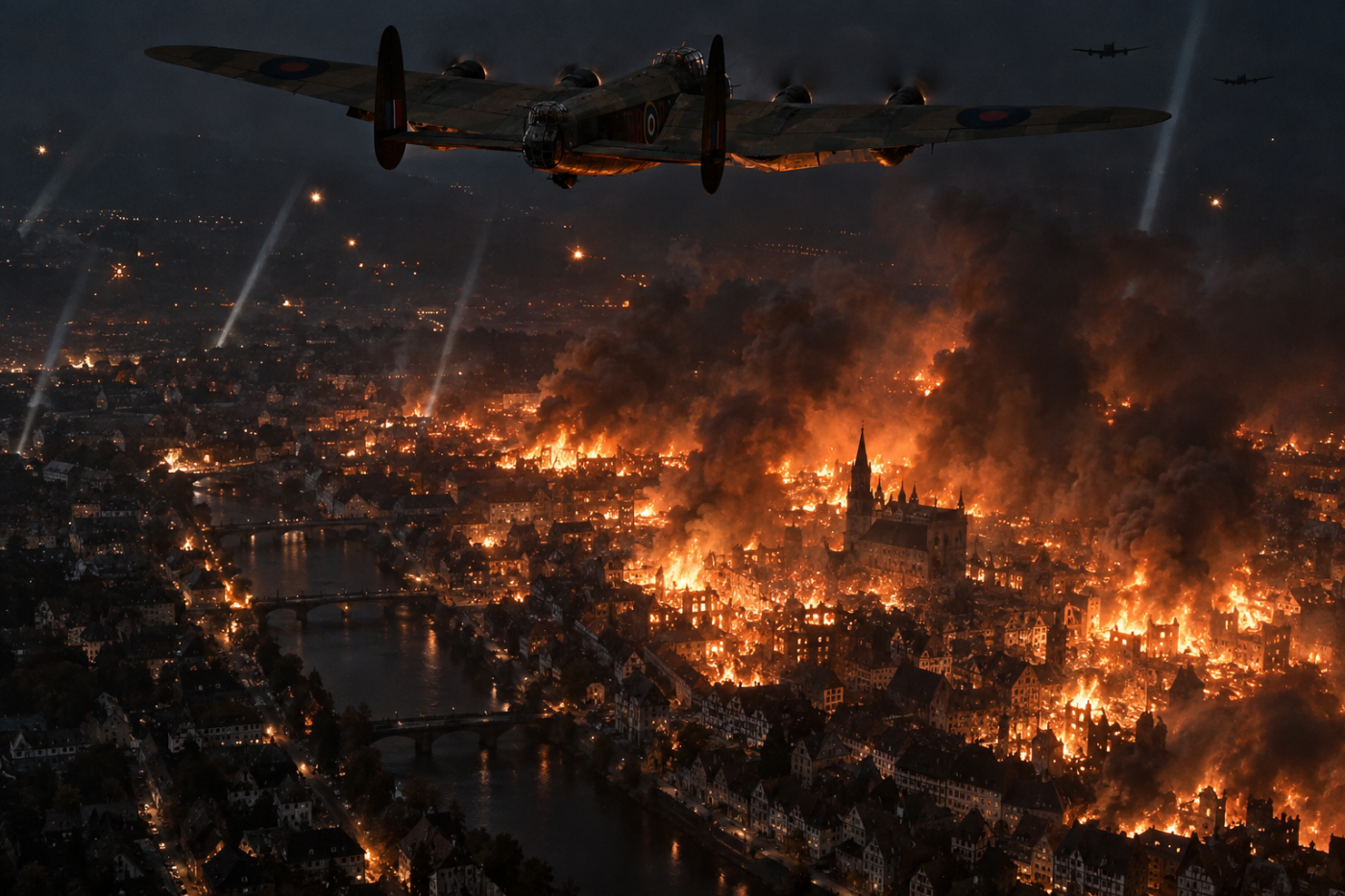
On the night of 22–23 October 1943, RAF Bomber Command launched a devastating attack on Kassel, an important German industrial city whose factories supplied Hitler’s armed forces with tanks, locomotives, aircraft and engines. Within little more than twenty minutes, concentrated bombing transformed much of its historic centre into an inferno. Thousands of people were killed, entire neighbourhoods disappeared and one of Germany’s finest medieval town centres was almost completely destroyed.
Kassel’s importance to the German war effort made it a significant target. Henschel & Sohn manufactured the formidable Tiger tank as well as railway locomotives and military vehicles, while Fieseler and other aviation firms produced aircraft and components. Railway connections supported the movement of troops, weapons and supplies. Yet the operation was an area bombing attack, directed against the urban centre rather than confined to individual factories. Under Air Chief Marshal Sir Arthur Harris, Bomber Command sought to disrupt German industry, transport and the workforce sustaining wartime production by striking heavily at industrial cities.
During the afternoon and evening of 22 October, 569 heavy bombers were dispatched from Britain: 322 Avro Lancasters and 247 Handley Page Halifaxes. Their crews faced a long journey through defended airspace, with German night fighters, searchlights and anti-aircraft batteries waiting along the route and around the target. For the young men aboard, reaching Kassel was only half the task; after releasing their bombs they still had to survive the return flight.
Pathfinder aircraft went ahead to identify and mark the aiming point. Initial marking using H2S ground-mapping radar overshot the target, but subsequent visual markers located the city centre accurately. This correction helped concentrate the main attack with devastating effect. Air-raid sirens sounded in Kassel at approximately 8.17 pm, and the principal bombardment followed between about 8.49 pm and 9.11 pm. In that short period, high-explosive bombs, large blast bombs and hundreds of thousands of incendiaries fell across the city.
The different weapons worked together to magnify the destruction. High explosives shattered buildings, opened roofs and damaged roads and services, while incendiaries started fires among exposed timbers and household contents. Kassel’s old town, with its closely packed half-timbered houses and narrow streets, was particularly vulnerable. Individual fires rapidly joined until whole districts were burning. As intensely heated air rose, powerful currents drew fresh air towards the flames, creating a firestorm that overwhelmed attempts to control it.
For those sheltering below ground, the danger continued after the bombers had gone. Cellars offered protection against fragments and blast, but burning buildings above them could turn those same shelters into traps. Heat, smoke and poisonous gases penetrated underground rooms, while collapsed masonry blocked exits. Openings between neighbouring cellars offered possible escape routes, yet finding a way out became increasingly difficult as the surrounding streets burned. Firefighters faced far more incidents than they could manage, with damaged communications and obstructed roads making their work still harder.
The raid also marked the first operational use of a British deception scheme called Operation Corona. German-speaking operators in Britain impersonated Luftwaffe ground controllers, broadcasting misleading instructions to night-fighter pilots in an attempt to divert them from the bomber stream. It added a battle of voices and false orders to the struggle overhead, although it could not prevent heavy losses. German controllers identified the target, and fighters attacked the bombers around Kassel and along their homeward route.
Forty-three aircraft failed to return: 25 Halifaxes and 18 Lancasters, approximately 7.6 per cent of the force dispatched. Behind that figure were crews killed in burning aircraft, men who parachuted into captivity and families left waiting for news. The operation demonstrated how even a highly concentrated attack could come at a severe cost to Bomber Command.
On the ground, the scale of the catastrophe emerged slowly. By the end of November, records listed 5,599 recovered dead, with thousands of people still unaccounted for. Estimates of the final death toll vary, reaching around 10,000. Many bodies could not be identified, and the destruction complicated efforts to establish who had survived, fled or died. More than 100,000 people were forced from their homes, while hospitals, schools, churches, public buildings and industrial premises were destroyed or badly damaged.
Almost the whole medieval old town was lost, and fires continued to burn among the ruins for days. Railway installations and factories also suffered serious damage, but the destruction did not permanently halt the city’s contribution to the German war effort. Production could be repaired, reorganised or dispersed, whereas the lives lost and the historic streets consumed by the firestorm could never be restored.
Kassel endured further attacks before American troops entered the city in April 1945, but the night of 22 October 1943 remained its defining wartime disaster. For the surviving inhabitants it was remembered as the Bombennacht, the night of bombing. For the aircrews who returned to Britain, it was another costly operation in a campaign that demanded repeated journeys into danger. The raid left a lasting record of both the destructive power of strategic bombing and the human suffering beneath it.