On this day in military history…
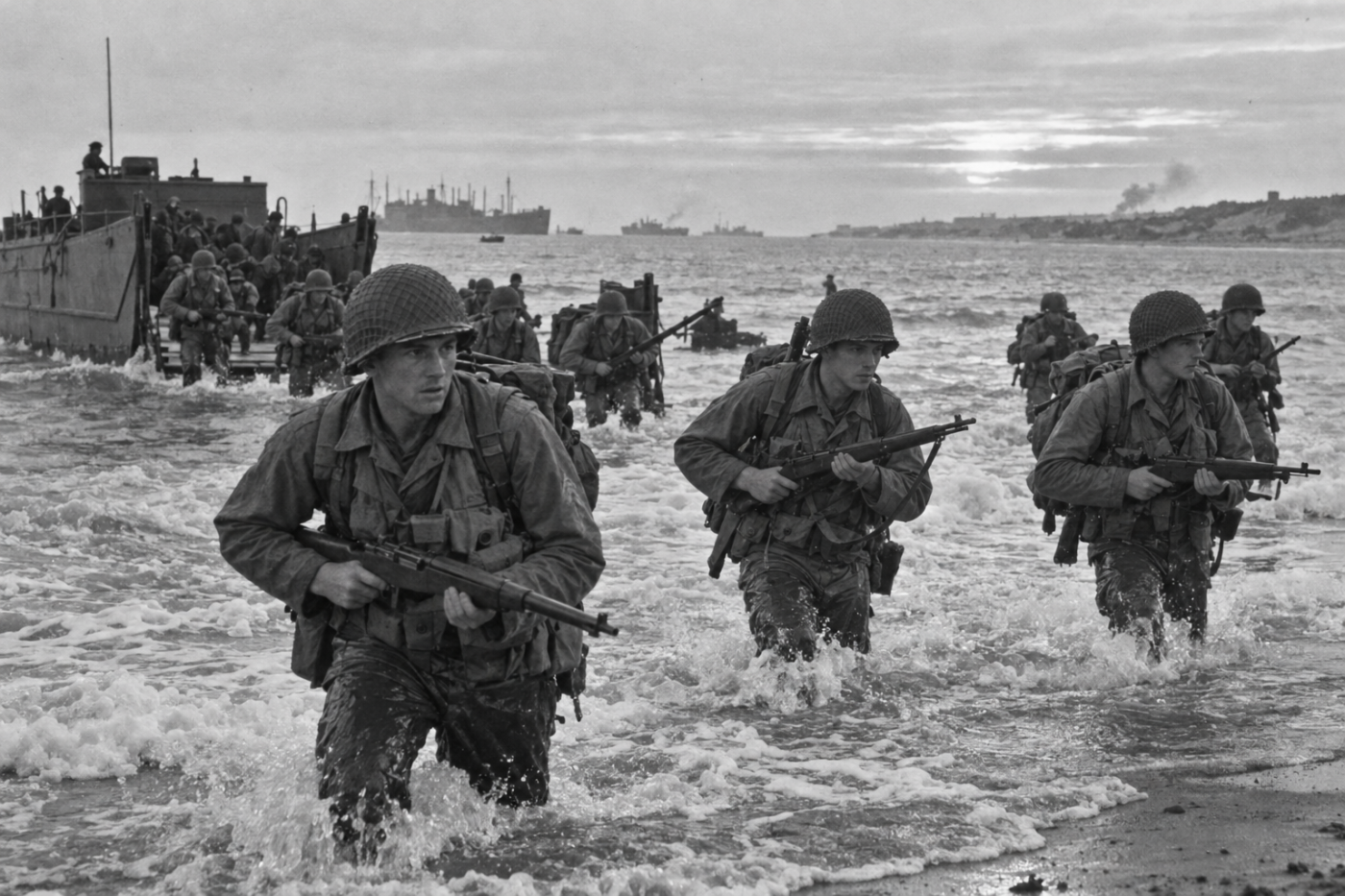
On 8 November 1942, British and American troops began landing on the shores of Morocco and Algeria in one of the most ambitious Allied operations of the Second World War. Codenamed Operation Torch, the invasion opened a new front in North Africa and brought American ground forces into major action against the Axis in the western theatre. Yet the soldiers coming ashore faced an unexpected enemy: French troops who had once been Britain’s allies.
The landings came at a crucial moment. Far to the east, General Bernard Montgomery’s Eighth Army had broken through at El Alamein and was driving German and Italian forces back towards Libya. Torch aimed to establish Allied armies behind them, creating the conditions for an advance on Tunisia from both directions. Victory would remove the Axis from North Africa and provide bases for further operations in the Mediterranean.
An invasion of northern France was still considered too dangerous by British planners. North Africa offered an opportunity to strike while giving American forces experience of large-scale combat. General Dwight D. Eisenhower received overall command of the expedition, making Torch an important early test of the Anglo-American partnership that would later direct the Normandy invasion.
The operation centred on three objectives: Casablanca in Morocco, and Oran and Algiers in Algeria. Major General George S. Patton commanded the American troops landing in Morocco, whose assault force crossed the Atlantic directly from the United States. Other American and British formations sailed from Britain for the Mediterranean landings. Thousands of men, vehicles and supplies had to reach widely separated beaches in a carefully coordinated assault.
The greatest uncertainty was whether the defenders would fight. Morocco and Algeria remained under the authority of Vichy France, the regime established after France’s defeat in 1940. Allied representatives had held secret discussions with French officers, hoping to avoid bloodshed. However, promises of cooperation did not guarantee that local commanders would surrender. Some regarded resistance as a matter of duty, while distrust of Britain further complicated the situation.
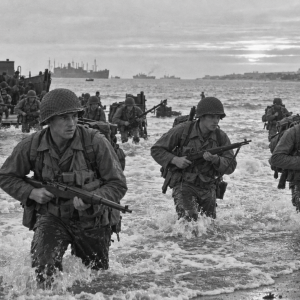
Before dawn on 8 November, landing craft began carrying troops towards the beaches. Darkness, unfamiliar coastlines and difficulties unloading equipment disrupted carefully prepared schedules. For many American soldiers, this was their first experience of enemy fire. Instead of an uncontested arrival, some encountered artillery, machine guns and determined French resistance.
Off Casablanca, the invasion produced a fierce naval battle. French warships challenged the American fleet, while the unfinished battleship Jean Bart, moored in the harbour, used its operational main armament against the attackers. American warships and carrier aircraft struck back. The fighting demonstrated how quickly hopes of a peaceful landing could collapse into a serious battle.
Around Oran, French coastal batteries and ground forces also resisted. An attempt to seize the harbour directly failed under heavy fire, showing the danger of sending troops into a defended port. At Algiers, an anti-Vichy uprising helped disrupt the defenders’ command arrangements, easing the main landings, although fighting still took place around the harbour.
By 11 November, organised French resistance to the landings had largely ended. An agreement involving Admiral François Darlan brought a ceasefire and allowed the Allies to turn their attention eastwards. It was a politically uncomfortable arrangement, but it helped prevent further fighting between forces that would soon be needed against Germany and Italy.
Securing the landing areas did not bring an immediate victory. German and Italian reinforcements arrived in Tunisia, frustrating Allied hopes of capturing Tunis quickly. The campaign continued through difficult winter weather and bitter fighting. For American troops, the battles ahead would expose weaknesses in leadership, training and coordination, while providing costly experience.
By May 1943, Allied pressure from east and west had crushed the remaining Axis position in Tunisia. Approximately a quarter of a million German and Italian troops surrendered. Operation Torch had helped transform the strategic situation in the Mediterranean, opening the way for the invasion of Sicily. Its beaches also provided hard lessons in cooperation, supply and amphibious warfare that the Allies would carry into the liberation of Europe.