On this day in military history…
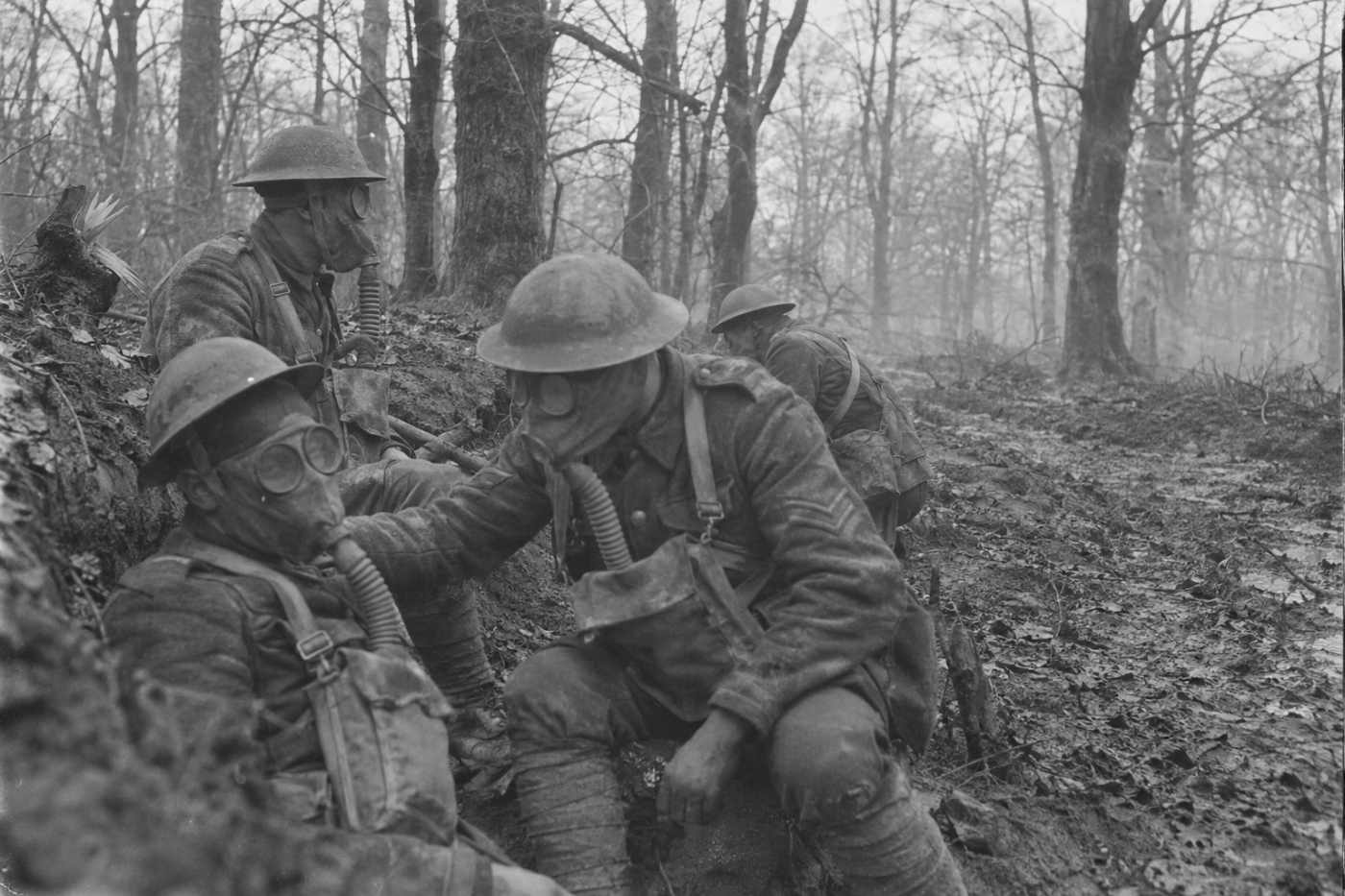
On the night of 28–29 November 1917, the London Irish Rifles moved into Bourlon Wood, west of Cambrai, to relieve dismounted cavalry. The guides were late, and the men had to find their way along unfamiliar approaches that German artillery was already shelling. By 9.45 pm the brigade had taken over the front line, which ran through the middle of the wood. Once the men were in position, the guns kept firing through the night, dropping gas shells into the wood and inflicting heavy casualties on the 141st Brigade.
Eight days earlier, British tanks and infantry had broken through sections of the Hindenburg Line in the opening attack at Cambrai. As the advance slowed, the fighting shifted to Bourlon Ridge. The high ground gave the British a clear view towards Cambrai and across the surrounding country. By the time the London Irish arrived, much of the wood was in British hands, but the men inherited shallow trenches and scattered rifle pits with little shelter from shellfire. So many troops had been ordered into the wood that the divisional commander feared the crowded position would suffer unnecessary losses. After taking command on 29 November, he began moving some units out.
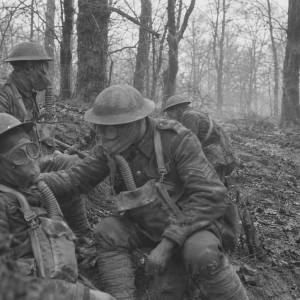
The gas lingered in the thick undergrowth and hollows. Men wore their respirators for long stretches while trying to deepen their positions. Some became casualties after lifting their masks briefly to catch their breath or drink from their water bottles. Gas and high-explosive shelling continued on 29 November. The bombardment brought trees down around the defenders.
The battalion aid post at a chalet in the wood filled with casualties. Some men struggled to see or were violently sick. Men who could still walk but had been blinded by the gas were led towards the dressing station at Flesquières in single file. Each held on to the tunic of the man ahead, following a stretcher-bearer or a lightly wounded soldier across open country. At Flesquières, every available vehicle was pressed into service to carry casualties farther back.
Three officers and about 50 other ranks of the London Irish Rifles died during six days of fighting in the Bourlon sector. That figure covers the fighting as a whole. The opening bombardment caused heavy gas casualties, though the regimental history gives no separate figure for that night.
On 30 November, the Germans launched a major counterattack. British artillery, machine guns and rifle fire checked the German infantry around the wood, but the wider fighting left the position exposed. On the night of 4–5 December, British troops withdrew to the Hindenburg Support Line. Losses were so heavy that the London Irish could contribute only one company to a temporary battalion formed from three depleted London units.