British Army Clasp Knife
British military equipment that generations of servicemen carried and used.
Today 11:09 AM
Take out reference sources
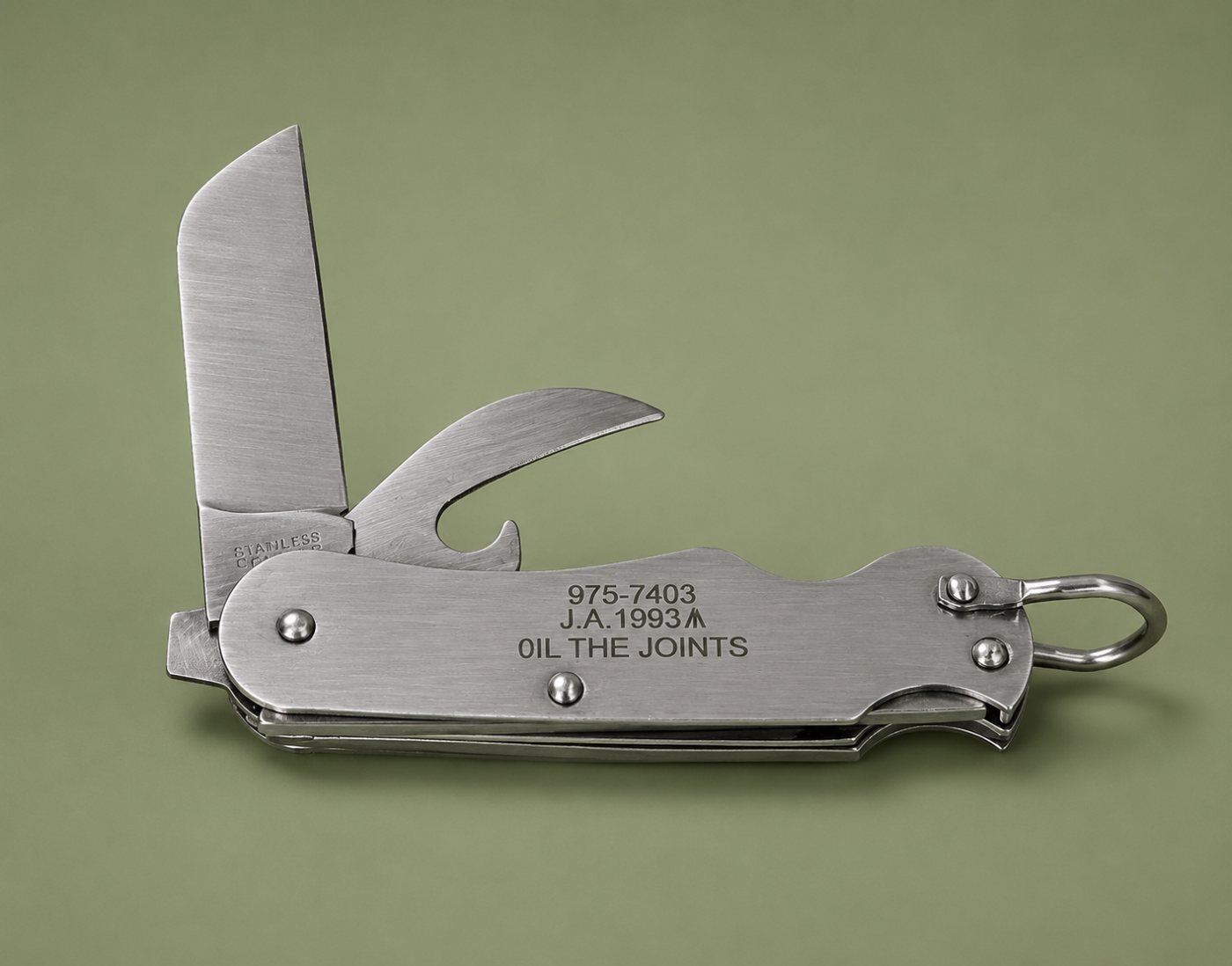
The British Army clasp knife was designed as a simple, extremely tough general-purpose tool capable of surviving years of military use. The example shown is dated 1993 and carries the stores number 975-7403, associated with the British service pattern of clasp knife. The familiar instruction “OIL THE JOINTS” was stamped directly onto the stainless-steel body, reminding the user that very little maintenance was required beyond keeping the moving parts lubricated.
This stainless-steel pattern developed from a long line of British military clasp knives that had been issued in various forms for decades. It was intended primarily as a working tool rather than a fighting knife, with a strong folding sheepsfoot-style blade suitable for cutting rope, webbing, food packaging and carrying out general field tasks. The shape of the blade also reduced the likelihood of accidental piercing during everyday use.
Alongside the main blade was a combined tin-opening and utility tool. Depending on the exact pattern, British military clasp knives could also incorporate a screwdriver and marlinspike for opening tight knots, separating strands of rope and carrying out basic rigging or splicing work. The large metal loop at the end allowed the knife to be attached to a cord or lanyard, helping prevent loss when working around vehicles, boats or equipment.
Several Sheffield cutlers manufactured military clasp knives over the years, with firms such as Joseph Rodgers becoming particularly associated with the type. Sheffield’s long-established cutlery industry made the city a natural centre for producing these rugged service tools. Examples from different manufacturers and periods show small variations in their markings, rivets and fittings while retaining essentially the same practical military design.
By the 1990s, when the illustrated example was produced, the clasp knife represented a remarkably traditional piece of equipment in an increasingly modern British Army. More elaborate multi-tools would eventually become common for many roles, but the old clasp knife earned an enduring reputation for strength, simplicity and reliability. Today, dated and military-marked examples remain popular with collectors as an instantly recognisable piece of British service equipment used by generations of soldiers.