On this day in military history…
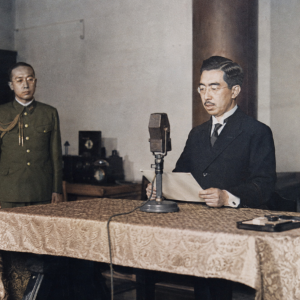
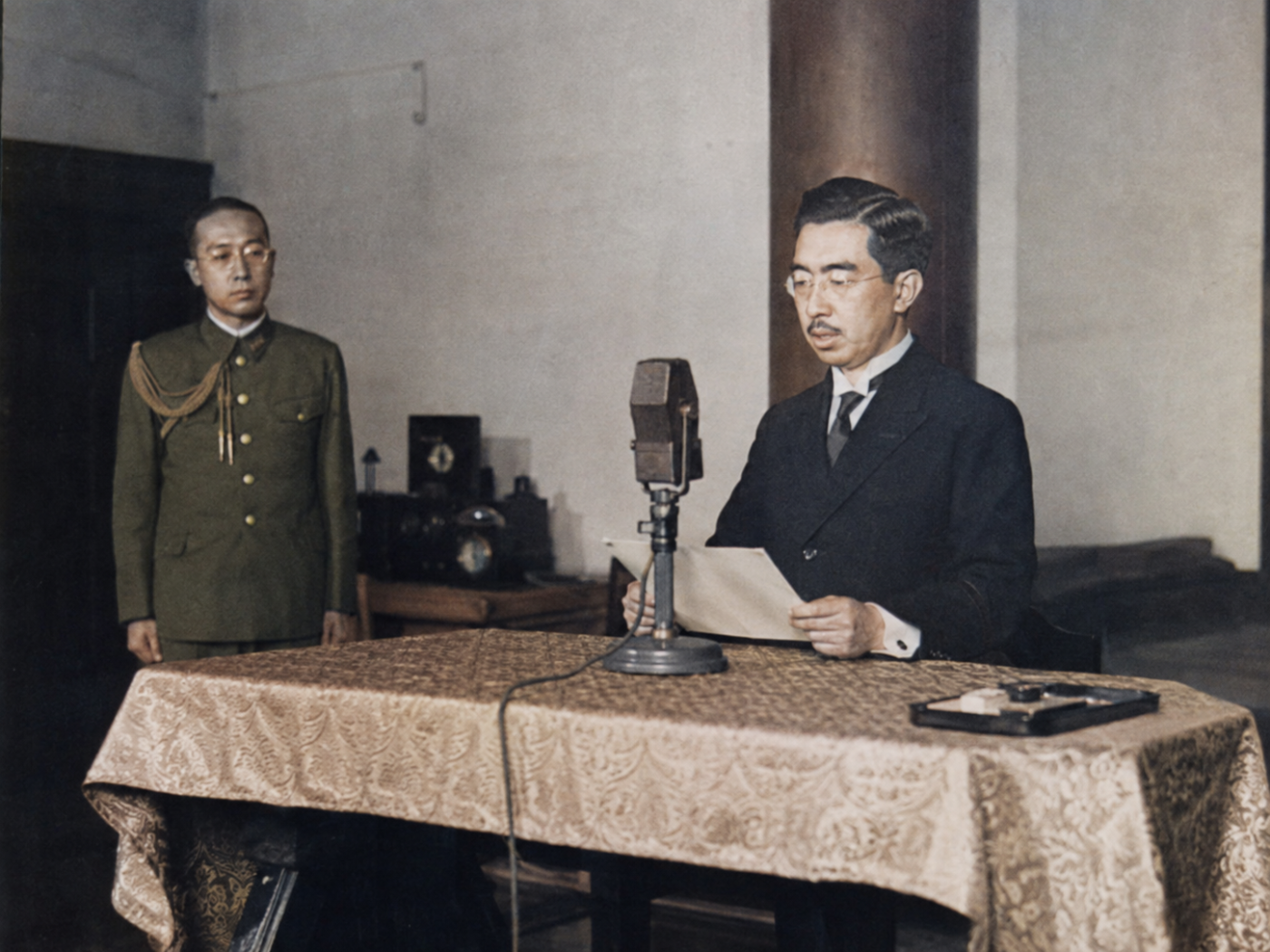
On 15 August 1945, millions of people across Japan gathered around radios to hear a voice that almost none of them had ever heard before. At noon, following the national anthem, the voice of Emperor Hirohito was broadcast across the country in a recorded message announcing that Japan would accept the Allied terms of the Potsdam Declaration and bring the Second World War to an end. The transmission became known as the “Jewel Voice Broadcast”, or Gyokuon-hōsō, a term derived from the traditional Japanese expression used to describe the voice of the Emperor. It was one of the most extraordinary broadcasts of the twentieth century, because for the Japanese population it represented far more than the end of a war. The Emperor was regarded as a distant and almost sacred figure, and his voice had never previously been heard by the overwhelming majority of his subjects.
By August 1945 Japan's military position had become desperate. The country had lost most of the territory conquered during the early years of the Pacific War, its navy had effectively ceased to exist as a major fighting force, American aircraft dominated Japanese airspace and cities had been devastated by months of bombing. Then came two events of enormous importance. On 6 August an American B-29 dropped an atomic bomb on Hiroshima, destroying much of the city. Three days later another atomic bomb devastated Nagasaki, while on 9 August the Soviet Union entered the war against Japan and launched a massive offensive against Japanese forces in Manchuria.
Despite the increasingly hopeless situation, Japan's leadership remained divided over surrender. Some military leaders still believed that a final bloody defence of the home islands might inflict such enormous casualties on an Allied invasion force that Japan could negotiate more favourable peace terms. Others recognised that continuing the war risked the complete destruction of the country. The Japanese government was effectively split, and the Supreme Council for the Direction of the War could not reach agreement over whether to accept the Potsdam Declaration. Eventually Emperor Hirohito intervened personally.
During an Imperial Conference held during the night of 9–10 August, the Emperor expressed his desire that Japan accept the Allied terms, provided the position of the Imperial institution could be preserved. The Allies replied that the Emperor would ultimately be subject to the authority of the Supreme Commander for the Allied Powers. Even then the argument inside Japan continued, and on the night of 14 August another Imperial Conference was held. Once again Hirohito spoke in favour of ending the war, believing that continued fighting would result in further devastation and perhaps the destruction of the Japanese nation itself.
Preparations were then made for an unprecedented announcement directly from the Emperor to his people. During the evening of 14 August Hirohito went to a room within the Imperial Palace in Tokyo where technicians from the Japanese broadcasting organisation NHK were waiting. Using recording equipment, he read the Imperial Rescript on the Termination of the War and two recordings were made onto phonograph discs. Those recordings immediately became some of the most important objects in Japan, because without them the Emperor's announcement could not be transmitted as planned.
Not everyone wanted them broadcast. During the night a group of young Japanese Army officers attempted to prevent the surrender in what became known as the Kyūjō Incident. Led principally by Major Kenji Hatanaka, the conspirators occupied parts of the Imperial Palace and attempted to locate and destroy the recordings of the Emperor's announcement. They hoped that by preventing the broadcast they could stop Japan's capitulation and continue the war. The situation inside the palace became confused and dangerous, with members of the Imperial Guard given misleading orders and communications disrupted. Lieutenant General Takeshi Mori, commander of the First Imperial Guards Division, was killed after refusing to support the coup.
The conspirators searched desperately for the recordings but failed to find them. The discs had been carefully hidden inside the palace among other material where soldiers searching the building overlooked them. As the night progressed it became increasingly obvious that the coup had failed to gain the support of senior Army commanders, and by the early morning of 15 August the rebellion collapsed. The recordings survived and the broadcast could proceed.
Shortly before noon the Japanese population was instructed to listen to an important announcement. People gathered around radios in homes, factories, military bases, railway stations and public areas. At exactly noon the Japanese national anthem, Kimigayo, was played, followed by the Emperor's voice. Even at this historic moment the announcement was far from straightforward. Hirohito spoke in a highly formal and archaic version of Japanese, using court language that many ordinary people found difficult to understand, while the quality of the recording and radio transmission also made portions of the speech difficult to hear.
Most remarkably, the Emperor never actually used the simple expression that Japan was surrendering. Instead he announced that the government had been instructed to accept the provisions of the joint declaration issued by the Allied powers. He explained that the war situation had developed unfavourably for Japan and made an indirect but unmistakable reference to the atomic bombings, describing the enemy's use of a new and exceptionally destructive weapon. Continuing the war, he warned, would not only result in the destruction of Japan but could threaten civilisation itself. One phrase from the broadcast became particularly famous when the Emperor called upon the Japanese people to endure what could not be endured and bear what could not be borne.
For many listeners it was only gradually that the meaning of the broadcast became clear. Japan had lost the war. Across the country the reaction varied enormously. Some people cried openly, others bowed towards the Imperial Palace, while soldiers struggled to comprehend that a conflict they had been told must continue until final victory was suddenly over. For those who had lost relatives, homes and possessions during years of war, the announcement brought a complicated mixture of grief, humiliation and relief. Some members of the armed forces initially refused to believe surrender was possible, while others accepted that an order from the Emperor could not be disobeyed.
The Jewel Voice Broadcast did not itself represent the formal legal surrender of Japan. Fighting effectively ceased following the Emperor's announcement, but the official Instrument of Surrender was signed on 2 September 1945 aboard the American battleship USS Missouri in Tokyo Bay. Representatives of Japan signed the document before General Douglas MacArthur and representatives of the Allied powers, formally bringing the Second World War to an end.
The broadcast nevertheless remains one of the defining moments of the conflict. For nearly four years Japan had fought a vast war across the Pacific and Asia, millions had died, cities had been destroyed and entire countries occupied. Yet the moment when the Japanese population finally learned that the war was ending came not through a battlefield announcement or newspaper headline, but through the unfamiliar voice of their Emperor crackling through radio speakers. The significance was even greater because of Hirohito's position within Japanese society. Until then the Emperor had deliberately remained distant from ordinary life, surrounded by centuries of Imperial tradition, and hearing him speak directly to the population shattered that distance.
The original recordings of the surrender broadcast became historical objects of immense importance. They had survived an attempted military coup and carried the words which effectively ended Japan's participation in the deadliest conflict in human history. At noon on 15 August 1945, the Japanese people heard the “Jewel Voice” for the first time. Many could barely understand the ancient language being spoken, but before the broadcast had finished its meaning was becoming unmistakable: after years of conquest, defeat, firebombing, atomic destruction and millions of deaths, Japan's war was finally over.