On this day in military history…
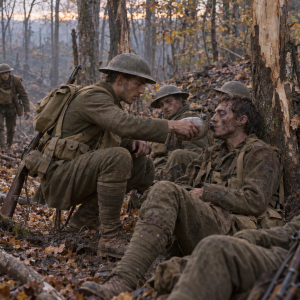
On 7 October 1918, exhausted American soldiers trapped inside France’s Argonne Forest finally saw friendly troops approaching through the trees. For five desperate days, they had endured German assaults, hunger, thirst and relentless shellfire, refusing to surrender as casualties mounted. Their ordeal became one of the most famous American stories of the First World War, remembered as the stand of the “Lost Battalion”. It unfolded during the Meuse–Argonne Offensive, launched on 26 September to break German defences and threaten the railway network sustaining their armies in northern France. The Americans faced steep ravines, thick woodland, concealed machine guns and tangled wire, where units could quickly lose contact with their neighbours and runners risked death or capture carrying orders.
On 2 October, troops of the US 77th Division advanced into the forest under Major Charles White Whittlesey, a New York lawyer before the war. His force included men from the 308th Infantry Regiment, alongside soldiers from the 307th Infantry and supporting machine-gunners. Despite its later name, the Lost Battalion comprised elements of several units rather than one complete battalion. They reached a position near the Charlevaux ravine, believing other American formations were advancing on either side. Those neighbouring attacks had been checked, leaving Whittlesey’s men exposed. By the following morning, German troops had moved behind them and cut their route back. More than 500 soldiers were isolated in a wooded pocket without a secure supply line. Whittlesey organised a defensive perimeter and held his ground, following orders to maintain captured positions. Withdrawal through the surrounding Germans would have been hazardous, particularly with wounded men unable to move without assistance.
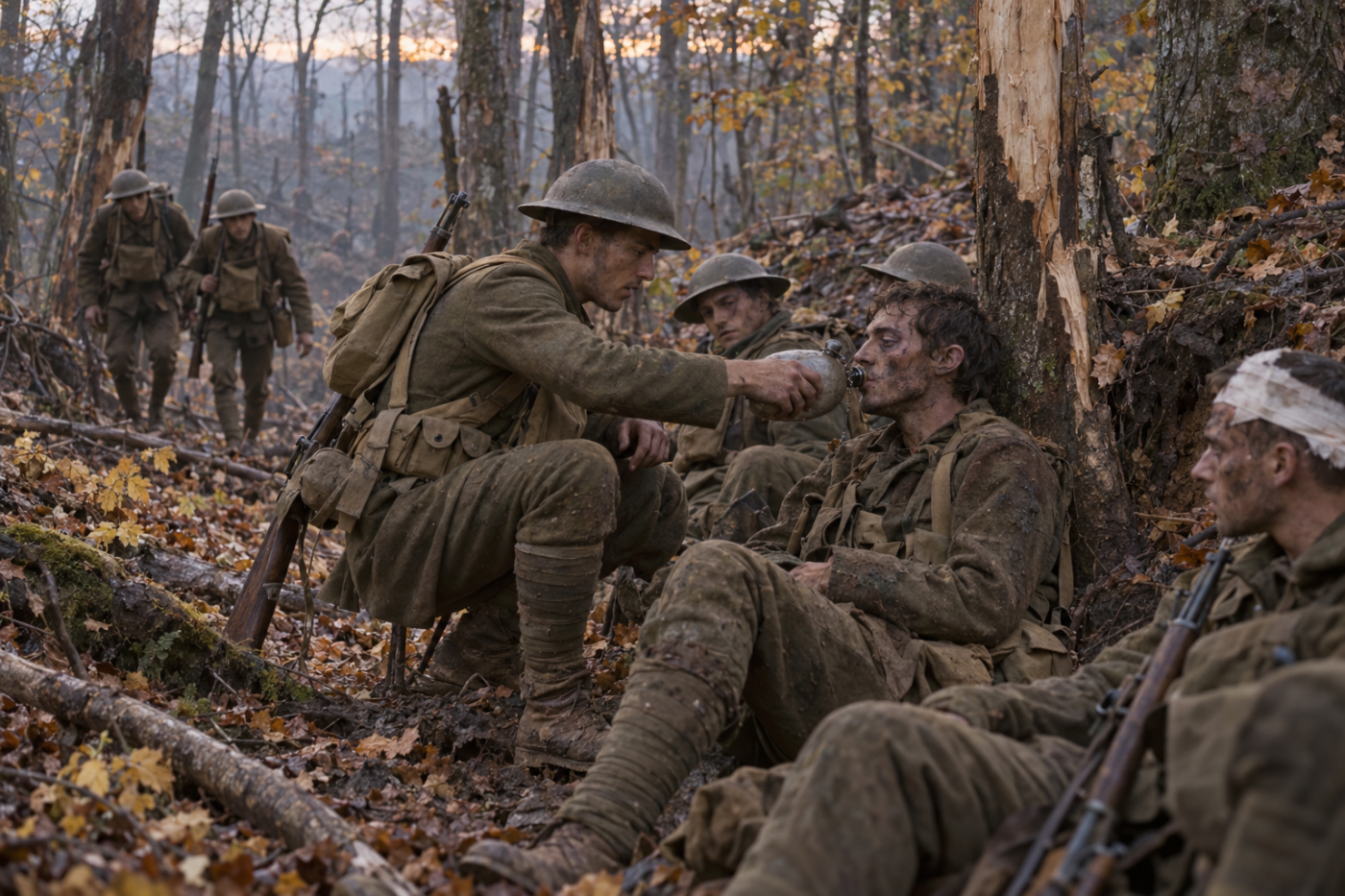
Repeated attacks followed with rifles, machine guns, grenades and mortars. Trees splintered under shellfire, while the steep slopes and undergrowth concealed German positions. American machine-gun crews helped prevent the perimeter from being overrun, and officers moved between scattered groups to maintain control. Captain George McMurtry, another lawyer and a veteran of the Spanish–American War, helped sustain the defence despite being wounded. Food ran out, ammunition dwindled and thirst became increasingly dangerous. A stream below their position offered water, but reaching it meant exposure to German fire. Wounded men lay among the trees with limited medical supplies, while those still fighting collected ammunition from casualties and recovered whatever weapons they could. Runners struggled to penetrate the German lines, and aircraft attempting to locate and supply the pocket had difficulty finding the Americans beneath the forest canopy.
One of the most terrifying episodes came when American artillery began shelling the trapped soldiers because the supporting batteries lacked an accurate picture of their position. With communications failing, carrier pigeons offered one of the few ways to reach headquarters. Cher Ami became closely associated with the ordeal after carrying an urgent message reporting that American shells were striking their own men. Despite being wounded, the bird reached its destination and later became one of the best-known animal figures of the war. On 7 October, the Germans delivered a written surrender demand through a captured American soldier, appealing to the suffering of the wounded and arguing that further resistance was pointless. Whittlesey refused to surrender. His men held their positions and repelled another fierce attack, although many were wounded, starving or nearing exhaustion.
Beyond the pocket, American formations continued attacking the German defences. Pressure from the 82nd Division threatened enemy positions in the Argonne and helped force a withdrawal around the isolated Americans. On the evening of 7 October, a patrol from the 307th Infantry reached Whittlesey’s men, ending their encirclement. Only around 194 were able to walk out; others had been killed, wounded or captured. Whittlesey, McMurtry and Captain Nelson Holderman received the Medal of Honor. Holderman had repeatedly exposed himself to enemy fire, continued leading despite multiple wounds and helped care for men in desperate condition. Their awards recognised exceptional leadership, but the achievement belonged equally to the ordinary soldiers who held their ground when rescue seemed increasingly unlikely.
Public recognition brought Whittlesey little peace. He returned to civilian life carrying the emotional burden of the men he had lost. In November 1921, shortly after serving as a pallbearer for America’s Unknown Soldier, he disappeared from a ship travelling to Cuba and was presumed to have taken his own life. His fate gave the story a painful aftermath, showing that survival on the battlefield did not always end a soldier’s suffering. The Lost Battalion had never truly been lost: its men knew where they were, but had been cut off amid a battle whose confusion overwhelmed communications. Their stand remains a powerful example of endurance and comradeship, remembered through the exhausted survivors who emerged from the Argonne Forest on 7 October 1918 and the men they left behind.