Worlds Largest War Memorial
Along the south-west coast of Victoria, Australia, a road winds past steep cliffs, sheltered bays and stretches of wild ocean. Known as the Great Ocean Road, it extends approximately 243 kilometres, or 151 miles, from Torquay to Allansford, near Warrnambool. Yet behind its reputation as one of the world’s most spectacular coastal drives lies a remarkable military story. The entire route is recognised as the world’s largest war memorial, created to honour those who died in the First World War. Its extraordinary size comes from the road itself being the tribute, with remembrance built into every mile.
The project brought together two pressing needs: commemorating the fallen and providing employment for servicemen returning to civilian life. Before its construction, many coastal communities depended on sea travel or difficult inland tracks. A road would connect these isolated settlements, support local industry and open the coastline to visitors. For the former soldiers employed on it, the work also offered wages and a shared undertaking after years of military service. More than 3,000 returned servicemen took part between 1919 and 1932, helping to create a permanent memorial to the men and women who had served, and to comrades who would never return.
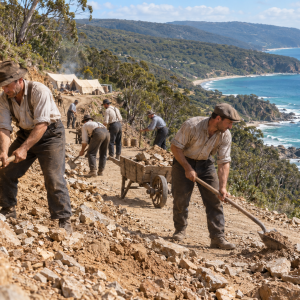
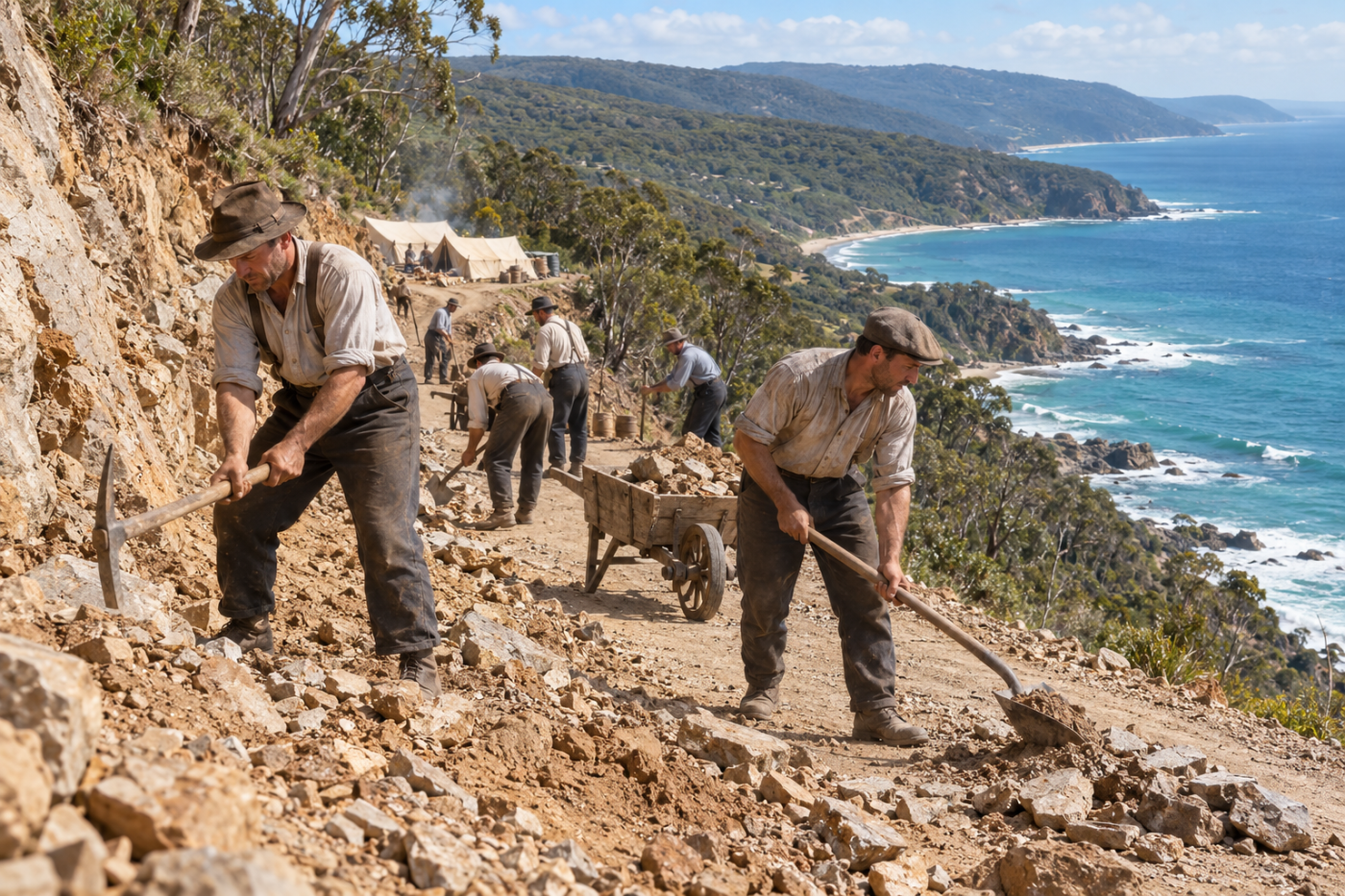
One of the project’s strongest supporters was Howard Hitchcock, the Mayor of Geelong, who formed the Great Ocean Road Trust and helped raise its funding. Construction began in September 1919, with men cutting into the rugged terrain using picks, shovels, explosives, wheelbarrows and horse-drawn carts. They worked eight-hour days for ten shillings and sixpence, living in tent camps that moved as construction advanced. It was exhausting and dangerous labour, particularly along steep coastal mountains where rock had to be blasted and cleared. Workers lost their lives during the undertaking. The first section, between Eastern View and Lorne, opened on 18 March 1922, but another decade passed before the difficult link to Apollo Bay was completed and the road officially opened in November 1932. Hitchcock had died that August, shortly before seeing his ambition fulfilled. His car nevertheless joined the opening procession in his memory. Tolls helped repay the construction costs until the road was handed to the Victorian government in 1936.
The finished route followed the contours of the landscape, carrying travellers through changing scenery rather than cutting a straight line across it. Beyond the wooded Otway country, the coast opens towards the famous limestone formations of the Twelve Apostles, where waves have shaped towering stacks, arches and sheer rock faces. The road transformed access to this coastline and became an enduring part of Australian life. In 2011, its historical, scenic and commemorative importance was recognised through inclusion on Australia’s National Heritage List.
What makes this memorial especially moving is the connection between the men who built it and those it remembers. Returning soldiers used their labour to create something that future generations could use and enjoy, while giving their fallen comrades a lasting place in the landscape. Every journey along the Great Ocean Road passes through that legacy. Beneath its beauty is a story of service, loss and the difficult task of building a life after war.