On this day in military history…
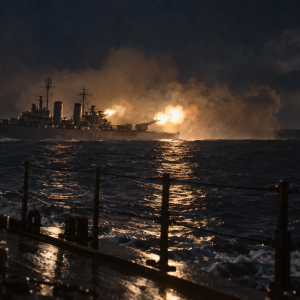
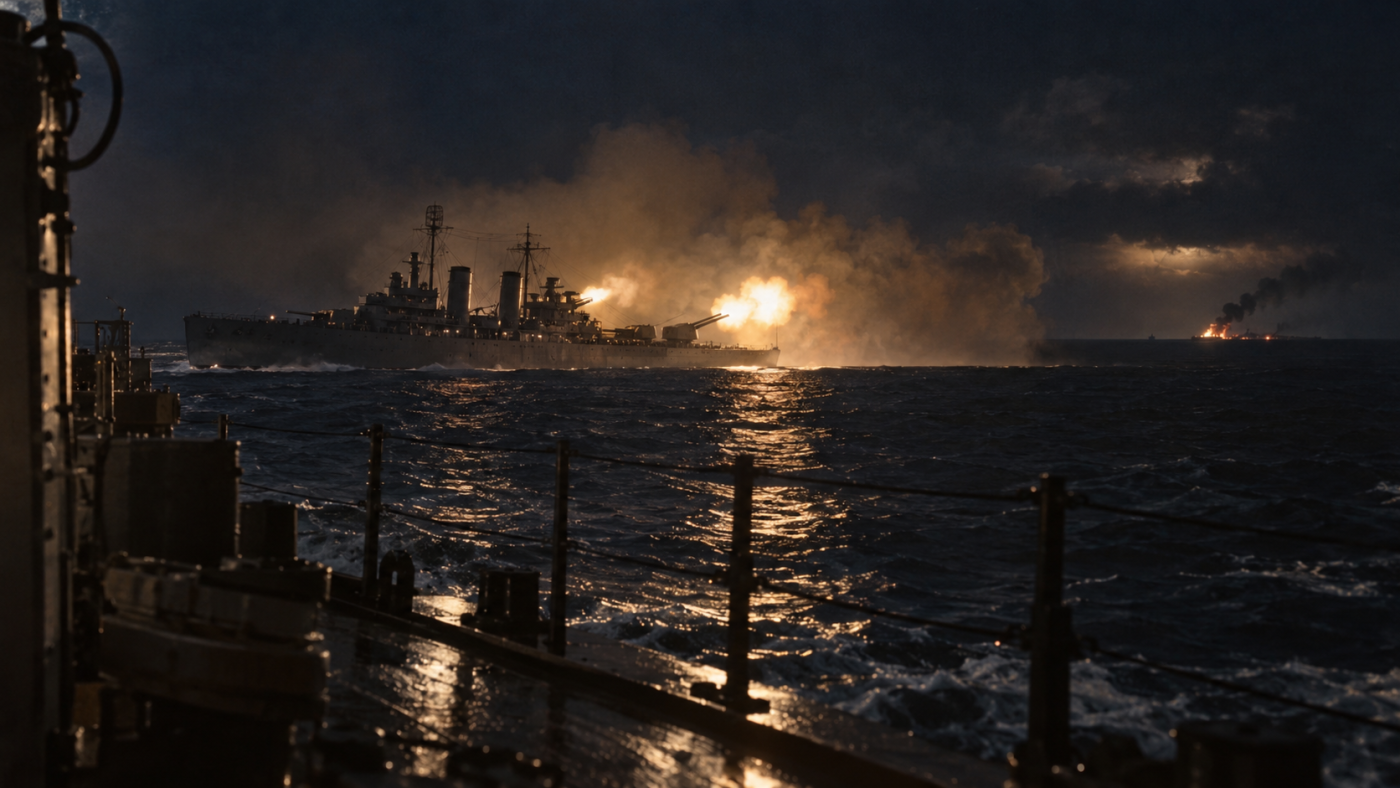
In the darkness off Bougainville, American and Japanese warships fought a confused and violent battle that helped secure the next stage of the Allied advance through the Solomon Islands. Shellfire, flares and burning ships illuminated the sea as cruisers and destroyers manoeuvred at speed, attempting to strike an enemy they could often locate only through radar or brief glimpses in the night. The Japanese were heading towards the American landing area at Empress Augusta Bay. Standing in their way was Rear Admiral Aaron Stanton Merrill’s Task Force 39.
American forces had landed near Cape Torokina on 1 November, establishing a precarious foothold on Bougainville. Before that position could be strengthened, the Japanese attempted to strike back from their major base at Rabaul. Rear Admiral Sentarō Ōmori led a force of two heavy cruisers, two light cruisers and six destroyers towards the island. If his ships reached the landing area, their guns could threaten the vulnerable shipping supporting the troops ashore. Merrill’s covering force consisted of four light cruisers and eight destroyers, tasked with intercepting precisely this kind of attack.
The American cruisers were USS Montpelier, Merrill’s flagship, USS Cleveland, USS Columbia and USS Denver. Their crews were already tired from demanding operations, but the coming engagement would require close attention at every station. Radar operators searched the darkness while gun crews waited beside their weapons. Unlike a daylight battle, there would be little opportunity to identify an approaching ship by its silhouette before decisions had to be made. Accurate plotting and clear communication could determine whether a vessel escaped destruction or came under fire.
Shortly before 2.30 am on 2 November, American radar detected the approaching Japanese formation. Merrill manoeuvred across its line of advance while Captain Arleigh Burke’s leading destroyers moved forward to launch torpedoes. Their opening attack scored no hits, but the American cruisers soon brought their guns into action. Radar directed their fire towards the Japanese light cruiser Sendai, which was repeatedly struck and set ablaze. The sudden bombardment forced Japanese ships into evasive manoeuvres, disrupting their formation at the moment they needed to deliver a coordinated attack.
The battle quickly became difficult to control. Ships turned through darkness, smoke and the glare of illumination shells, with collisions adding to the damage caused by gunfire. The Japanese destroyer Hatsukaze collided with the heavy cruiser Myōkō and was later sunk by American destroyers. On the American side, USS Thatcher and USS Spence sideswiped one another while manoeuvring, although both remained capable of fighting. Such incidents revealed how easily a carefully planned night action could break into separate, confused encounters.
The most serious American damage fell upon USS Foote. At about 3.01 am, a Japanese torpedo struck her stern, wrecking the after part of the destroyer and leaving her helpless in the water. Men were killed, others were missing, and wounded sailors needed urgent treatment while the battle continued around them. Despite the destruction, the ship remained afloat. USS Claxton later took her in tow, with other destroyers providing protection as the force withdrew.
Ōmori eventually abandoned his attempt to reach the American landing area. Japan had lost Sendai and Hatsukaze, while other vessels had suffered damage. Merrill had lost no ships, although several required repairs. For the exhausted American crews, daylight brought another threat as Japanese aircraft attacked the retiring force. Meanwhile, transport vessels returned to Torokina and continued unloading the supplies needed ashore.
Empress Augusta Bay mattered because the Japanese surface force had been turned back before it could disrupt the landing. The battle also demonstrated the growing importance of radar in naval warfare, allowing American ships to detect and engage opponents hidden by darkness. It was an imperfect victory, marked by missed torpedo attacks, collisions and the terrible damage aboard Foote, but the essential task had been achieved: the sea approach to the vulnerable Bougainville beachhead had been defended.