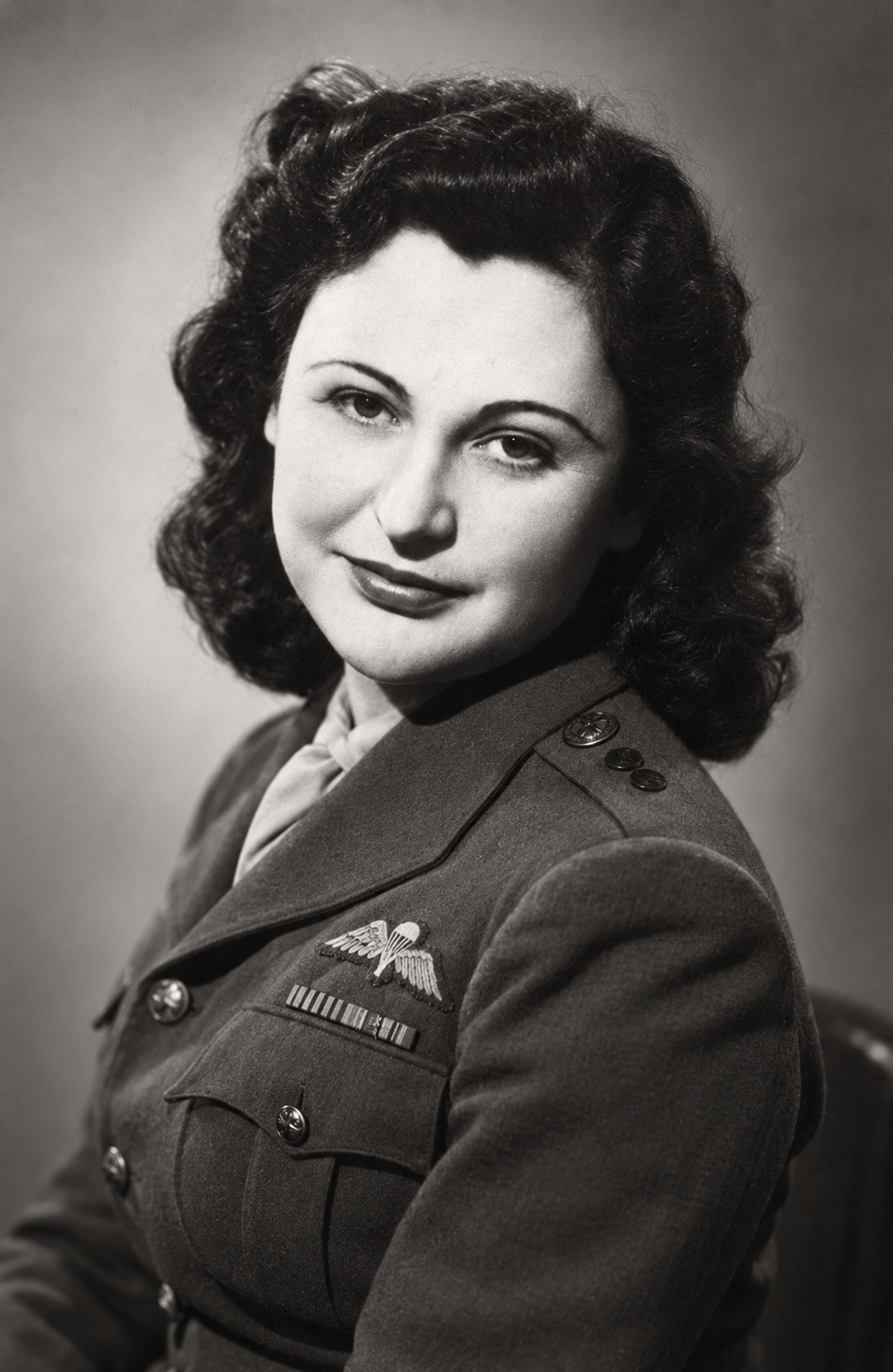
Nancy Wake
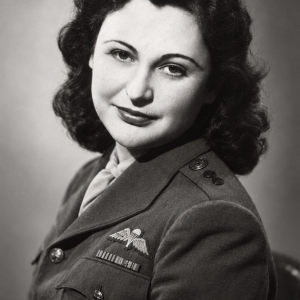
To the Gestapo, she was the “White Mouse”, a woman who seemed able to slip through their fingers whenever they closed in. To the Resistance fighters she served alongside, Nancy Wake was a determined comrade who shared their dangers and helped keep them armed and supplied. Serving with Britain’s Special Operations Executive, she became one of the most highly decorated Allied women of the Second World War.
Born in Wellington, New Zealand, on 30 August 1912, Nancy grew up in Australia before travelling to Europe as a young woman. She worked as a journalist and eventually settled in France, where she married wealthy industrialist Henri Fiocca in 1939. When war came, she was living in Marseille, with a comfortable life and every reason to hope that the fighting would pass her by. Instead, she began driving an ambulance, carrying supplies and helping people whose lives had been overturned by the German advance.
Her involvement soon went far beyond relief work. Nancy became part of an escape network helping Allied servicemen and others hunted by the Germans reach safety. This was dangerous, painstaking work, dependent on trusted contacts, safe houses and the ability to move without attracting attention. Every journey carried the possibility of betrayal or arrest. Her success in avoiding capture earned her the nickname that would remain with her for the rest of her life: the White Mouse.
In 1943, with the network compromised, Nancy was forced to flee France. Henri remained behind. She eventually reached Britain, but her escape came at a terrible personal cost. Her husband was captured and killed by the Gestapo, something she would not discover until France was being liberated. While Nancy prepared to return to the fight, she still believed there was a chance they would be reunited.
In Britain, she joined the Special Operations Executive, the organisation responsible for supporting resistance and sabotage in occupied Europe. On the night of 29–30 April 1944, she parachuted back into France as part of the Freelance team. Her task was to help connect British support with the scattered groups of Maquis fighters operating in the Auvergne. Weapons, equipment and money had to reach the right people, while groups working in difficult conditions needed reliable communication and coordination.
Nancy helped organise parachute supply drops and distribute arms to fighters hiding in the countryside and mountains. As the Allied invasion approached, and then became a reality, these groups faced German attempts to destroy them. She was involved in fighting as well as the exhausting work that made resistance possible: arranging supplies, carrying messages and keeping people in contact when a single broken link could leave them isolated.
One of her most remarkable achievements came after radio communications were lost. Nancy undertook a bicycle journey through enemy-held territory to help restore contact. Accounts differ over the exact distance, placing it at roughly 400–500 kilometres in about three days. Even at the lower estimate, it was an extraordinary feat of endurance across difficult country, with the constant danger of being stopped and questioned. An ordinary bicycle became the means of reconnecting fighters whose operations depended on contact with the outside world.
Her service brought recognition from several nations. Britain awarded her the George Medal, France honoured her with the Légion d’honneur and Croix de Guerre, and the United States awarded her the Medal of Freedom. Guinness World Records recognises her as the most highly decorated Allied servicewoman of the Second World War.
Nancy Wake died in London on 7 August 2011, aged 98. Behind the medals was a woman who had carried messages, helped fugitives, returned by parachute to occupied France and endured the loss of her husband. Her story gives a human face to the secret war: people working under immense pressure, often with limited resources, whose courage helped others survive and made the enemy’s hold on occupied Europe harder to maintain.