On this day in military history…
On 4 November 1918, just one week before the First World War ended, New Zealand soldiers stood beneath the towering walls of a fortified French town. After four years of machine guns, heavy artillery and trench warfare, they were about to attempt something that seemed to belong to another century: climbing into an enemy stronghold using a ladder.
The town was Le Quesnoy, in northern France. German forces had occupied it since August 1914, and its civilians had endured more than four years under occupation. Protected by a complicated network of brick ramparts, ditches and outer defences, it presented a formidable obstacle to the advancing New Zealand Division.
By early November, the German Army was retreating across much of the Western Front, but the fighting remained deadly. On the morning of 4 November, British armies launched the Battle of the Sambre, another major blow against Germany’s weakening defences. The New Zealanders were ordered to advance past Le Quesnoy towards the Mormal Forest, surrounding the town and cutting off its garrison.
Bombarding the town into submission would have endangered the thousands of French civilians still living inside. Instead, the New Zealanders bypassed it, leaving troops to contain the defenders while other units pressed eastwards. The hope was that the isolated Germans would surrender once they realised their position was hopeless.
But the garrison refused to give in. Messages demanding surrender failed to produce the desired result, and German troops continued to resist from behind the walls. New Zealand riflemen began searching for a way through the formidable defences.
For men already exhausted by years of industrial warfare, the task was extraordinary. Before they could reach the main wall, they had to negotiate the outer ramparts and ditches. Engineers supplied ladders, but finding somewhere to use them against the final obstacle proved difficult. The inner walls rose far above the troops, and exposed approaches were vulnerable to enemy fire.
Eventually, men of the 4th Battalion, New Zealand Rifle Brigade, identified a possible entry point. A narrow ledge above a sluice gate offered somewhere to position a ladder approximately nine metres long. From there, they could reach the top of the rampart.
At about four o’clock that afternoon, Second Lieutenant Leslie Averill, the battalion’s intelligence officer, began climbing. With only a small group immediately behind him, he faced the danger of emerging above the parapet directly in front of German defenders.
Averill reached the top and encountered Germans withdrawing nearby. Shots were exchanged, and more New Zealanders followed him over the wall. After years in which enormous bombardments had sometimes failed to secure a few hundred yards of ground, a handful of riflemen had gained entry to a fortress using a wooden ladder.
Elsewhere, soldiers of the 2nd Battalion, New Zealand Rifle Brigade, entered through the Valenciennes Gate. With New Zealand troops now inside the defences and the town surrounded, the remaining German resistance collapsed. The garrison surrendered.
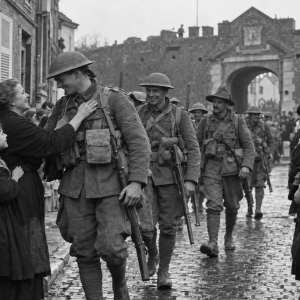
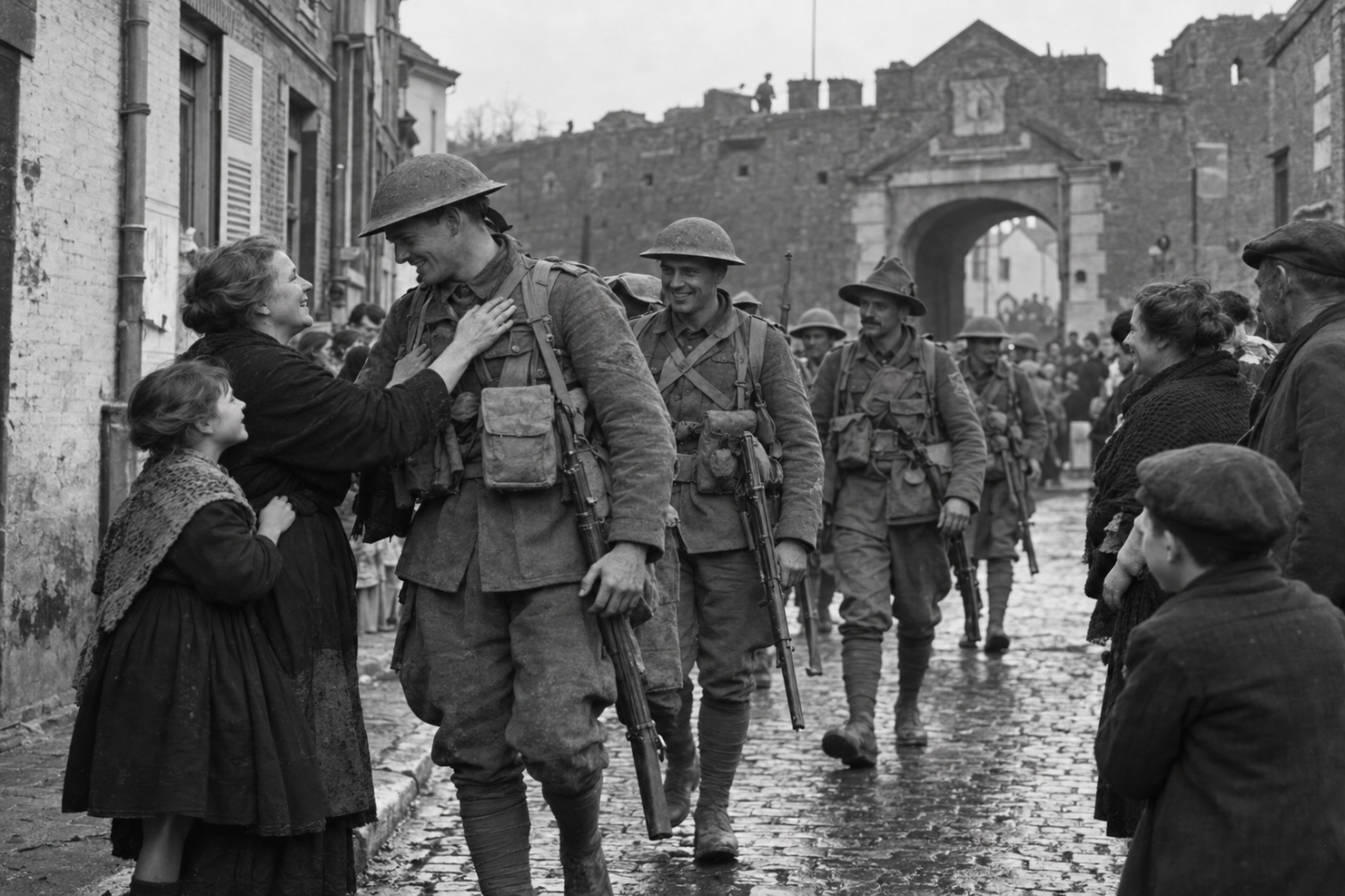
For the people of Le Quesnoy, the arrival of the New Zealanders ended four years of occupation. Civilians emerged to greet soldiers who had travelled from the other side of the world to fight in France. Their town had been liberated without the destructive bombardment that might otherwise have accompanied its capture.
The wider day’s fighting was among the New Zealand Division’s most successful of the war. Its troops advanced approximately ten kilometres, captured around 2,000 prisoners and took 60 field guns. Those figures covered the division’s operations that day, rather than the capture of the town alone.
Yet victory came at a painful cost. About 140 New Zealand soldiers died during the day’s operations. For their families, the approaching end of the war would offer little comfort. Just seven days later, on 11 November, the Armistice brought the fighting on the Western Front to an end.
Le Quesnoy became the New Zealand Division’s last major action of the First World War, and its liberation created a bond that endured long after the soldiers returned home. Commemorations, memorials and friendships have kept the connection between the French town and New Zealand alive across generations.
Among the final battles of a war remembered for its machinery and destruction, Le Quesnoy stands out for the courage and resourcefulness of the men who captured it—and for the civilians whose lives helped determine how the attack was fought. Its enduring image is a simple one: a ladder against a high brick wall, and soldiers climbing towards an uncertain welcome.