On this day in military history…
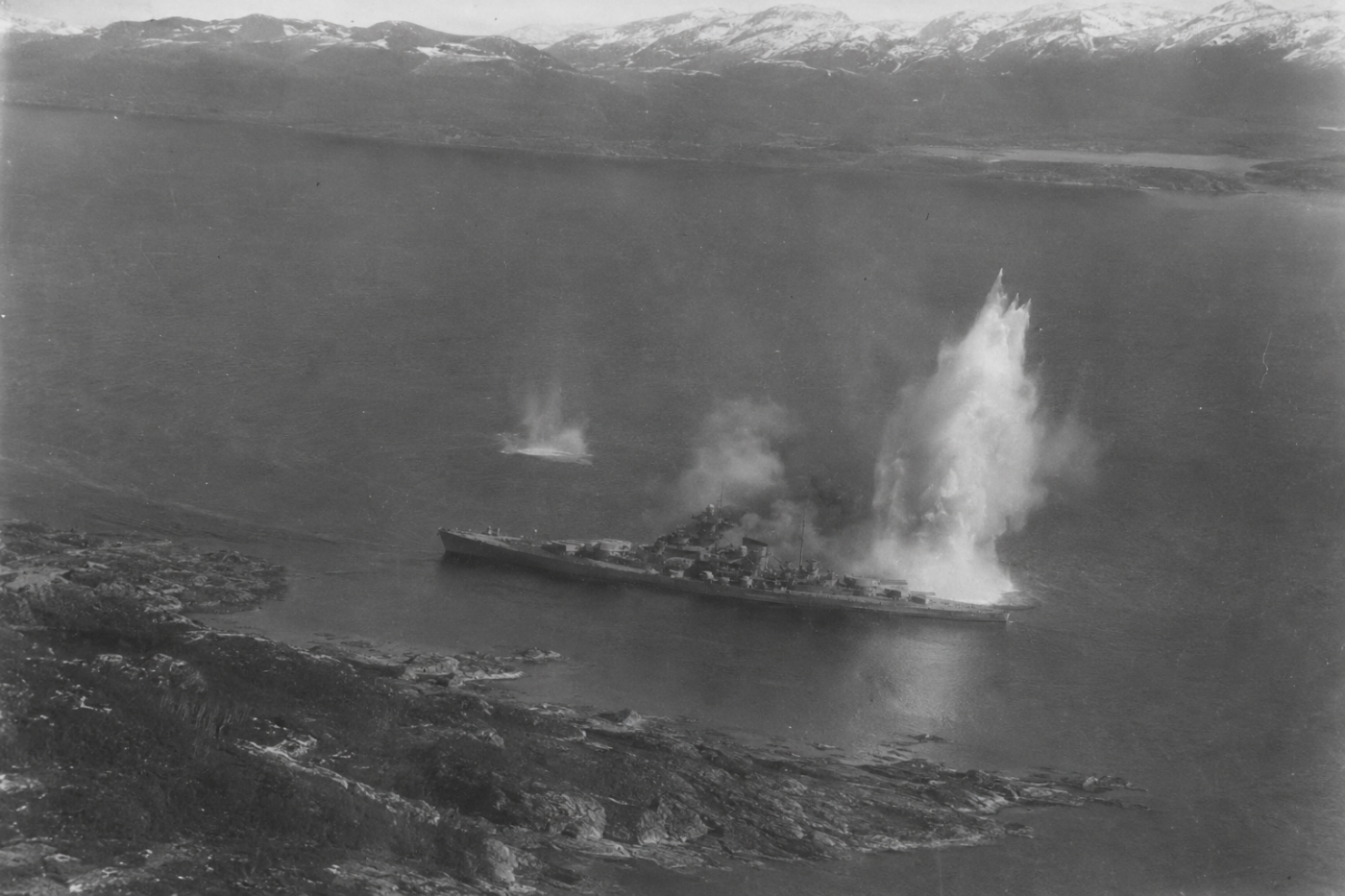
On the morning of 12 November 1944, RAF Lancaster bombers appeared over a Norwegian fjord to deliver the final blow against one of Germany’s most feared warships. Within minutes, the battleship Tirpitz would be overturned, her great hull lying exposed above the water. Operation Catechism brought together the famous Dambusters of 617 Squadron and the crews of 9 Squadron, armed with the enormous Tallboy bomb.
Tirpitz had forced Britain to devote ships, aircraft and considerable effort to watching and attacking her. Her presence in Norway threatened the Arctic convoys carrying supplies to the Soviet Union, and the Royal Navy could never simply ignore her. Even when she remained at anchor, the possibility of her putting to sea influenced Allied planning.
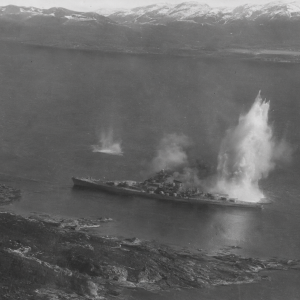
By autumn 1944, however, repeated attacks had taken their toll. On 15 September, Lancasters operating from a Soviet airfield struck Tirpitz with Tallboy bombs during Operation Paravane. A direct hit caused serious damage, leaving her unfit for normal operations at sea. She was subsequently moved south to waters near Tromsø to serve as a floating gun battery. This also brought her within reach of specially modified Lancasters flying from Scotland.
The weapon chosen to finish the job was another invention of Barnes Wallis, the engineer behind the bouncing bomb used in the Dambusters raid. Tallboy weighed 12,000lb and was designed to penetrate deeply before exploding, producing an earthquake effect capable of wrecking exceptionally strong targets. Using it successfully demanded accurate bombing from height, a task for which 617 Squadron had trained extensively. An attack on Tirpitz on 29 October had been frustrated by cloud, but the crews would return.
Before dawn on 12 November, eighteen Lancasters from 617 Squadron and thirteen from 9 Squadron took off from northern Scotland. Leading the operation was Wing Commander James “Willie” Tait, commanding officer of 617 Squadron. Another Lancaster accompanied the force to film the attack. The journey carried the bombers towards the Arctic Circle, where clear weather would finally give their bomb aimers a view of the battleship.
As the Lancasters approached, German anti-aircraft guns opened fire. The crews had to hold their aircraft steady through the barrage while the bomb aimers completed their runs. German fighters failed to intervene in time. At approximately 8.41am GMT, the first Tallboys began falling towards Tirpitz.
At least two bombs struck the battleship directly, while nearby explosions added to the destruction. Water poured into the damaged hull and Tirpitz heeled over to port. A violent explosion then tore through the ship, blowing one of her main gun turrets from its mounting. Within roughly ten minutes of the first bomb falling, the battleship had capsized.
For the men inside, the sinking was a catastrophe. Hundreds were trapped as compartments flooded and the ship rolled over. Estimates of the dead vary, but around a thousand sailors lost their lives. Rescuers later cut through the exposed hull and brought 87 men out alive.
The destruction of Tirpitz became one of Bomber Command’s most remarkable achievements. For 617 Squadron, already famous for breaching the German dams, it added another extraordinary operation to its history. The achievement belonged jointly to 617 and 9 Squadrons: their crews, flying Lancasters armed with Barnes Wallis’s Tallboys, had finally ended the long campaign against the German battleship.