Handley Page Hastings
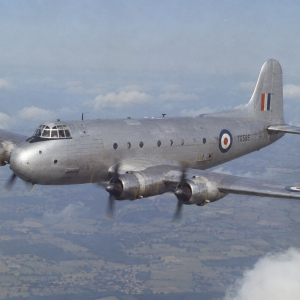
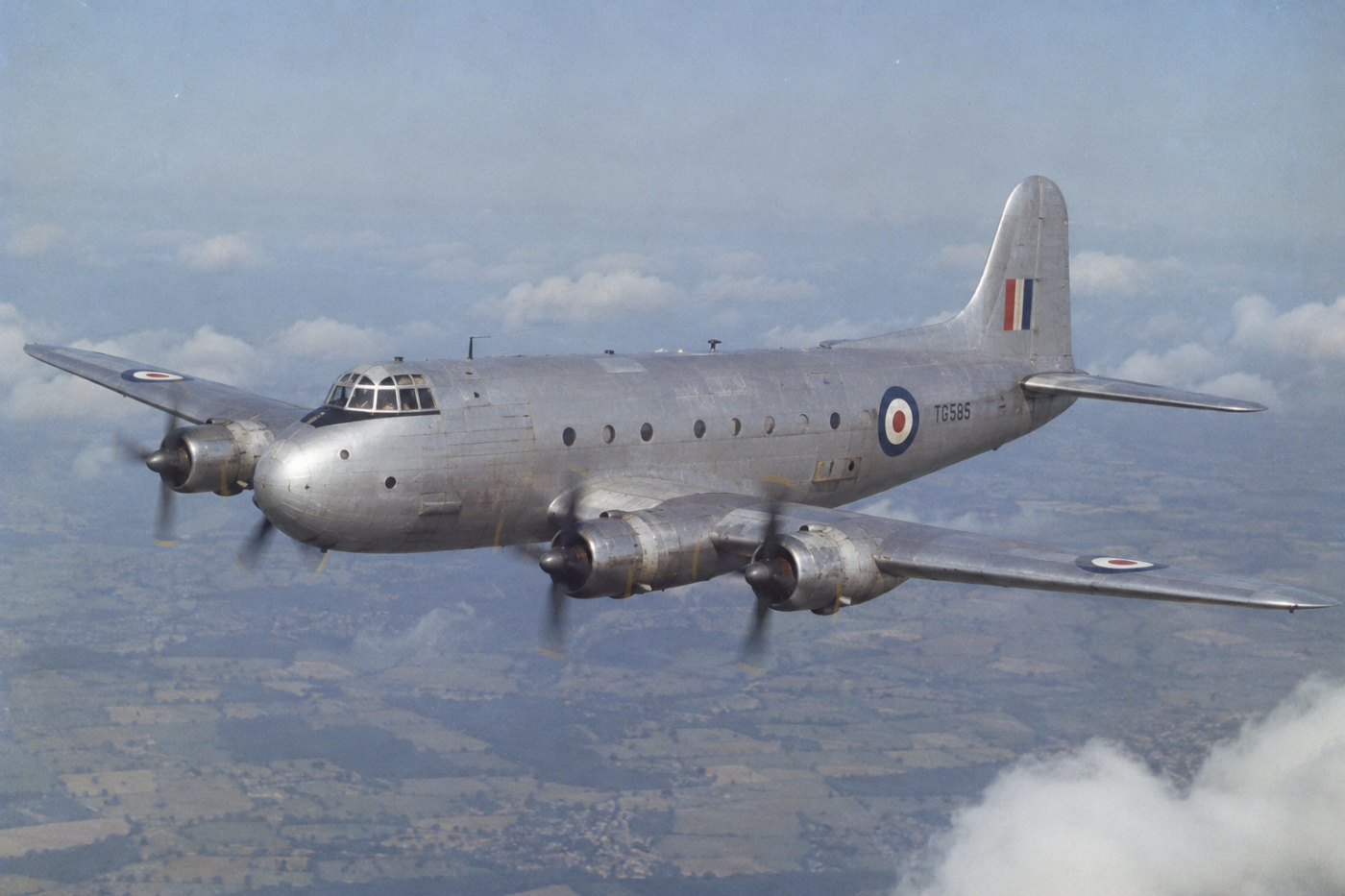
With its four roaring engines, broad wings and distinctive nose-high stance on the ground, the Handley Page Hastings became one of the RAF’s principal transport aircraft after the Second World War. It carried troops, freight, casualties and parachutists, supporting Britain’s overseas commitments during the early Cold War.
The Hastings was designed and manufactured by the British Handley Page Aircraft Company, the firm responsible for the wartime Halifax bomber. Designated the HP.67, it answered an Air Ministry requirement for a long-range military transport and was developed alongside the related Hermes civilian airliner. Its prototype first flew on 7 May 1946, and the type entered RAF squadron service in September 1948. Production is generally recorded as 151 aircraft, with Britain the principal customer and four built for the Royal New Zealand Air Force.
Power came from four Bristol Hercules air-cooled radial engines. Early C.1 aircraft used Hercules 101 engines, while the improved C.2 employed Hercules 106 engines, each producing approximately 1,675 horsepower. These were 14-cylinder engines arranged in two rows, using sleeve valves and driving four-bladed propellers. Together they delivered around 6,700 horsepower. Published C.2 performance figures give a maximum speed of approximately 348 mph and a service ceiling of 26,500 feet. Range depended heavily on the load: approximately 1,690 miles with maximum payload, extending to around 4,250 miles with maximum fuel and a much smaller load.
The normal flight crew numbered five: pilot, co-pilot, navigator, wireless operator and flight engineer. Parachute operations required additional personnel to supervise and dispatch the jumpers, so the total crew aboard could be higher. The Hastings accommodated approximately 50 fully equipped troops or around 30–35 parachutists, depending on the loading arrangement. For casualty evacuation, it could carry 32 stretchers together with additional seated casualties. Its wingspan measured 113 feet, and the fuselage was approximately 81 feet 8 inches long. Maximum payload was roughly nine tonnes.
Despite being a new post-war aircraft, the Hastings retained a tailwheel undercarriage. This left the cabin floor sloping when parked, complicating the handling of heavy loads. Freight entered through a large door on the port side, while parachutists could jump through doors on both sides of the fuselage. The improved C.2 introduced a larger, lower-mounted tailplane and increased fuel capacity. Earlier aircraft modified to the improved standard became C.1As.
Its first major test came almost immediately during the Berlin Airlift. Hastings crews joined the effort to supply West Berlin after the Soviet blockade cut the city’s surface links with the Western occupation zones. Flying alongside other transport aircraft, they delivered essential supplies to the isolated population. A Hastings flew the final RAF airlift sortie on 6 October 1949, giving the aircraft a place in one of the defining operations of the early Cold War.
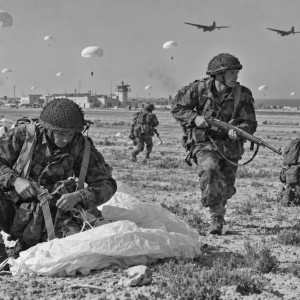
For British airborne forces, its most famous operational role came during the Suez campaign. On 5 November 1956, Hastings and Valetta transports carried 3 PARA and attached troops from Cyprus to El Gamil airfield near Port Said. Seven Hastings joined 18 Valettas in the troop-carrying force, while another seven Hastings were assigned to drop jeeps, recoilless anti-tank guns and heavy equipment. The narrow drop zone lay between the Mediterranean and Lake Manzala, leaving little margin for error. This became the last British battalion-sized operational parachute assault.
Away from combat operations, the Hastings maintained military transport routes to the Middle East and Far East, supported parachute training and carried personnel and supplies between overseas stations. New Zealand’s four aircraft operated international transport services, including flights to Britain and Pacific islands. Weather reconnaissance versions collected information over the oceans, often in difficult conditions, providing valuable observations for forecasters before modern satellite coverage became available.
Specialist versions extended its usefulness further. Four C.4 aircraft were equipped for VIP transport, while eight aircraft became T.5 radar trainers. These carried a conspicuous radome beneath the fuselage and helped train the radar specialists who served in Britain’s V-bomber force. An aircraft designed to carry soldiers and freight therefore found a further career supporting the crews of Britain’s nuclear deterrent.
Its history also contains tragedy. On 6 July 1965, Hastings TG577 crashed at Little Baldon in Oxfordshire shortly after taking off from RAF Abingdon for a parachute training flight. All 41 people aboard died: six crew and 35 service personnel. The investigation identified metal fatigue in the elevator attachment bolts, and the disaster led to the grounding of the Hastings fleet. Those lost included parachute instructors, soldiers and recruits, making Little Baldon a particularly painful chapter in airborne forces history.
The Hastings left frontline RAF transport service during 1967–68 as newer aircraft, particularly the Lockheed Hercules, took over. Its specialist training career continued until 30 June 1977. Across almost three decades, it had helped supply Berlin, carried British paratroopers into Suez and maintained the air routes connecting Britain with its forces overseas.