Last Battle of Passchendaele
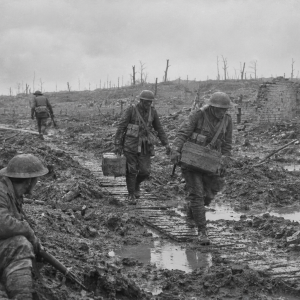
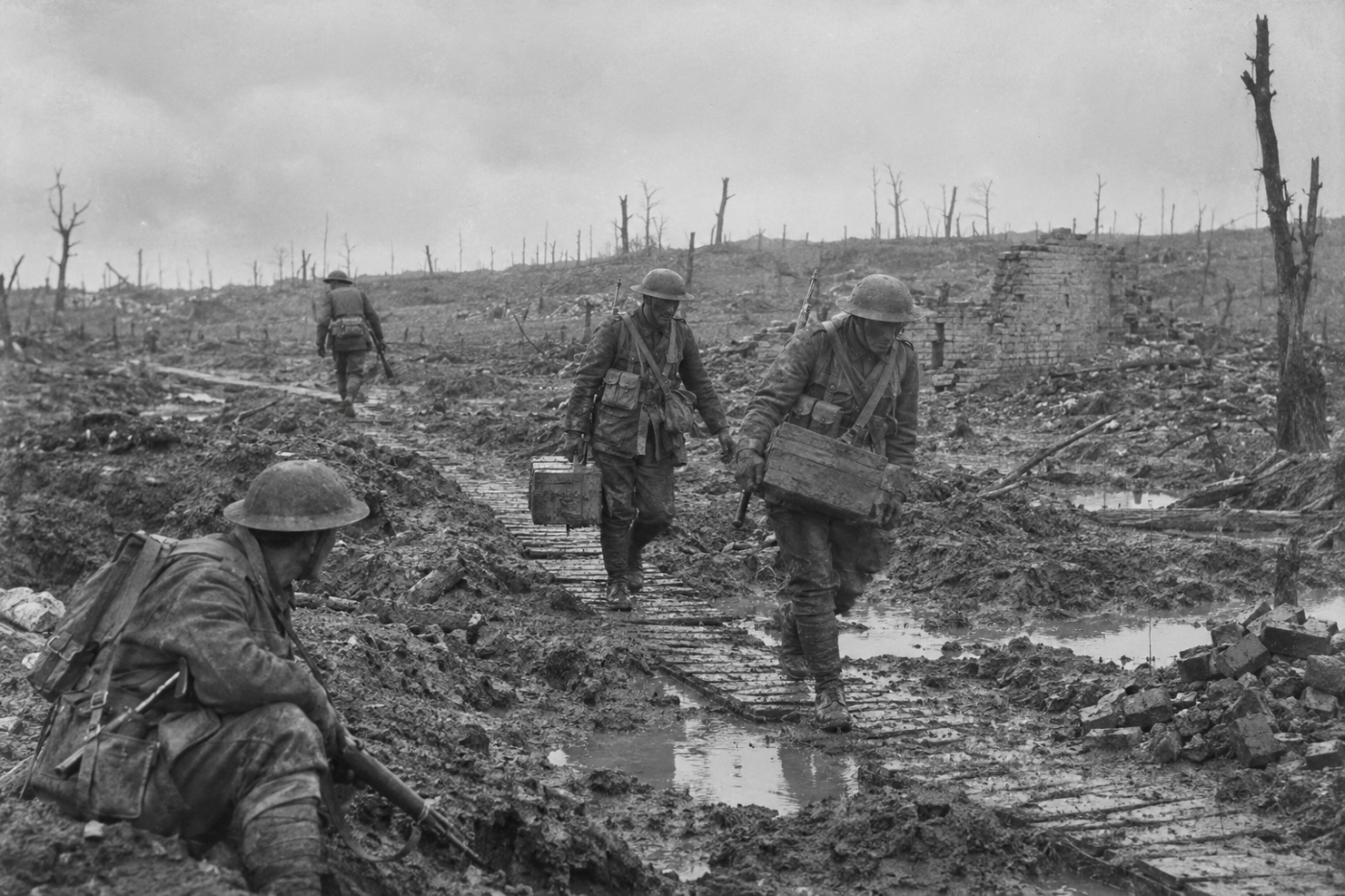
The Canadians took the ruins of Passchendaele on 6 November 1917. Four days later, they went back into the rain to seize the high ground north of the village. It was the last major attack of the Third Battle of Ypres, which had begun on 31 July with hopes of breaking through to the Belgian coast.
Shortly after six that morning, the 7th and 8th Canadian Battalions advanced towards Vindictive Crossroads and Hill 52. They reached their first objective by 7.30, and the 10th Battalion came up from reserve to push the line forward. On their left, a German counter-attack forced battalions of the British 1st Division to withdraw, leaving the Canadians in a narrow bulge exposed to concentrated shellfire. They held the ground, but suffered 1,094 casualties that day, including 420 killed.
More than 4,000 Canadians died and nearly 12,000 were wounded in the final phase. One estimate puts British and Commonwealth deaths at around 70,000 when the preliminary Battle of Messines in June is included. Estimates for Passchendaele put British and Commonwealth casualties at about 300,000 and German casualties at roughly 260,000. Those figures include the killed, wounded and missing. The total number of deaths on both sides remains uncertain.
Before the July infantry assault, more than 3,000 guns fired around 4.25 million shells. In the Canadian phase, 18-pounder field guns laid creeping barrages, advancing their fire in timed lifts ahead of the infantry. The artillery included 4.5-inch howitzers, while 6-inch howitzers and 60-pounder guns engaged distant German batteries. German machine guns covered the approaches to concrete strongpoints, and the Canadians captured four German 77 mm field guns at Venture Farm on the final morning. Shellfire wrecked the drainage, and rain filled the craters, making it harder to move men, guns and ammunition.
Lieutenant-General Sir Arthur Currie deserves the most credit for planning the final phase. He secured time to prepare and divided the operation into four attacks, giving his troops time to consolidate between them. His artillery commander, Brigadier-General Edward Morrison, reorganised the gun batteries after finding that fewer than half the 18-pounders listed on paper were in action. Earlier in the campaign, General Sir Herbert Plumer’s ‘bite and hold’ tactics had worked well at Menin Road, Polygon Wood and Broodseinde. His troops took limited objectives under heavy artillery cover and dug in to meet counter-attacks, helped by a spell of drier weather.
Field Marshal Sir Douglas Haig had hoped to hold the entire ridge through the winter, but the advance fell short of Westroosebeke. The troops were exhausted, the ground was waterlogged and a breakthrough was out of reach. The need to send Allied troops to Italy after Caporetto added to the pressure to stop. By 15 November, Haig had decided to end the Flanders offensive. The submarine bases at Ostend and Zeebrugge remained in German hands, and during the German spring offensive of 1918 the British withdrew from the ridge they had spent months fighting to take.