On this day in military history…
In the early hours of 21 November 1970, American helicopters approached a prison camp deep inside North Vietnam. On board were Special Forces soldiers preparing to fight their way into captivity’s darkest corners and bring their fellow servicemen home. Months of secret training had brought them to this moment. Within minutes they would be inside the walls of Son Tay, but the men they had come to rescue were already gone.
By 1970, hundreds of Americans were being held prisoner in North Vietnam, many of them airmen shot down during operations over the country. For some, captivity had lasted years. Torture, isolation, inadequate food and untreated injuries had taken a terrible toll, while their families waited for news that often never came. Against this background, the possibility of mounting a rescue offered something that negotiations had failed to deliver: a chance of bringing at least some of the prisoners home.
American intelligence had identified Son Tay, around 23 miles west of Hanoi, as a promising target. Reconnaissance photographs suggested that American prisoners were being held inside its walls, and planners believed approximately 70 men might be there. Although the camp stood within reach of substantial North Vietnamese forces, its position offered a small assault force the possibility of achieving surprise and withdrawing before a major response could be organised.
The operation became known as Ivory Coast, with the final execution phase designated Kingpin. Overall command rested with United States Air Force Brigadier General LeRoy Manor. His deputy, Colonel Arthur “Bull” Simons, was an experienced soldier whose service stretched back to the Second World War. Lieutenant Colonel Elliott “Bud” Sydnor commanded the ground force, while Captain Richard “Dick” Meadows would lead the men entering the prison itself.
The volunteers trained in secrecy at Eglin Air Force Base in Florida. A replica of the prison allowed them to practise their movements until each man understood his task and the positions of those around him. Rehearsals continued after dark, bringing soldiers and aircrews together under conditions intended to resemble the operation they would face. Speed mattered, but so did the ability to recover when something went wrong. Once inside North Vietnam, there would be little time for discussion.
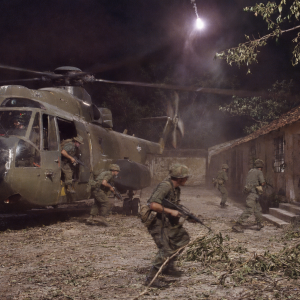
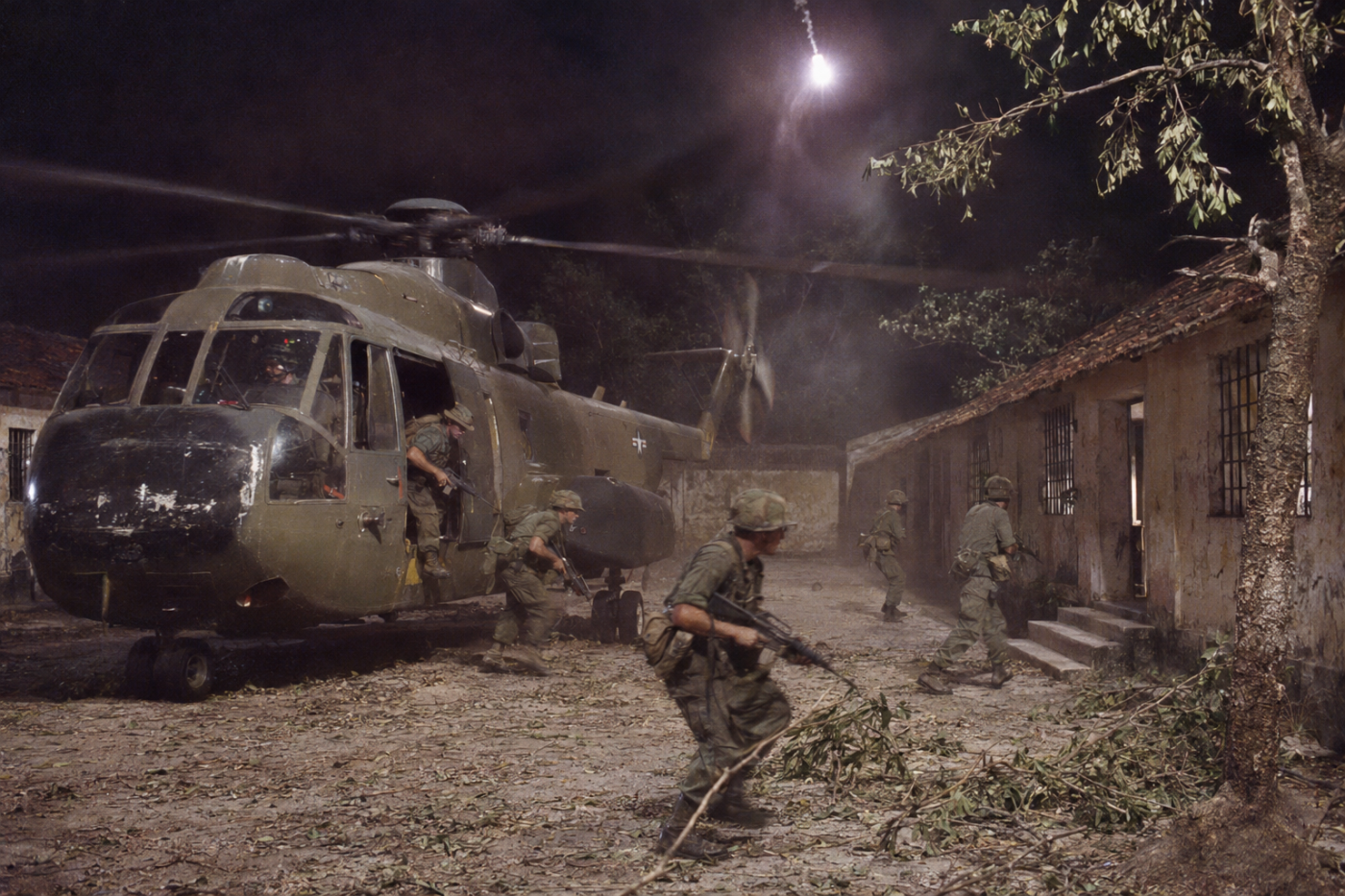
The plan demanded an extraordinary piece of flying. An HH-3E helicopter would make a deliberate crash-landing inside the prison courtyard, delivering Meadows and his assault team directly into the compound. Other helicopters would land supporting troops outside, secure the surrounding area and provide the means of escape. The helicopter placed inside the walls would be destroyed before the force withdrew.
Behind the small ground force stood a much larger air operation. Combat Talon aircraft would guide the helicopters through the darkness, tankers would support their long journey, and combat aircraft would protect the raiders. Naval aircraft would conduct diversionary activity elsewhere in North Vietnam. The aircraft had different flying characteristics, making their coordination another demanding part of an already complicated mission.
After President Richard Nixon approved the attempt, the force prepared to launch from Thailand. Fifty-six Army Special Forces soldiers would take part in the ground assault. When the destination and purpose were finally revealed, the men knew that they were being sent close to Hanoi, into one of the most heavily defended areas of the war.
At approximately 2.19 am on 21 November, the assault reached Son Tay. Flares illuminated the area and helicopter gunfire struck defensive positions. The HH-3E descended into the courtyard, its rotor blades cutting through branches as it came down. Meadows and his men emerged and moved towards the prison buildings, searching for the captives they expected to find.
Using a loudhailer, Meadows announced that Americans had arrived to rescue them and urged the prisoners to keep down. There was no answering call. The soldiers checked the cells and buildings, but each search brought the same result. No American prisoners were present.
Outside the prison, another part of the force had encountered an unexpected problem. The helicopter carrying Simons and his supporting troops had landed at a nearby compound several hundred metres from the intended position. The men came under fire and fought their way through the immediate danger before being collected and moved to the correct location. Meanwhile, the other raiders adjusted their actions to maintain security around the prison.
Inside Son Tay, the search continued until there could be no doubt. The camp was empty of the men they had crossed North Vietnam to recover. The operation’s purpose had disappeared before the first helicopter ever lifted off.
The order was given to withdraw. The helicopter in the courtyard was destroyed, and the raiders boarded the aircraft waiting to take them out. Within approximately half an hour of arriving, the ground force was leaving. Every member returned alive, although two men had been injured. A supporting F-105 aircraft was lost, but its crew were rescued.
The disappointment was profound. The prisoners had been transferred from Son Tay in July, roughly four months before the raid. Intelligence had failed to establish their continued presence with certainty. There had been indications before the launch that they might have moved, but the decision was taken to proceed while a possibility of rescue remained.
Son Tay therefore failed in its central objective. No prisoners were brought home, despite the courage of the men and the immense effort invested in their preparation. That fact cannot be separated from the operation’s history.
Yet the raid also reached beyond the empty cells. When prisoners elsewhere learned what had happened, it gave them evidence that men were prepared to come for them. Following the attack, prisoners were brought together in larger groups, allowing more companionship and mutual support after long periods of isolation. Former captives later described the rescue attempt as a powerful encouragement during their remaining imprisonment.
The Son Tay raiders returned with empty helicopters, but their actions carried a message into the prisons of North Vietnam. Beyond the walls, beyond the interrogations and the years of waiting, there were fellow servicemen willing to risk their lives to bring them home.