The Eurasian Formations of the Waffen-SS, 1943–1945
Before the Second World War, the SS was intended to represent the racial and political ideals of National Socialism. Men seeking to enter its armed formations were selected according to their ancestry, physical condition and political reliability. Heinrich Himmler regarded the organisation as the foundation of a future Germanic elite that would occupy an important position within a German-dominated Europe. Recruitment was gradually extended to the Netherlands, Flanders, Denmark and Norway, whose populations the Nazi leadership considered Germanic. However, the demands placed upon the Waffen-SS increased considerably after Germany launched Operation Barbarossa, the invasion of the Soviet Union, on 22 June 1941. Although the German armies achieved major victories during the first months of the campaign, they also suffered heavy losses. As the war in the east continued, it became increasingly difficult to replace experienced soldiers. The defeat at Stalingrad in early 1943 made the need for additional manpower even greater, forcing the SS leadership to reconsider some of its original recruitment requirements.
The invasion of the Soviet Union had also placed millions of Red Army soldiers in German captivity. Prisoners were held in overcrowded camps where food, shelter and medical care were often almost entirely absent. Of the approximately 5.7 million Soviet military personnel captured by the Germans during the war, around 3.3 million died as a result of deliberate starvation, disease, exposure and executions. Among the prisoners were members of the many ethnic and national minorities of the Soviet Union, some of whom had experienced forced collectivisation, religious persecution, political repression or the loss of national independence under Soviet rule. The Germans hoped to use these grievances against Moscow and began recruiting among the Soviet population. In December 1941, the German military leadership ordered the establishment of the Ostlegionen, or Eastern Legions. During 1942, separate legions were organised for Turkestanis, Azerbaijanis, Armenians, Georgians, North Caucasians and Volga Tatars, while thousands of others entered German service through local defence companies, auxiliary police units and military support formations.
The reasons why these men entered German service varied considerably. Some were convinced anti-communists or opposed Stalin’s government, while others hoped that a German victory would lead to national independence or greater religious freedom. For many Soviet prisoners of war, however, joining a German military formation offered their best chance of survival. Others enlisted under pressure or were later transferred between German formations without being given much choice. The SS leadership gradually became interested in this large source of manpower, with Himmler and Gottlob Berger, the head of the SS Main Office, taking a particular interest in the Muslim peoples of the Soviet Union. They believed that resentment towards Soviet religious persecution could be used to encourage recruitment and strengthen opposition to communism. Military imams were appointed, religious services were permitted and concessions were made concerning food and religious customs. Although the recruitment of men from Central Asia, Crimea and the Caucasus required the SS to relax some of its earlier racial requirements, it did not mean that the organisation had abandoned its racial ideology. Non-Germanic recruits generally served in separate formations under German command, while the Nazi leadership remained committed to its belief in German racial superiority.
The first major attempt to establish a Waffen-SS formation from the Muslim peoples of the Soviet Union began in the autumn of 1943. One of the men behind the project was Major Andreas Mayer-Mader, an Austrian-born German Army officer who had gained military experience in Asia and had previously been involved in the organisation of Turkestani units within the Wehrmacht. In November 1943, Himmler supported plans to establish a Muslim SS division, which by January 1944 was also being referred to as ‘Neu-Turkestan’. Two existing German Army battalions, Turk-Bataillon 450 and Turk-Feld-Bataillon I/94, were intended to form the basis of the new division, while additional recruits were to be obtained from other Eastern units and prisoner-of-war camps. Recruitment and training took place around Poniatowa near Lublin and at Trawniki in German-occupied Poland. The men came from various parts of Soviet Central Asia and included Uzbeks, Kazakhs, Turkmens, Kyrgyz and Tajiks. The name Turkestani therefore referred to a geographical region rather than a single nationality. Many of these men had originally served in the Red Army before being captured and recruited into the Eastern Legions. Although the SS intended to create an entire division, the formation, which became known as the 1. Ostmuselmanisches SS-Regiment, or 1st Eastern Muslim SS Regiment, contained only around 800 men in early 1944.
The regiment experienced serious problems almost from the beginning. On 31 January 1944, some of its soldiers attempted to *blocked text* Polish forced labourers at Poniatowa, while disagreements between the SS and the German Army made it difficult to obtain additional recruits. The Army was reluctant to hand over its Eastern battalions at a time when it was struggling with manpower shortages of its own. From 15 March, the regiment was ordered to move to the area around Yuratishki, west of Minsk, where further military training was combined with operations against Soviet partisans. German anti-partisan warfare in this region frequently involved the destruction of villages and the killing of civilians suspected of supporting the resistance. Meanwhile, problems within the regiment continued. Mayer-Mader gave up his command under circumstances that remain unclear and was subsequently killed. In April, his temporary successor, an officer named Hermann, warned that the formation was in danger of falling apart and recommended placing its troops under Oskar Dirlewanger, whose SS unit had already become notorious for its brutality during anti-partisan operations. With recruitment falling short of expectations and discipline becoming increasingly difficult to maintain, the planned Muslim SS division never materialised.
The Soviet summer offensive of 1944 forced the regiment to withdraw from the region west of Minsk. In August, its men were sent to Warsaw, where the Polish Home Army had launched an uprising against the German occupation on 1 August. Under Dirlewanger’s command, the Eastern Muslim soldiers took part in operations against the Polish resistance, including the fighting for the Old Town. The suppression of the uprising was accompanied by mass executions, the murder of hospital patients and the destruction of entire neighbourhoods. Although Dirlewanger’s men had already participated in the massacre of civilians in the Wola district before the Eastern Muslim regiment arrived, the regiment became part of the wider German operation to suppress the uprising. Its involvement in individual atrocities is difficult to establish. The fighting also damaged relations between the Muslim soldiers and their German commanders. In September, the Uzbek officer Gulam Alimow complained about the treatment of his men by Dirlewanger’s officers, and a subsequent SS investigation confirmed his complaints. German records listed 48 men killed, 187 wounded and seven missing, while a strength report dated 19 September recorded 1,011 officers and men. Shortly after the surrender of the Polish Home Army, the regiment was ordered to move to Slovakia on 10 October. It subsequently lost its independence and was absorbed into the newly established Osttürkischer Waffen-Verband der SS, in which many of its surviving soldiers continued to serve.
Another Muslim formation of the Waffen-SS had its origins in the German occupation of Crimea. After occupying most of the peninsula in 1941 and capturing Sevastopol in July 1942, the Germans recruited members of the local Crimean Tatar population into village defence companies and later into Schutzmannschaft battalions, or armed auxiliary police units. The Crimean Tatars were a predominantly Muslim, Turkic-speaking people with a long history on the peninsula. Some welcomed the German advance in the hope that it would bring an end to Soviet repression and allow them to restore their national and religious institutions. Others entered German service to obtain food, protect their families or improve their chances of survival. Under German supervision, these units guarded settlements and military installations and took part in operations against Soviet partisans. Some were also involved in violence against civilians suspected of assisting the resistance. When the Red Army recaptured Crimea in the spring of 1944, the retreating Germans evacuated approximately 2,200 Crimean Tatar military auxiliaries, according to one published estimate. Meanwhile, Stalin’s government accused the entire Crimean Tatar population of collaboration with the Germans. Between 18 and 20 May 1944, around 180,000 Crimean Tatars were deported, mainly to Soviet Central Asia. Among them were families whose relatives had served loyally in the Red Army.
The evacuation of the Crimean Tatar auxiliaries gave the SS an opportunity to establish a military formation of its own. In May 1944, preparations began for the creation of a mountain infantry regiment from the former Tatar police battalions, reportedly at the Moorlager training grounds. On 8 July, an order was issued for the establishment in Hungary of the Waffen-Gebirgs-Brigade der SS (tatarische Nr. 1), or 1st Tatar Waffen-SS Mountain Brigade. Its commander was SS-Standartenführer Willy Fortenbacher, whose rank was equivalent to that of a colonel. Although many of its soldiers had previous experience in security and anti-partisan operations, turning them into a mountain infantry brigade required further training, experienced officers and additional military equipment. German police personnel and Waffen-SS officers were assigned to the formation, but the brigade never developed into the fully equipped military unit that the SS had intended to create. A strength report from December 1944 recorded 2,421 men, excluding an additional group of ethnic Germans temporarily placed under its command. The number of soldiers available for frontline service was probably considerably lower, and there is little reliable evidence that the brigade ever fought as a complete formation. Much of the military experience of its soldiers came from their earlier service in Crimea, before they entered the Waffen-SS.
By late 1944, the organisation of the brigade appears to have moved to the Kurmark training grounds near Frankfurt an der Oder. As Germany’s military situation deteriorated, the SS was already attempting to bring its various Turkic formations together under a single command. It therefore decided to dissolve the brigade with effect from 1 January 1945 and transfer its Crimean Tatar soldiers and equipment to the Osttürkischer Waffen-Verband der SS. The transfer was not completed immediately, and it was not until around February that the former members of the brigade joined the reorganised formation as Waffengruppe ‘Krim’. Some of these men subsequently reached northern Italy, where surviving groups surrendered to the Allies during the final stages of the war. Little is known about their lives after the war, and it remains unclear how many were eventually returned to the Soviet Union or managed to remain in Western Europe.
Despite the problems experienced by the Eastern Muslim regiment, the SS had not abandoned its plans to establish a larger formation from the Turkic peoples of the Soviet Union. In June 1944, the German officer Wilhelm Hintersatz was appointed to lead the new project. Hintersatz had converted to Islam and had served with the Ottoman General Staff during the First World War. He was better known by the name Harun el-Raschid Bey, and the SS leadership believed that his military experience and familiarity with Islamic customs made him particularly suitable for commanding Muslim soldiers. The new formation eventually received the name Osttürkischer Waffen-Verband der SS, or East Turkic Armed Formation of the SS. Its official establishment was dated from 1 October 1944, with further orders being issued during October and November. The former Eastern Muslim regiment formed the basis of the new unit, while the SS attempted to obtain additional men from existing Eastern formations, prisoner-of-war camps and German-controlled labour organisations. Recruitment efforts extended as far as occupied Norway, where Soviet Muslim prisoners were approached for military service. The formation assembled around Myjava in western Slovakia, where its soldiers received further military training and took part in operations against local partisans.
The Germans hoped that a shared religion and the use of national languages would help unite the soldiers, but the different peoples within the formation did not always share the same political interests or national ambitions. Disagreements between ethnic groups, dissatisfaction with German officers and shortages of equipment made it difficult to establish an effective military formation. These problems became particularly serious on 25 December 1944, when around 500 Turkestani soldiers under Gulam Alimow left their positions and joined Slovak partisans. Although some were subsequently captured or returned voluntarily, the desertion represented a serious breakdown of discipline. German officers blamed the incident partly on personal rivalries and disagreements over the treatment of the different Central Asian nationalities. Statements made by returning soldiers also suggest that some of the men had not known what Alimow intended to do. His exact motives remain unclear, but the incident demonstrated how divided the formation had become and how difficult it was for the Germans to maintain the loyalty of its soldiers.
Under an order issued on 30 December 1944, effective from 15 December, the formation was reorganised into three Waffengruppen, or armed groups, named ‘Turkestan’, ‘Idel-Ural’ and ‘Krim’. The first consisted of soldiers from Soviet Central Asia, while the second took its name from the Volga-Ural region, which was home to Volga Tatars, Bashkirs and several other peoples. The third group was formed from the Crimean Tatar soldiers of the dissolved mountain brigade. Each group was intended to contain two infantry battalions and supporting companies, although shortages of men and equipment continued to affect their organisation. The Azerbaijani soldiers, who had previously served alongside the other Muslim recruits, were to be transferred to a newly established Caucasian Waffen-SS formation. In practice, however, the transfer was never fully completed, and some Azerbaijanis remained with the East Turkic troops until the end of the war.
In February 1945, the Osttürkischer Waffen-Verband der SS began moving from Slovakia towards northern Italy, where a German report dated 9 April placed its remaining strength at approximately 3,800 men near Bergamo. The activities of its soldiers during the final weeks of the war are less well documented than their earlier service in Warsaw and Slovakia, and it remains unclear whether the formation took part in any major military operations in Italy. As German authority collapsed, its soldiers became scattered across the region. At the end of the war, approximately 650 Azerbaijani, Turkestani and Tatar soldiers wearing Waffen-SS uniforms surrendered to the Allies at Brixen, now Bressanone. They identified themselves as remnants of the East Turkic formation and were subsequently taken to an internment camp at Rimini. What happened to the other men recorded in April remains largely unknown. Some may have deserted or surrendered elsewhere, while others may have avoided captivity altogether. Those returned to the Soviet Union faced investigation and possible punishment for their service in German uniform, while those who avoided repatriation had the opportunity to begin new lives outside Soviet territory.
The Germans had also recruited soldiers from the Caucasus since the early stages of the war against the Soviet Union. Georgians, Armenians, Azerbaijanis and members of the various peoples of the North Caucasus had served in separate Eastern Legions within the Wehrmacht. Their languages, cultures and religious backgrounds differed considerably. While most Georgians and Armenians came from Christian backgrounds, the Azerbaijanis and many of the North Caucasian peoples were predominantly Muslim. Among those who entered German service were nationalists who hoped to achieve independence from Moscow, opponents of Soviet communism and former Red Army soldiers who had enlisted after being taken prisoner. As the German armies withdrew from Soviet territory, many Caucasian soldiers and civilian refugees moved westwards with them. Their presence in German-controlled territory gave the SS an opportunity to establish another military formation. On 30 December 1944, an order was issued for the creation of the Kaukasischer Waffen-Verband der SS, or Caucasian Armed Formation of the SS, with its headquarters officially established from 15 December. SS-Standartenführer Arved Theuermann was associated with its command, while the reorganisation of the East Turkic formation provided for the transfer of its Azerbaijani soldiers to the new unit.
The Germans intended to establish four separate national groups, named ‘Georgien’, ‘Armenien’, ‘Aserbeidschan’ and ‘Nordkaukasus’, each containing mounted units. Recruitment and assembly were associated with northern Italy and the region around Klagenfurt in southern Austria, where large numbers of Caucasian soldiers and refugees had gathered. However, the formation was established so late in the war that there was little time to complete its organisation. Surviving records do not provide a reliable figure for its total strength, nor do they establish whether all four national groups were formed as intended. Although other Caucasian units took part in operations against Italian and Slovenian partisans, they should not be confused with the Caucasian formation of the Waffen-SS. There is no clear evidence that the Kaukasischer Waffen-Verband der SS ever fought as a complete formation, and it disappeared during the German collapse in 1945. Some Caucasian soldiers surrendered to Allied troops in Italy, while others reached British-controlled territory in Austria, where many soldiers and civilian refugees were subsequently handed over to the Soviet authorities. As several different Caucasian formations and refugee communities were present in the region, it is difficult to establish what happened to the men who had served specifically under Theuermann.
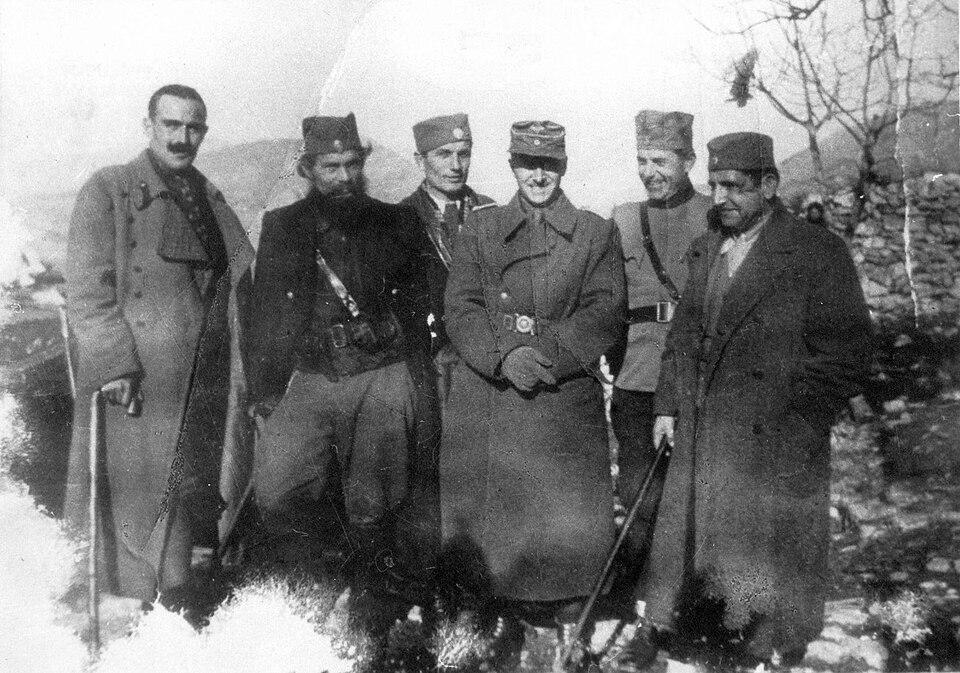
By far the largest and most experienced of the Eurasian formations to come under Waffen-SS administration was the XV. SS-Kosaken-Kavallerie-Korps, or 15th SS Cossack Cavalry Corps. Unlike the smaller Muslim and Caucasian formations, it developed from an existing German Army division that had already gained considerable combat experience. The Cossacks belonged to communities with distinctive military and social traditions dating back to the Russian Empire, and most came from Russian Orthodox backgrounds. Following the Russian Revolution, many Cossack communities had experienced political persecution and the loss of their traditional way of life, followed by the hardships of collectivisation under Stalin. When Germany invaded the Soviet Union in 1941, some Cossacks saw the German advance as an opportunity to fight against Soviet rule. Cossack units began appearing in German-occupied territory and among Soviet prisoners of war, and in the spring of 1943 the German Army brought several of these formations together at the Mielau training grounds near Mława in German-annexed Poland. Under the command of the German cavalry officer Helmuth von Pannwitz, they were organised into the 1st Cossack Cavalry Division. The division consisted of two cavalry brigades with six regiments representing the Don, Kuban, Terek and Siberian Cossack communities. Published estimates place its strength at around 18,500 men when it was formed, including more than 4,000 Germans.
In the autumn of 1943, the division was sent to German-controlled Yugoslavia, where, instead of fighting the Red Army on Soviet soil, the Cossacks were used mainly against the partisans of Josip Broz Tito. Their horses allowed them to operate in areas where poor roads and difficult terrain restricted the movement of military vehicles. The division was therefore particularly useful for patrolling the countryside, protecting roads and railway lines, and searching villages suspected of supporting the partisans. However, its operations were frequently accompanied by looting, *blocked text* and the killing of civilians. The conduct of the Cossacks became such a serious problem that officials of the German-allied Independent State of Croatia repeatedly complained to the German authorities and requested their removal. Although some offenders were tried by military courts and executed by their own commanders, the violence continued. In November 1944, the division was transferred to Waffen-SS administration as part of Himmler’s efforts to bring more foreign formations under SS control. The transfer made little immediate difference to its soldiers, many of whom retained their German Army uniforms and military ranks while continuing their operations in Yugoslavia. In December, the division’s 2nd Cavalry Brigade also fought regular Soviet troops near Pitomača in Croatia.
Having gained control of an experienced cavalry division, the SS began expanding it into an entire cavalry corps. On 25 February 1945, the conversion of the two existing cavalry brigades into separate divisions was formalised, while additional Cossack units were attached or intended to join the new XV. SS-Kosaken-Kavallerie-Korps. According to the historian Alexey Timofeev, approximately 25,000 men were under Pannwitz’s command by this stage. Although the corps was considerably larger and more experienced than the other Eurasian formations of the Waffen-SS, its expansion came at a time when the German military position in south-eastern Europe was rapidly deteriorating. Its soldiers continued fighting in the Drava region against Yugoslav partisans and Bulgarian troops that were now fighting on the Soviet side. On 24 March 1945, a Cossack congress held at Virovitica elected Pannwitz as supreme field ataman, a traditional Cossack military title. By then, however, Germany had lost any realistic chance of defeating the Soviet Union, and many of the Cossacks were more concerned with reaching the Western Allies before being captured by Soviet troops or Yugoslav partisans.
During the final weeks of the war, the corps withdrew through Slovenia towards Austria, fighting Yugoslav partisans along the way. Although some soldiers were captured before reaching Austria, many managed to surrender to British forces in May 1945 and were gathered in the region around Klagenfurt. The Cossacks hoped that British captivity would protect them from Soviet punishment, but under the agreements reached at the Yalta Conference, the Western Allies had undertaken to return Soviet citizens to the Soviet Union. In southern Austria, the British also handed over some men who had never held Soviet citizenship, including Russian émigrés and German officers. The Cossack cavalry corps should not be confused with the large Cossack military and civilian refugee community gathered around Lienz, although both were affected by the forced repatriations. During the transfers in late May and early June 1945, some prisoners and refugees attempted to escape, while others took their own lives rather than return to the Soviet Union. Pannwitz and several senior Cossack leaders were taken to Moscow, where they were executed on 16 January 1947. Many of the repatriated soldiers received lengthy prison or forced labour sentences. Some died in Soviet camps, while others survived and were released under later amnesties, including that of 1955. Those who avoided repatriation sometimes managed to settle in Western Europe or elsewhere, although the fate of many former members of the corps remains unknown.
The Eurasian formations occupied an unusual place within the history of the Waffen-SS. Some developed from small groups of former Soviet prisoners of war and local auxiliary troops, while others had already served within the German Army long before coming under SS control. Their military value differed greatly, ranging from formations that never completed their organisation to an experienced cavalry corps containing thousands of soldiers. Their establishment was largely the result of Germany’s growing manpower shortages and the willingness of the SS leadership to take advantage of opposition to Soviet rule. For many of the men who entered German service, their own political, national or religious interests were very different from those of the Nazi regime. Although Himmler was prepared to make exceptions to his original racial recruitment requirements, the wider ambitions of National Socialism remained unchanged. The presence of these formations within the Waffen-SS was therefore less a sign of changing racial beliefs than a consequence of Germany’s increasingly desperate military situation.
Author: Tom Dankers, Historian - Arnhems Oorlogsmuseum 40-45
Photo: See page for author, Public domain, via Wikimedia Commons